On a bare site, the programme is a function of how much work there is. In an occupied building it is a function of when you are allowed to do it. Two projects with identical bills of quantities can run four weeks apart purely because one had the loading bay from 7am and the other had it from 10pm. If you plan an A&A job around the quantity of work, you will be late. The access window is the programme.
Who actually controls your working hours
Rarely the client. In most Singapore commercial buildings the hours are set by building management or the management corporation, and they are usually written down long before your project existed. Landlords add conditions of their own. Where the space is tenanted, the tenant’s own trading hours narrow the window further.
All three can say no independently. Getting agreement from the client is not the same as getting access.
The constraints that show up most often
Typical restrictions in an occupied commercial building:
- Noisy works confined to specific hours, or to evenings and weekends only
- Service lift bookings in fixed slots, sometimes days in advance
- Loading bay access limited by time and by vehicle size
- No material movement through public or tenant areas during business hours
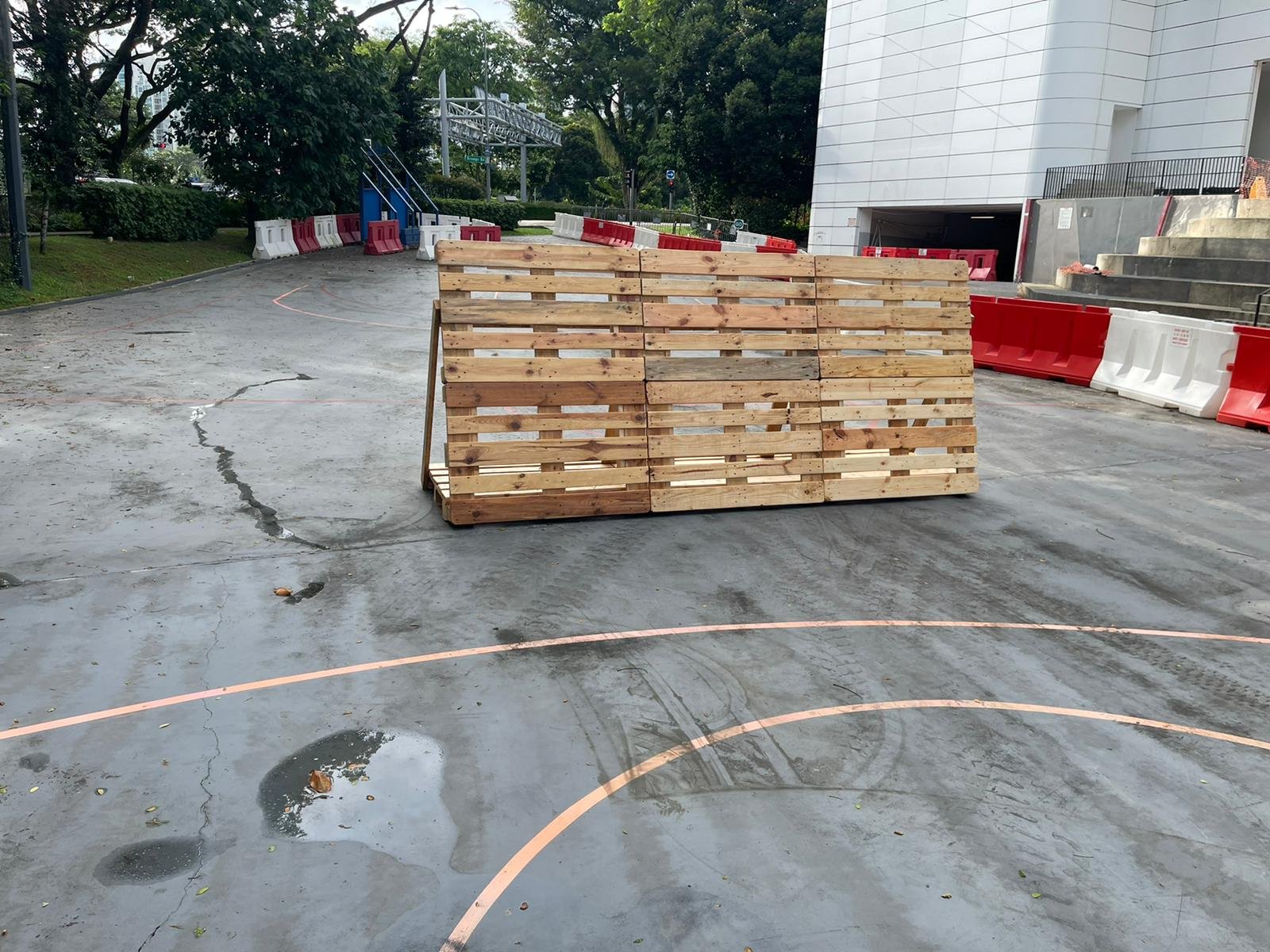
- Hoarding required before anything starts, to an appearance standard the building sets
- Hot works permits issued per shift, with a fire watch
- Deposits, insurance and contractor inductions completed before first entry
None of these is unreasonable. All of them cost time, and all of them are knowable before tender if somebody asks.
Why night work is not a straight swap
Moving work into the night solves the access problem and creates three others. Productivity per hour is lower. Rates are higher. And anything needing an inspection, a delivery or a decision has to wait for the following day, so a two-hour query can cost a full shift.
Night work is the right answer for genuinely disruptive operations — coring, hacking, anything that cannot coexist with occupants. Using it for everything is expensive and usually slower than it looks.
The shift has to end tidy, every time
On a bare site you can leave tools where they lie. In an occupied building every shift ends with the area protected, swept, barriers back in place and escape routes clear, because people will walk past it in a few hours. That closing-down routine is real time, it happens every single shift, and it belongs in the programme rather than in the contractor’s optimism.
Building services are somebody else’s asset
Isolating a fire alarm zone, draining a sprinkler branch, shutting off a riser or taking a power supply down in an occupied building are coordinated operations, not tasks. They need notice, a permit, an attendance from the building’s own contractor, and a defined window for restoring the system.
These are the items most often missed at tender and most likely to stop a programme dead, because no amount of labour on site substitutes for a shutdown you have not been granted.
Sequencing around people who are still working
The practical approach is to sort the scope by how disruptive it is, then match each band to the window it fits: quiet, contained work during occupied hours; disruptive work in the granted windows; anything requiring a shutdown scheduled well ahead and treated as a fixed date the rest of the programme moves around.
Work that can happen off site should happen off site. Every component we can machine, assemble and finish in our own facility is an hour that does not need to be bought inside somebody else’s building.
Find out before you price, not after
- Ask building management for their contractor rules in writing, including permitted hours for noisy works.
- Confirm lift and loading bay booking procedure, slot length and notice period.
- Establish the route materials will take, and whether it passes through occupied areas.
- Identify every service shutdown the scope will need, and who has to attend each one.
- Ask the tenant what they cannot lose and when — the answer often reshapes the sequence.
- Convert all of it into a calendar of available hours, then plan the work into that calendar.
What this means for your tender
A tender that does not state its access assumptions is not comparable with one that does. If two prices differ significantly on the same drawings, the first thing to check is what each assumed about working hours. The cheaper one has often assumed daytime access it will not get.
How Rongda Pacific plans around access
We have delivered works in live medical facilities and phased commercial projects where the building stayed in use throughout. Our starting point on an A&A project in an occupied building is the calendar of hours we can actually have, and the programme is built into that calendar rather than against an ideal one.
Frequently Asked Questions
Can you work at night or over weekends?
Yes, where the building permits it. We plan the disruptive operations into those windows and keep quieter, contained work in normal hours, because putting everything into night shifts raises cost without always saving time.
How far ahead do service shutdowns need to be arranged?
It depends on the building, and it is one of the first things we confirm rather than assume. What is consistent is that a shutdown is a fixed date the rest of the programme has to move around, not an activity that can be resequenced at short notice.
Will occupants be able to use the space during the works?
That is usually the whole point of an A&A job. The areas outside the hoarding stay in use, which is why protection, daily clean-down and clear escape routes are treated as part of the work rather than as housekeeping.
What if building management refuses a window we have planned around?
Then the programme changes, and it is better to discover that at tender than in month two. We ask for the rules in writing before pricing, so that the assumptions are visible to everyone from the start.