An overseas interior contractor can manufacture almost everything a Singapore project needs. Joinery, wall panelling, decorative metalwork, stone, glazed screens – all of it can be produced abroad, packed and shipped. What cannot be put in a container is the site scope: the opening that has to be formed, the steel that has to be fixed before the feature can hang, the hoarding that has to stand before any of it starts, and the making good that has to follow after.
That scope is small as a percentage of contract value and decisive as a percentage of programme. It is also the part most often discovered in the second week on site, by which point it is being priced under pressure, by whoever happens to be available, with no drawings and no approvals in hand.
This article is for overseas contractors and manufacturers who already have the product side solved and need the Singapore construction side. The technical mechanics of builder’s works around furniture are covered in our guide to builder’s works for furniture installation; what follows is how the scope is scoped, bought and sequenced from abroad.
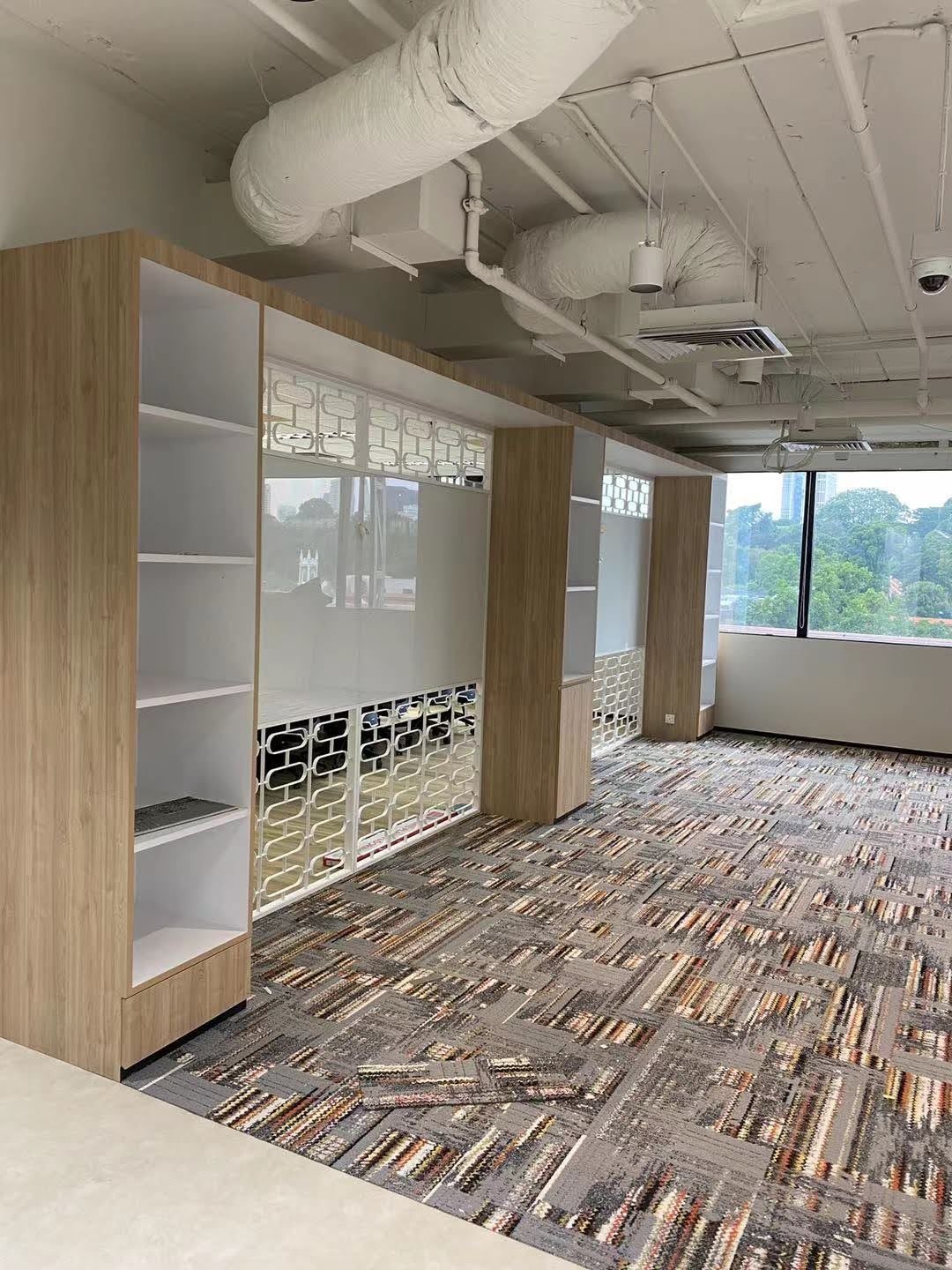
What You Cannot Import
The distinction that matters is not between furniture and construction. It is between work that can be done in a factory and work that can only be done in the building, by a party who is on site, insured for it, and able to answer for it under Singapore practice.
Site scope an overseas contractor cannot ship in:
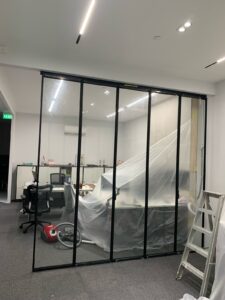
- Hoarding, dust screens, temporary protection and controlled work zones
- Forming and closing openings in existing walls, slabs and ceilings
- Wall reinforcement and backing for cantilevered or wall-hung elements
- Local structural steel supports, plinths and framing
- Penetrations, fire-stopping and reinstatement
- Concrete, masonry and plaster making good
- Floor patching, screed correction and levelling to receive joinery
- M&E preparation, relocation and final interface
- Attendance at consultant and authority inspections
- Waste removal, cleaning and handover of the work area
None of these is exotic. They are simply work that has to be executed by somebody standing in the building, and an overseas contractor who has planned only for product and installation labour arrives without a party to do them. Where the works alter the building itself rather than only its contents they may also fall under a different regulatory regime – our guide to what counts as A&A works in Singapore sets out where that line sits and what crossing it changes in the programme and the price.
Separation Comes Before Anything Else
On an operational building – a mall, an office in use, a school, a hotel that is still trading – the first construction activity is not construction. It is separation. Hoarding, dust screens, protection to existing finishes, defined work zones and a temporary access route have to be in place and, usually, approved by building management before a single panel is carried in.
The containment techniques are a subject of their own, and we cover them in our guides to dust, noise and smell control for works in a live building and permitted hours, lift slots and shutdowns. What matters from overseas is narrower and more commercial: almost none of it is decided by your product, and all of it sets the programme you are being asked to commit to.
Decided by the building, not by your package:
- Whether the works may run in daytime at all, and which hours are permitted
- How much of the programme has to happen outside occupied hours
- Which lift may be used, when, and for how long at a time
- Where materials may be staged, and how long they may stay there
- What has to be dismantled and cleared at the end of every shift
- Which building-management approvals must be in hand before a start date is credible
- What condition the area has to be handed back in
An overseas contractor who prices a Singapore programme without these answers is quoting a duration the building has not agreed to. Establishing them is a survey task rather than a drawing task, which is why it has to be done locally and early.
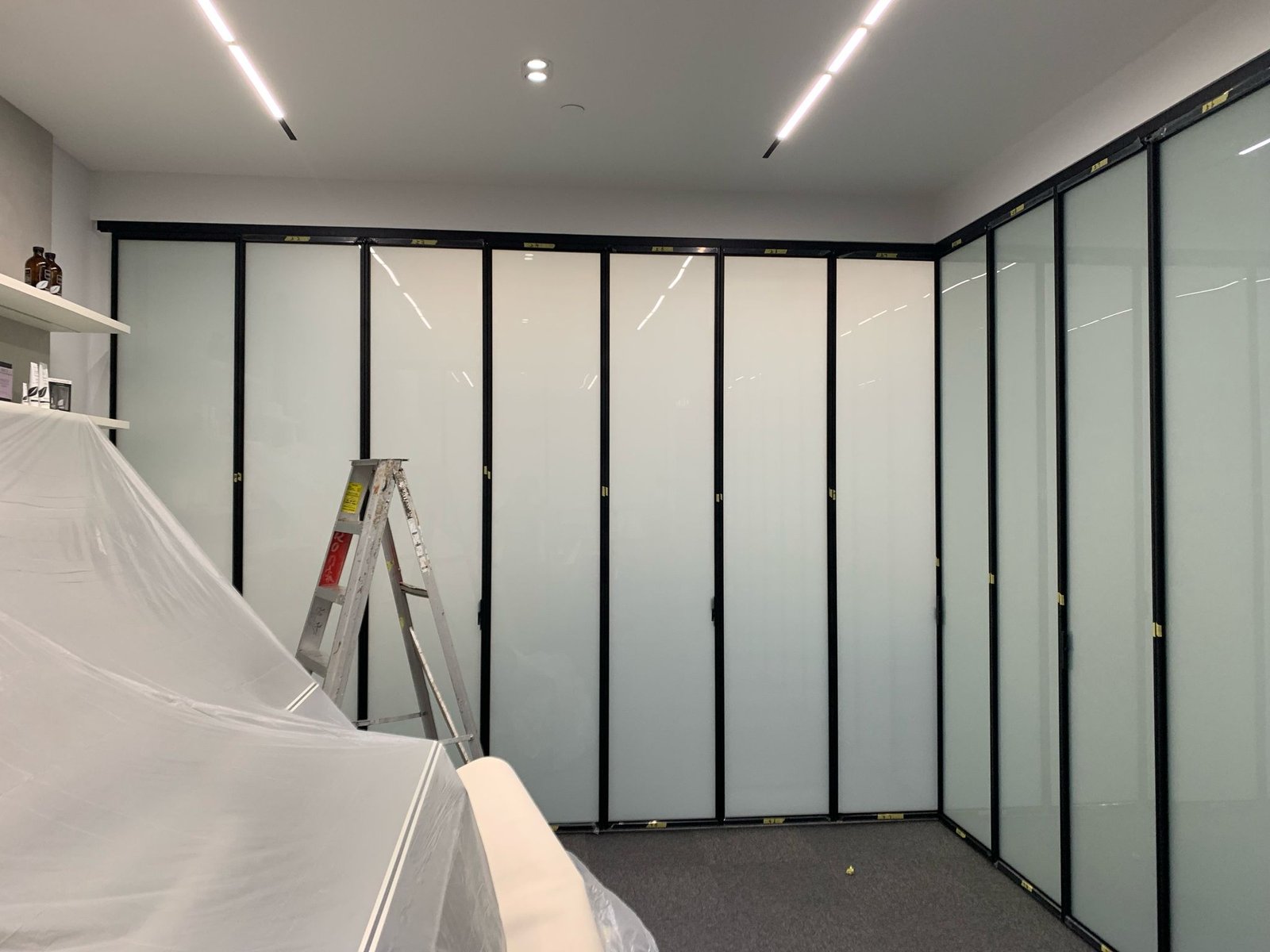
Structural Support Is a Local Responsibility, Not a Product Specification
An overseas contractor generally knows the load its element imposes, and will specify it correctly. What the factory cannot do is decide how that load is transferred into a Singapore building it has never seen. Whether the support is fixed to a structural wall, a drywall partition, a slab soffit or a false ceiling zone – and whether that connection needs professional endorsement – is a local determination made against the built condition and the project’s approval regime.
In practice, the useful division is that the overseas party supplies the load, the fixing requirement and the tolerance; the Singapore party determines the connection, prepares the substrate, fabricates and installs the support, obtains whatever approval the works require, and makes good afterwards. Attempting to specify the connection from abroad usually produces a detail that cannot be built.
Send us this and the support scope can be priced properly:
- Element weight, dimensions and centre of gravity
- Required fixing points, spacing and tolerance
- Connection type the product is designed to receive
- Whether the item is wall-hung, floor-standing or suspended
- Any movement, deflection or vibration limit the product requires
- Location drawings against the architectural layout
- Programme date by which the support must be complete
M&E Is Where Imported Packages Actually Stall
A correct product in a room whose services are not ready is a stalled room. Power, lighting circuits, data, drainage, water points, ventilation, sprinkler drops and detection all interface with interior elements, and the interface is almost never a single clean handover point – it is a sequence of preparation, first fix, installation, connection and testing that has to interleave with the fit-out.
The recurring failures are dull and predictable: an isolator behind a fixed panel with no access, a sprinkler drop that lands in a bulkhead that has moved, a drainage point set for the previous layout, a socket that ends up inside a cabinet carcass. Each is trivial to prevent at coordination stage and expensive to correct after finishes are on. Our guide to interface coordination between furniture and the other trades covers the conflicts that recur most often.
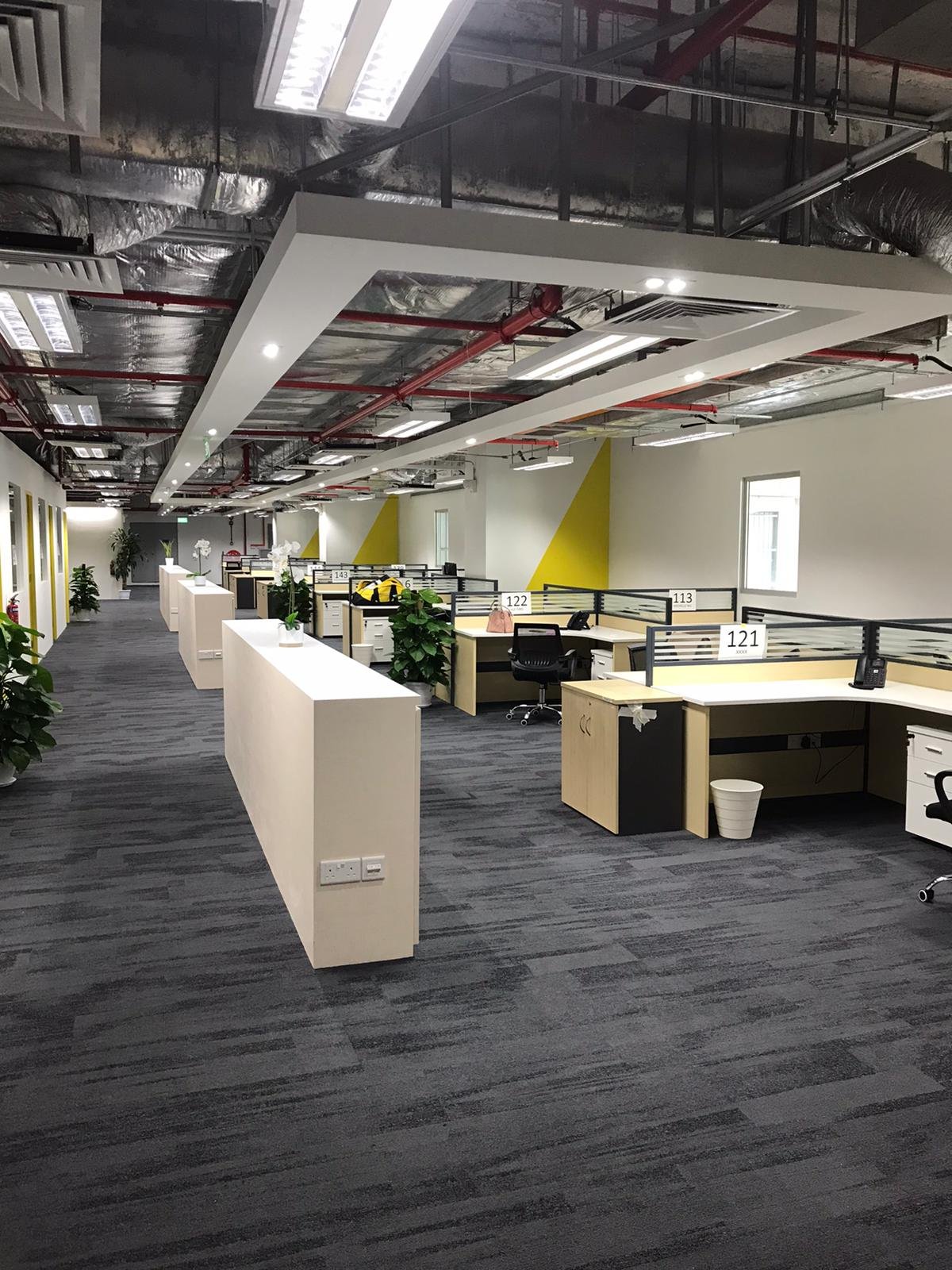
Making Good Is Not the Same as Cleaning Up
Reinstatement is a defined scope with a defined standard: openings closed, penetrations fire-stopped and sealed, substrates patched flat enough to receive the specified finish, and the finish itself matched to an existing surface that has aged. Matching an existing finish is the part that is consistently underestimated, because the comparison is made against a wall that has had several years of light on it, not against a colour code.
It is also the last activity before inspection, which means it sits directly on the critical path. Where making good is left unallocated in the contract, it is discovered at the point where there is least time to do it properly. On leased premises the same work returns at the end of the term on a far larger scale, which we cover separately in our guide to reinstatement at the end of a commercial lease.
One Local Scope Reduces the Interfaces You Have to Manage Remotely
The practical argument for consolidating is not commercial, it is administrative. Every additional Singapore subcontractor is another party to appoint, brief, insure, sequence, chase and reconcile – from a different time zone, usually in a second language, and without anybody on the ground to verify what has actually happened.
Where the works are genuinely related – hoarding, openings, supports, installation, making good and rectification around the same package – holding them under one local scope collapses that management overhead into a single accountable party.
What consolidating actually simplifies:
- One appointment, one insurance position, one safety submission
- One party sequencing hoarding, builder’s works, installation and making good
- No gap between trades where responsibility for an item is unclear
- One defect register and one route to rectification
- One party attending consultant and authority inspections
- One point of contact when something has to be decided the same day
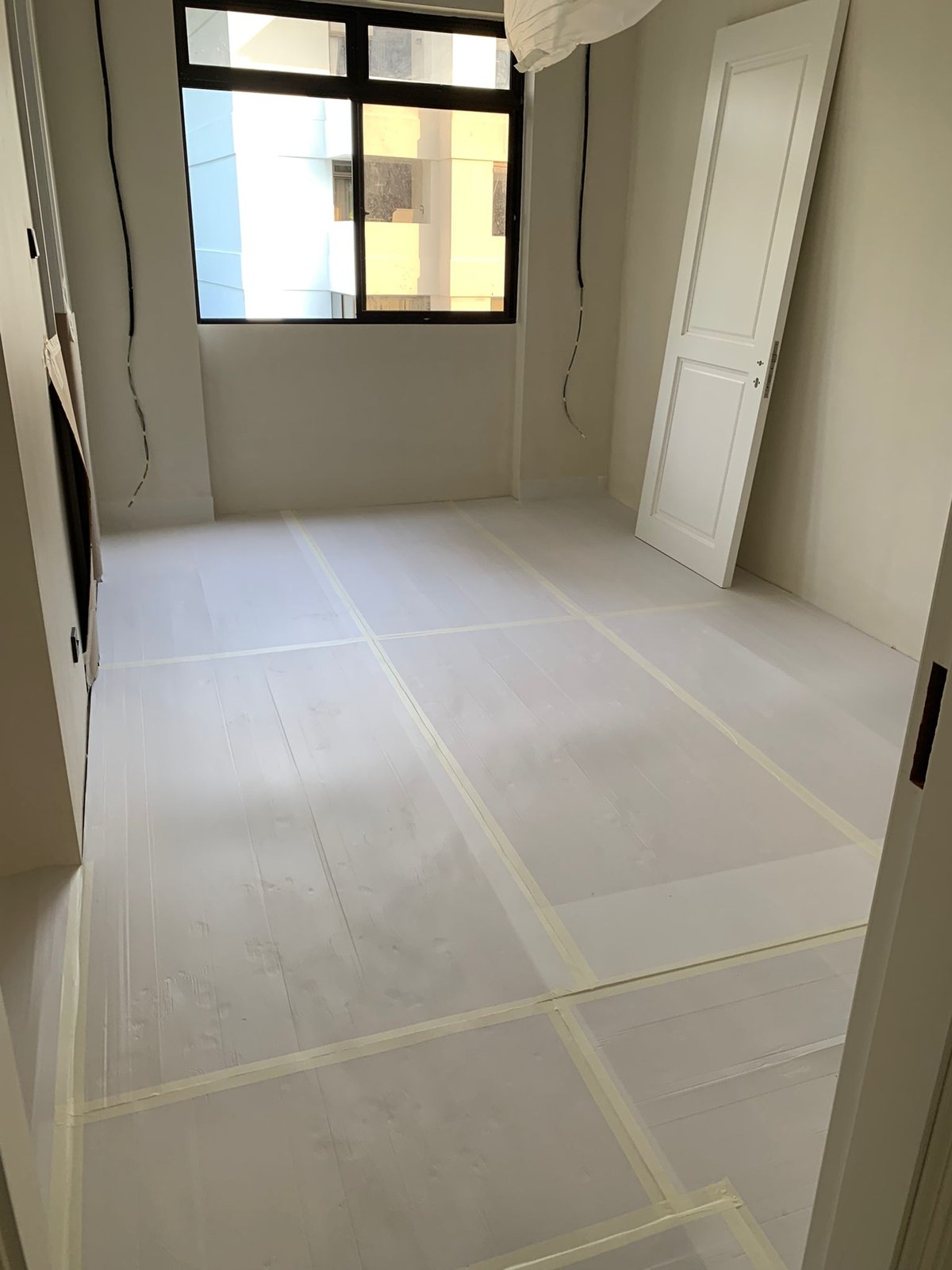
How the Appointment Usually Runs
Overseas contractors tend to approach this in one of two ways. Either the local scope is appointed early and planned alongside production, or it is appointed once the containers are on the water and planned around whatever has already been decided. The first costs less and takes less time, for reasons that are entirely mechanical.
The survey is also where the risk of variations is established rather than assumed. In an existing building the as-built information is frequently incomplete or simply wrong, and what is found once a wall or ceiling is opened routinely changes the scope – our guide to discovered scope and how variations are handled covers how that is priced honestly at tender rather than argued afterwards.
Where This Sits Alongside the Furniture Scope
For most overseas contractors the builder’s works scope is bought together with the installation scope, because separating them reintroduces exactly the interface the consolidation was meant to remove. Our overview of the wider Singapore installation scope for imported furniture covers the product side, and FF&E receiving, logistics and installation for commercial projects covers how the two are sequenced on larger packages.
Where a project also involves alteration and addition works, Rongda Pacific carries A&A works, commercial interior fit-out, structural steel support and M&E-related coordination in its own right, which is generally what an overseas contractor is missing – not carpentry.
How Rongda Pacific Works With Overseas Contractors
We act as the Singapore construction arm for contractors who design, procure and manufacture abroad. The arrangement works best as a standing one rather than a single project, because the site knowledge compounds – what is learned about access, approvals, building management practice and local tolerances on the first job is applied to the second.
Practically, that means we attend the building before you commit to a programme date, quote the site scope itemised rather than as a lump sum, carry out the works with our own supervision, and remain the party that attends when something is reported during the liability period.
Frequently Asked Questions
Does Rongda only install imported furniture?
No. Commercial interior fit-out, A&A works, builder’s works, hoarding, making good, structural steel support and M&E-related coordination are part of our own business. For overseas contractors, the site scope is usually the part that is missing rather than the product.
Can you quote builder’s works without drawings?
We can give an indicative position, but a firm price needs the architectural layout, the product loads and a site survey. Structural and regulated works in particular must follow the applicable drawings, approvals and professional requirements.
Can you work in an occupied building?
Yes. Hoarding, dust control, protection, phased working, restricted hours and out-of-hours arrangements are planned against the building’s own rules and agreed with building management before works start.
Who obtains approvals – us or you?
Ordinarily we do, because the approvals sit with the party carrying out the works in Singapore. What we need from the overseas side is the product information the submission depends on.
Can you work under an overseas main contractor or ID contractor?
Yes. We work either directly for the overseas contractor or under the Singapore main contractor, depending on how the project is structured. The important thing is that the scope boundary is written down.
How is making good priced?
Against the defined reinstatement standard and the finish being matched. Matching an aged existing finish is the item most often underestimated, so it is worth identifying those locations at survey rather than at handover.
Do we need a separate installation contractor as well?
Normally not, and separating them usually costs more. Holding hoarding, builder’s works, installation and making good under one local scope removes the interfaces that otherwise have to be managed from abroad.
What is the earliest useful point to involve you?
Before the programme date is committed. A site survey at that stage establishes what the building actually requires, which is what determines how long the site scope takes.