
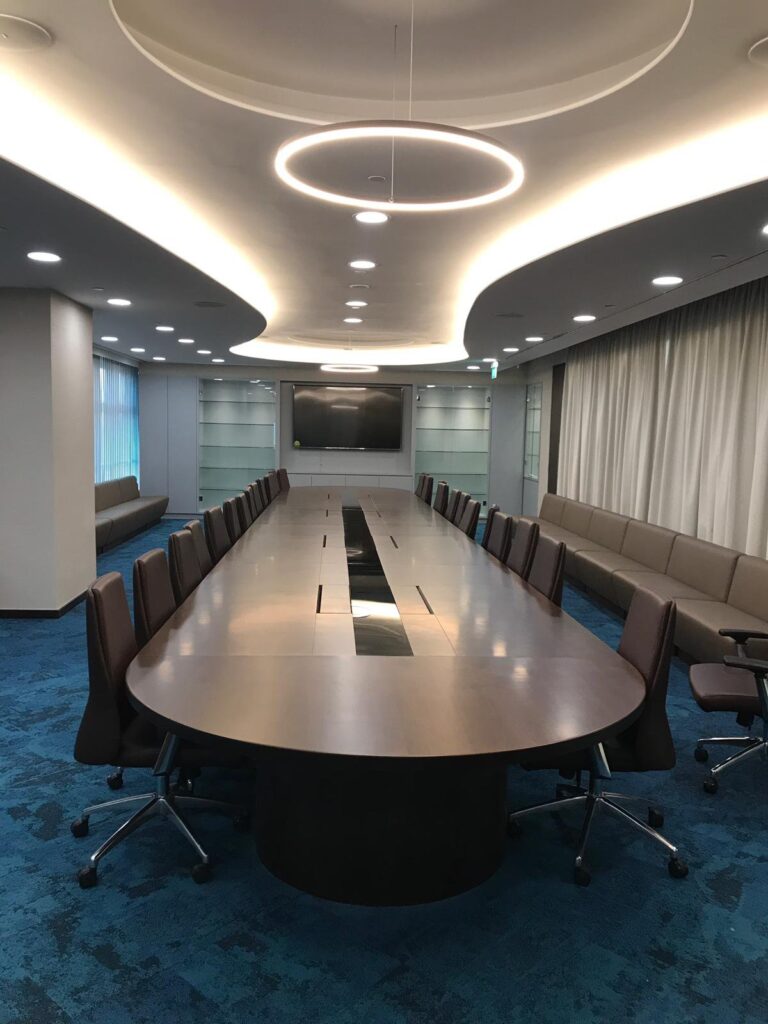
A factory quotation from China and a quotation from a Singapore supplier are usually compared side by side in the same tender report, as though they described the same scope. They do not. One of them ends when the goods are loaded; the other ends when the room is handed over. The difference between those two endpoints is not a rounding error – on a large FF&E package it is routinely the difference between the two numbers on the page.
Related service: commercial fit-out contracting in Singapore.
Direct procurement from Chinese manufacturers is a sound strategy, and for many Singapore developments it is the right one. Capacity, specialist finishes and cost are real advantages. But the decision is only as good as the plan for what happens after the goods land, and that plan has to be made before award, when it can still be written into a contract, rather than afterwards, when it can only be negotiated.
This article is about the procurement decision itself – what the factory price does not cover, which clauses actually determine the outcome, and what to put in the tender documents. The stage-by-stage process once an order is placed is covered separately in our guide to the complete factory-to-Singapore workflow.
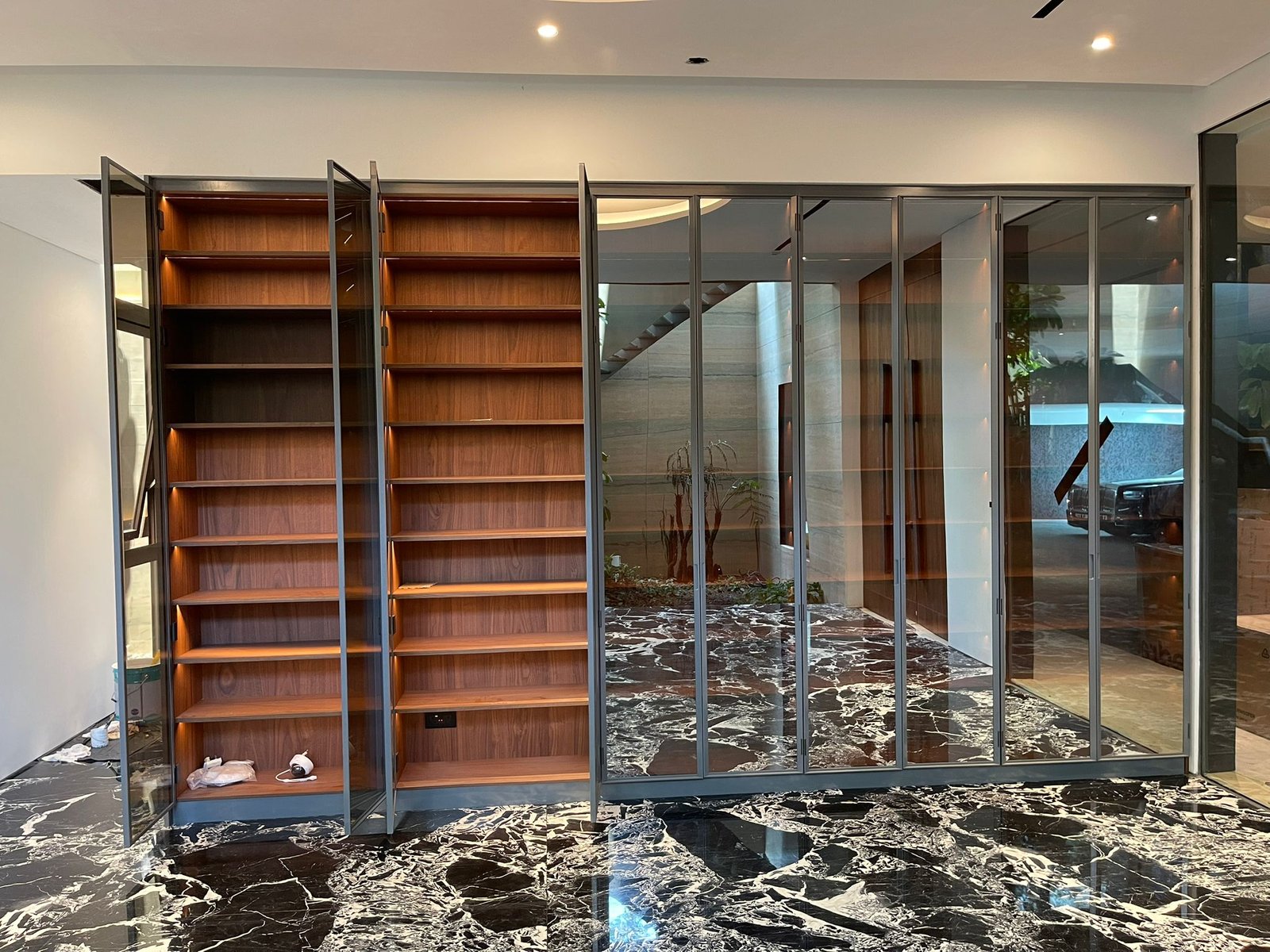
The Two Quotations Do Not Describe the Same Scope
A Singapore supplier’s price generally includes site measurement, delivery, installation, coordination with other trades, snagging, making good and attendance during the defects liability period. A factory price generally includes manufacture, packing and – depending on the Incoterm – freight. Everything between the two is real work that somebody will do and somebody will pay for.
The purpose of the comparison is not to make direct procurement look expensive. It is to make the two numbers describe the same thing, so the decision is made on a genuine differential rather than an accounting artefact.
Scope that sits outside a typical factory quotation:
- Site measurement against the built condition, and the risk if it is wrong
- Container de-stuffing, condition inspection and hardware reconciliation
- Warehouse storage between arrival and room readiness
- Delivery, lift booking, access planning and room-by-room release
- Installation, levelling, scribing, fixing and final adjustment
- Coordination with M&E, stone, flooring, ceiling and glazing contractors
- Local modification where an item does not fit the built condition
- Finish rectification for transit and installation damage
- Builder’s works, wall reinforcement and making good around the package
- Snagging, protection, handover documentation and DLP attendance
Rectification Risk Is a Cost, Whether or Not It Is Priced
The item that most often breaks a direct-procurement budget is not a missing scope line. It is the remedy available when something does not fit. Where no local capability has been contracted, the only remedy is a replacement manufactured and shipped from the factory, and the project absorbs a two-month lead time for a discrepancy that a carpenter could have resolved in a morning.
That exposure should be assessed before award, not discovered at installation. On a package of any size, a small percentage of items will need adjustment – that is normal and not a reflection on the factory. What matters is which of the four available remedies the contract makes possible.
A procurement model that can only reach the fourth row carries a materially different risk profile from one that can use the first three. Our guides to on-site modification and replacement parts and local rectification set out what can realistically be resolved here. Where the package goes into an existing building rather than a new one, the same exposure arrives from the building instead of the furniture – our guide to discovered scope and how variations are handled covers how that is priced at tender rather than argued afterwards.
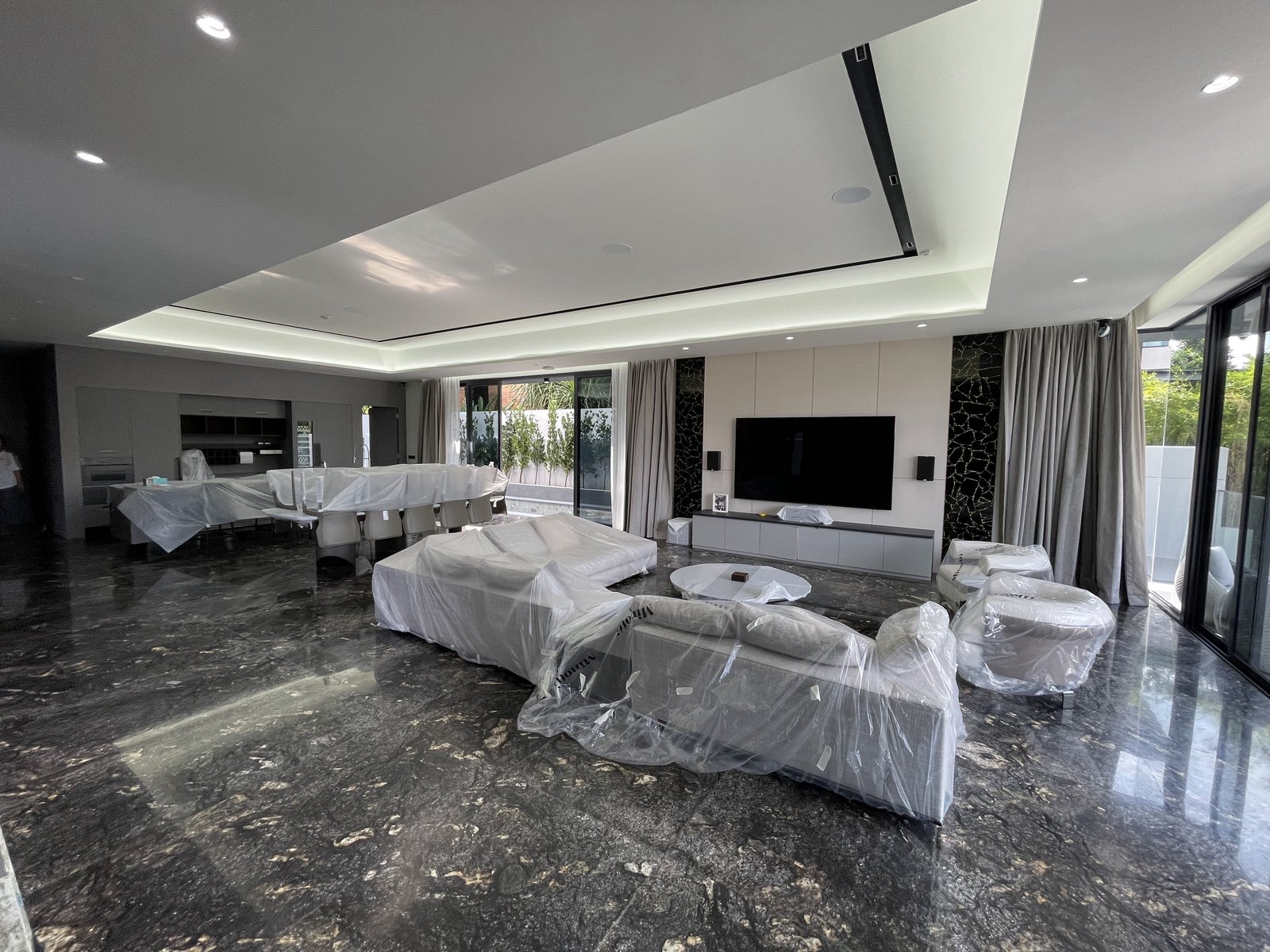
Measurement Responsibility Is the Clause That Decides the Most Money
Almost every dimensional problem discovered at installation was created months earlier, at measurement. Furniture is manufactured to the dimensions somebody supplied, at a moment when the building may still have been changing – and if that measurement was taken from an architect’s drawing rather than the built condition, or before finished floor levels were laid, the discrepancy is already in the production run.
The clause therefore needs to answer two questions, not one: who takes the measurement, and who carries the cost if it turns out to be wrong. It also needs to tie the measurement to a drawing revision, so production cuts to a known reference rather than to whichever version reached the factory most recently. Our guide to professional site measurement covers how this is normally managed.
Packing Format Is a Procurement Decision
How a factory packs and labels has more effect on installation speed than almost any other single factor, and it is decided long before anyone on site sees a carton. Furniture packed for container efficiency arrives sorted by component type – all the doors together, all the carcasses together – and a Singapore team then has to rebuild room sets before installation can start. Furniture packed for installation arrives as rooms.
This is cheap to specify at tender and expensive to correct afterwards, because it is a production-line habit rather than a one-off task. It belongs in the purchase specification alongside the finish schedule.
Packing and documentation to specify at tender:
- A packing list that maps cartons to rooms or item references, not only to a running number
- Carton labelling that matches the FF&E schedule used on site
- Hardware packs identified and kept with the units they belong to
- Assembly drawings showing sequence, not only an exploded view
- Fixing details for wall-hung and full-height items
- Finish and component schedules retained for future replacement
Several Factories Multiply the Interfaces, Not the Savings
Large developments frequently split packages – wardrobes from one factory, vanities from another, loose furniture from a third, decorative panelling from a fourth. Each factory optimises its own scope, its own packing and its own delivery date, and none of them is responsible for the combined effect on a single bedroom that needs all four.
The result is usually visible at the room level rather than the package level: three of the four elements are installed and the room cannot be closed. Where a development is split this way, centralising the Singapore side under one execution scope is what keeps the room, rather than the package, as the unit of control.
What a single local scope centralises across multiple suppliers:
- One delivery programme sequenced against actual room readiness
- One site access, storage and lift booking arrangement
- One party coordinating interfaces between the packages
- One defect register rather than four, with consistent classification
- One route for rectification, whoever manufactured the item
- One point of accountability at inspection and handover
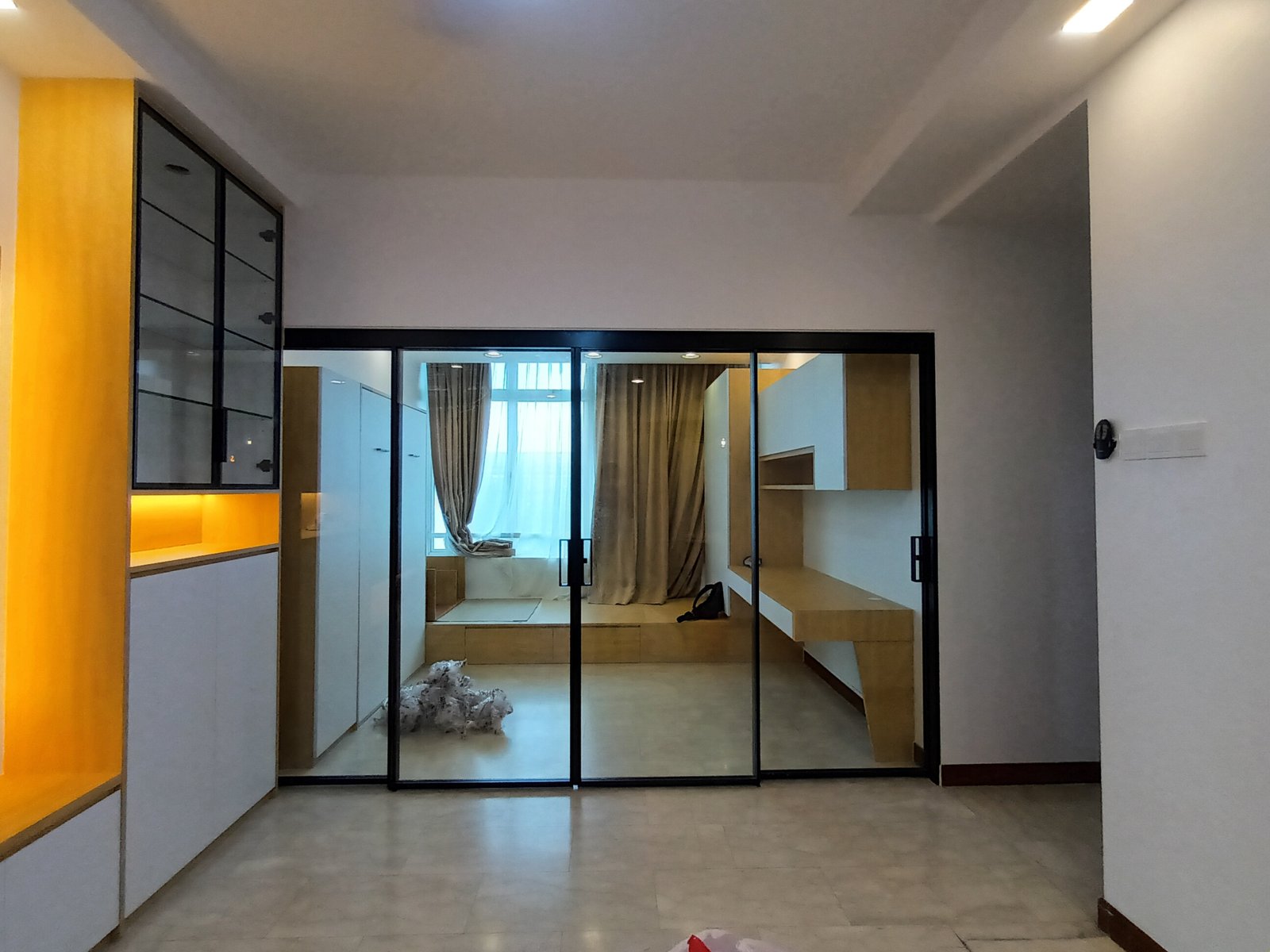
DLP Belongs in the Tender, Not in the Argument Afterwards
A purchase contract usually ends at delivery. A construction obligation does not – it continues through the defects liability period, and during that time somebody has to attend, inspect, classify, rectify and close each item that is reported. For a developer this is not a minor administrative tail; it is the period during which the end client forms their opinion of the building.
Flying a factory team in for a misaligned door is impractical, and shipping a replacement panel for every scratch is inefficient. The realistic arrangement is local attendance with an agreed route back to the factory for the items that genuinely require it – and that arrangement costs very little to write into a tender and a great deal to negotiate once a defect list already exists. Our guides to after-sales and defect liability and snagging and defect rectification cover how the process normally runs.
A Structure That Works
The weakness in most direct-procurement models is not the factory. It is that the model is drawn as a single line from developer to factory, with the Singapore half left implicit.
The two halves are not alternatives and they do not compete. The factory carries manufacture, documentation, packing and warranty supply; the Singapore scope carries verification, receiving, delivery, installation, interface, modification, rectification, handover and attendance. Both need to be contracted for the model to hold.
What to Include in the Tender Documents
For a package of any size, settling these before award removes most of the arguments that otherwise surface at installation.
Settle in writing before award:
- Which party measures the site, and who carries the risk if the measurement is wrong
- Which drawing revision production will cut to, and how revisions are controlled
- What installation allowance is built in as filler and scribe material
- How items will be packed and labelled – by room or by component type
- What documentation ships with the goods
- Incoterms, and the point at which risk and title pass
- Whether stone is supplied by the factory or templated and fabricated in Singapore
- How replacement parts are raised, produced, shipped and paid for
- Who carries the cost of local modification where an item does not fit
- Who attends during the defects liability period, and at whose cost
How Rongda Pacific Supports Direct Procurement
Rongda Pacific Pte Ltd is engaged by developers, main contractors and overseas manufacturers as the contracted Singapore scope alongside a direct factory purchase. That typically covers site verification and feedback before production, container receiving and inspection, storage, staged delivery, installation and trade interface, local modification, finish rectification in our own spray facility, builder’s works and making good around the package, snagging, handover and DLP attendance.
We are not a procurement agent and we do not take a position between the developer and the factory. The point of the arrangement is that the Singapore-side scope is priced, contracted and owned rather than left to be discovered.
Frequently Asked Questions
Is direct procurement from China suitable for Singapore projects?
Frequently, yes – capacity, specialist finishes and cost are genuine advantages. The determining factor is whether the Singapore-side execution scope has been planned and contracted, because that is the half the factory price does not cover.
How should a factory quotation be compared with a local supplier’s?
Bring both to the same endpoint. Add the receiving, storage, delivery, installation, coordination, modification, rectification, making good and DLP scope to the factory price before comparing, and price the rectification remedy the contract actually makes available.
Who should take the site measurement?
Whoever carries the risk if it is wrong, and that should be stated explicitly. The measurement also has to be tied to a drawing revision so production cuts to a known reference.
What is an installation allowance, and why does it matter at tender?
Filler and scribe material deliberately designed into the items so real wall and floor deviation can be absorbed on site. Without it, a run that is dimensionally correct still cannot be fitted to a wall that bows – and the allowance has to be specified before production, not requested afterwards.
Can one local contractor coordinate several China factories?
Yes, and on a split package it is usually the more reliable structure. It gives the project one delivery programme, one defect register and one point of accountability at room level, whoever manufactured the item.
Should furniture be delivered straight from the port to site?
On small jobs it sometimes is. On anything larger it causes more problems than it saves – no space to inspect, no way to reject damage before it is installed, and cartons opened in corridors.
What happens if something arrives damaged?
Damage found and photographed at the warehouse is a recoverable claim and can be rectified while other work continues. Damage discovered in a finished room usually is not, which is the whole argument for receiving inspection.
Should DLP be settled before award?
Yes. Local attendance costs very little to write into a tender and a great deal to negotiate once a defect list exists and the factory’s project team has already gone home.
More in Commercial Fit-Out
 SCDF Fire-Safety Coordination for Interior Fit-Outs in Singapore: Submission Routes, Interfaces and the Furniture Nobody Checked
 Main Contractor, ID Contractor or Direct Trades: Choosing a Procurement Route for a Singapore Fit-Out
 How Long Does an Office Renovation Take in Singapore? Programme, Critical Path and the Last Ten Per Cent