
Luxury homes and premium commercial spaces are becoming steadily more intelligent, and custom furniture is now expected to integrate with technology rather than simply provide storage. The catch is that a motor, a driver and a data cable have requirements a shelf does not — and most of those requirements have to be settled before the cabinet is manufactured, not after it arrives.
Modern Furniture Is No Longer Just Furniture
Motorised TV lift cabinets, hidden charging stations, wireless charging surfaces, smart lighting, concealed speakers, automated wardrobe lighting, electronic locks and smart mirrors are all now built into the furniture itself. The furniture has become an enclosure for equipment, and it inherits every constraint that equipment brings: power, heat, access, control and eventual failure.
Installing these systems takes more than carpentry. It requires coordination between the furniture installer, the electrician, the AV specialist and the smart-home integrator, and it requires somebody to own the interfaces between them. At Rongda Pacific Pte Ltd we deliver precision installation for imported smart furniture and integrated FF&E projects across Singapore.

What Smart Furniture Actually Includes
Residential:
- Motorised TV lift cabinets and rising screens
- Automatic wardrobe and drawer lighting with door sensors
- Wireless bedside and desk charging surfaces
- Smart mirrors with demist, lighting and display
- Concealed speakers, media storage and cable management
- Electronic locks on safes, drawers and storage
Commercial:
- Smart reception counters with visitor-management screens
- Digital display and interactive kiosk integration
- Meeting-room technology furniture and cable retraction
- Charging stations and powered lockers
- Height-adjustable desks with integrated power and data
Early Coordination Is the Whole Job
Smart furniture needs services in place before the cabinetry is finished, and needs the cabinetry designed around the equipment rather than the other way round. Almost every expensive problem on these projects traces back to a decision made after manufacture that should have been made before it.
What must be fixed before the furniture is built:
- Power supply positions and circuit capacity for each powered item
- Data cabling, Wi-Fi access point locations and any control bus
- Speaker wiring runs and terminations inside the joinery
- Lighting-control cabling and which protocol is being used
- AV equipment placement, depth and cable service loops
- Ventilation for anything that generates heat
- Where the driver, transformer or power supply physically lives
The last two are the ones most often left out of a drawing and most often regretted. Our guide to imported furniture interface coordination covers how these responsibilities are allocated between trades before anyone is on site.
Concealed Cable Management Is What Makes It Look Premium
Visible cables undermine even the most expensive interior, but concealment is only half the requirement. A cable that is hidden and unreachable is a maintenance problem waiting to happen.
What good cable management inside joinery looks like:
- Dedicated channels sized for the cable count, not just squeezed behind a panel
- Access panels wherever a termination or connector sits
- Ventilated equipment compartments for anything that runs warm
- Power and data separated to avoid interference on long runs
- Service loops so an item can be withdrawn without disconnecting it
- Spare capacity for the equipment that will replace this equipment

Heat and Ventilation: the Failure Nobody Designs For
An AV receiver, a set-top box, an LED driver and a motor controller all produce heat, and a sealed cabinet is a very effective insulator. Equipment that runs hot fails early, and the failure appears months after handover when nobody connects it to the joinery.
Where powered equipment sits inside a cabinet, the compartment needs a defined air path — a vented back, a grille, or a deliberate gap — and the manufacturer’s clearance requirements should be checked against the actual internal dimension rather than assumed. This is also why an appliance or equipment schedule needs to reach the furniture manufacturer before the carcass is cut.
Motorised Components Need Precise Installation
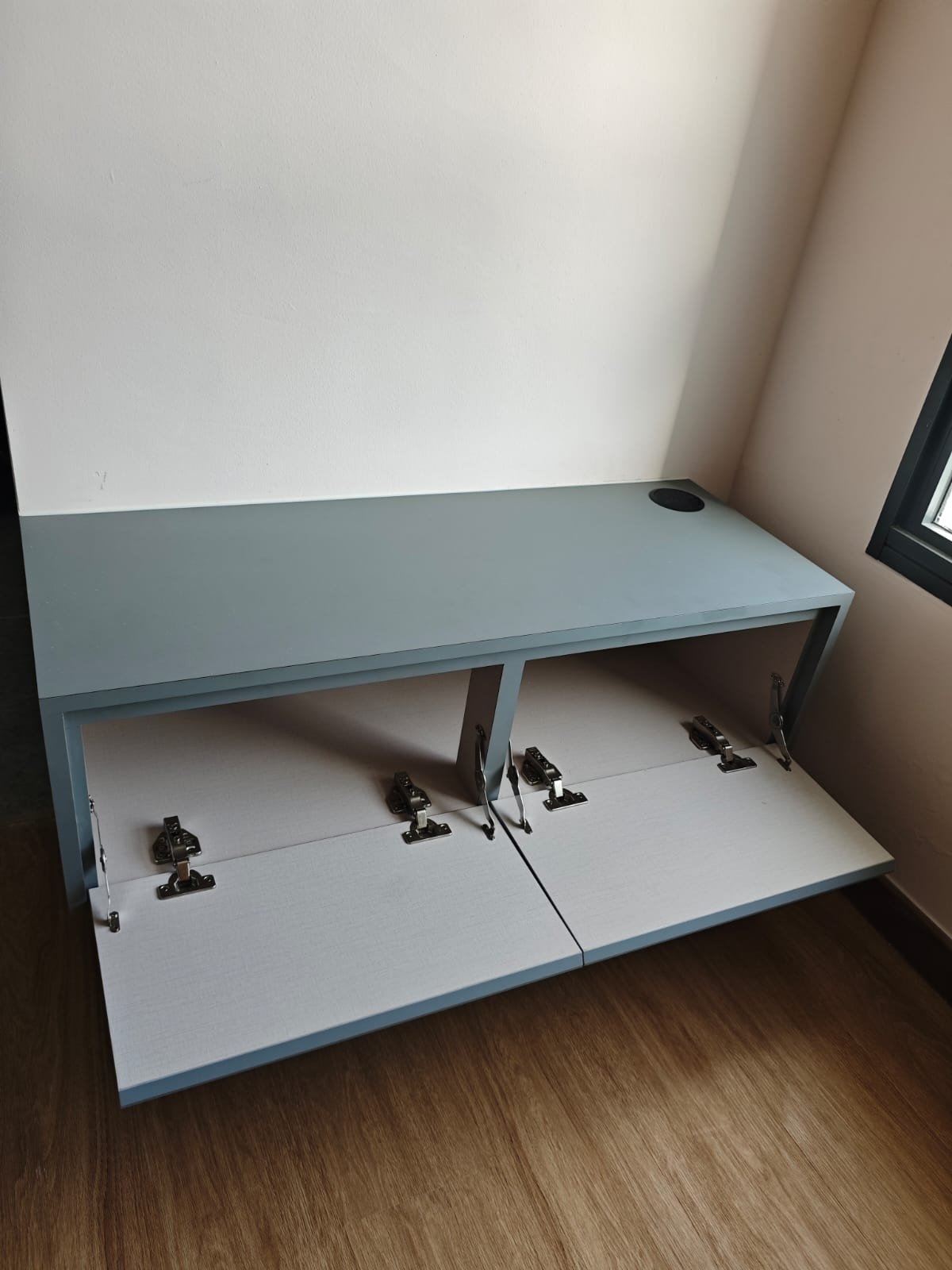
Many imported systems include motorised elements — TV lifts, rising panels, motorised drawers, automated wardrobe rails and lift-up doors. These have far tighter installation tolerances than static joinery, because the mechanism has to travel through its full stroke without binding.
Imported Smart Furniture: Check the Electrical Side Early
Furniture manufactured overseas arrives with the electrical components the factory fitted, and those are specified for the factory’s home market. Before the shipment leaves, it is worth confirming what is actually inside the cabinet.
Questions to settle with the overseas factory:
- Supply voltage and frequency of every powered component
- Plug and connector types, and whether they suit local outlets
- Whether powered items carry the approvals required for use here
- Driver and transformer specifications, and where they are mounted
- Whether lighting is dimmable and on which control protocol
- Spare parts availability, and lead time for a replacement driver
The commercial reason to ask early is simple: a lighting driver that has to be swapped after installation means opening finished joinery. The practical reason is that a component sourced locally at the start is far easier to replace in year three than one that only exists in the factory’s supply chain. Our guide to replacement parts and local rectification covers what happens when a component fails after handover.
Serviceability Is an Approval Criterion, Not an Afterthought
The single most useful test to apply to a piece of smart furniture before signing it off is this: can the next person reach the thing that will break, without dismantling the joinery?
Drivers fail. Motors need adjustment. A screen gets replaced with a larger one. If reaching any of those means removing a fixed panel or a stone top, the design has created a maintenance liability that will be discovered at the worst possible moment. Access panels should be identified on the shop drawing and verified on the installed unit, and their positions should be recorded in the handover documentation.
Testing and Commissioning
Smart furniture is commissioned, not merely installed. Every powered function is operated, every mechanism is run through its stroke, lighting is checked for consistency between fittings, sensors are tested at the door positions they respond to, and the control integration is verified with the integrator present rather than assumed to work.
What a commissioning check covers:
- Every motorised item run through its full travel, repeatedly
- Door and drawer sensors triggering at the correct position
- Lighting colour temperature consistent across fittings in one run
- Dimming behaviour across the full range without flicker
- Wireless charging surfaces tested with real devices
- Access-control and electronic locks tested with the operator’s credentials
- Control-system integration verified end to end
Defects found here are logged and closed like any other snag. Our guide to FF&E snagging and defect rectification covers the process, and final inspection and project handover covers what is recorded.
Handover Documentation Matters More Here Than Anywhere Else
A conventional cabinet needs no manual. A cabinet containing a motor, a driver, a sensor and a control interface needs to be documented, because the person maintaining it in three years will not be the person who installed it.
A useful handover package records the equipment schedule with model numbers, the location of every driver, transformer and controller, the access panel positions, the control protocol and settings, the supplier and lead time for each component, and the commissioning results. Our guide to after-sales service and defect liability covers why that record is what makes a warranty usable.
How Rongda Pacific Supports Smart Furniture Installation
Rongda Pacific Pte Ltd installs imported smart furniture and integrated FF&E across Singapore for residential, hospitality and commercial projects. Our scope covers shop-drawing and interface review before manufacture, container receiving and condition inspection, coordination with electrical, AV and smart-home integrators, builder’s works and first-fix verification, joinery installation and levelling, motorised mechanism fitting and adjustment, cable management and access-panel verification, commissioning and functional testing, snagging, local rectification and handover documentation.
Frequently Asked Questions
What has to be decided before smart furniture is manufactured?
Power positions and circuit capacity, data and control cabling, speaker runs, AV equipment depth, ventilation for anything that generates heat, and where each driver or transformer physically lives. Deciding these afterwards means modifying finished joinery.
Why does ventilation matter inside a cabinet?
AV equipment, LED drivers and motor controllers all produce heat, and a sealed cabinet insulates them. Equipment that runs hot fails early, and the failure usually appears months after handover when nobody links it back to the joinery.
Can imported smart furniture be used directly in Singapore?
Check before it ships. Confirm the supply voltage and frequency of every powered component, the plug and connector types, whether the items carry the approvals needed for use here, and where the drivers are mounted. Swapping a driver afterwards means opening finished joinery.
What is the most common installation mistake with motorised furniture?
Fitting the mechanism before the carcass is properly levelled. A frame slightly out of plumb will bind at the end of the stroke rather than the start, so the problem appears only when the unit is fully operated — often after the installer has left.
How is cable management handled inside joinery?
With dedicated channels sized for the cable count, access panels at every termination, separation of power and data, service loops so equipment can be withdrawn, and spare capacity for future replacement equipment.
What should be accessible after installation?
Anything that will eventually fail: drivers, transformers, controllers, motor mechanisms and connection points. If reaching one of them requires removing a fixed panel or a stone top, that should be raised before the item is signed off.
How is smart furniture commissioned?
Every powered function is operated, mechanisms are run through their full travel repeatedly, lighting is checked for consistency and dimming behaviour, sensors are tested at their trigger positions, and control integration is verified with the integrator present.
What documentation should be handed over?
An equipment schedule with model numbers, driver and controller locations, access panel positions, control protocol and settings, supplier and lead time per component, and the commissioning results. Without it, a warranty is difficult to act on.