
An overseas factory can manufacture thousands of components correctly, the container can arrive on schedule and the warehouse can receive every crate — and then one small problem appears. A hinge plate is missing, a decorative panel is damaged, a filler is 15 mm too wide, or a cabinet door was built to an earlier drawing revision. On an imported FF&E project, one incorrect component can stop an entire room from reaching completion.
The real question is not simply “can somebody repair it?” A better question is: what is the fastest technically appropriate way to restore the original design intent without creating another problem? At Rongda Pacific Pte Ltd, Singapore-side rectification is the bridge between overseas manufacturing and final handover — identifying the problem, documenting it accurately, communicating with the factory, carrying out suitable local modifications and returning to install replacement parts. For imported furniture, the installation team does not only assemble what is inside the container. Sometimes it must also solve what was not inside it.
Rectifying Imported Project Furniture Is Not Ordinary Repair
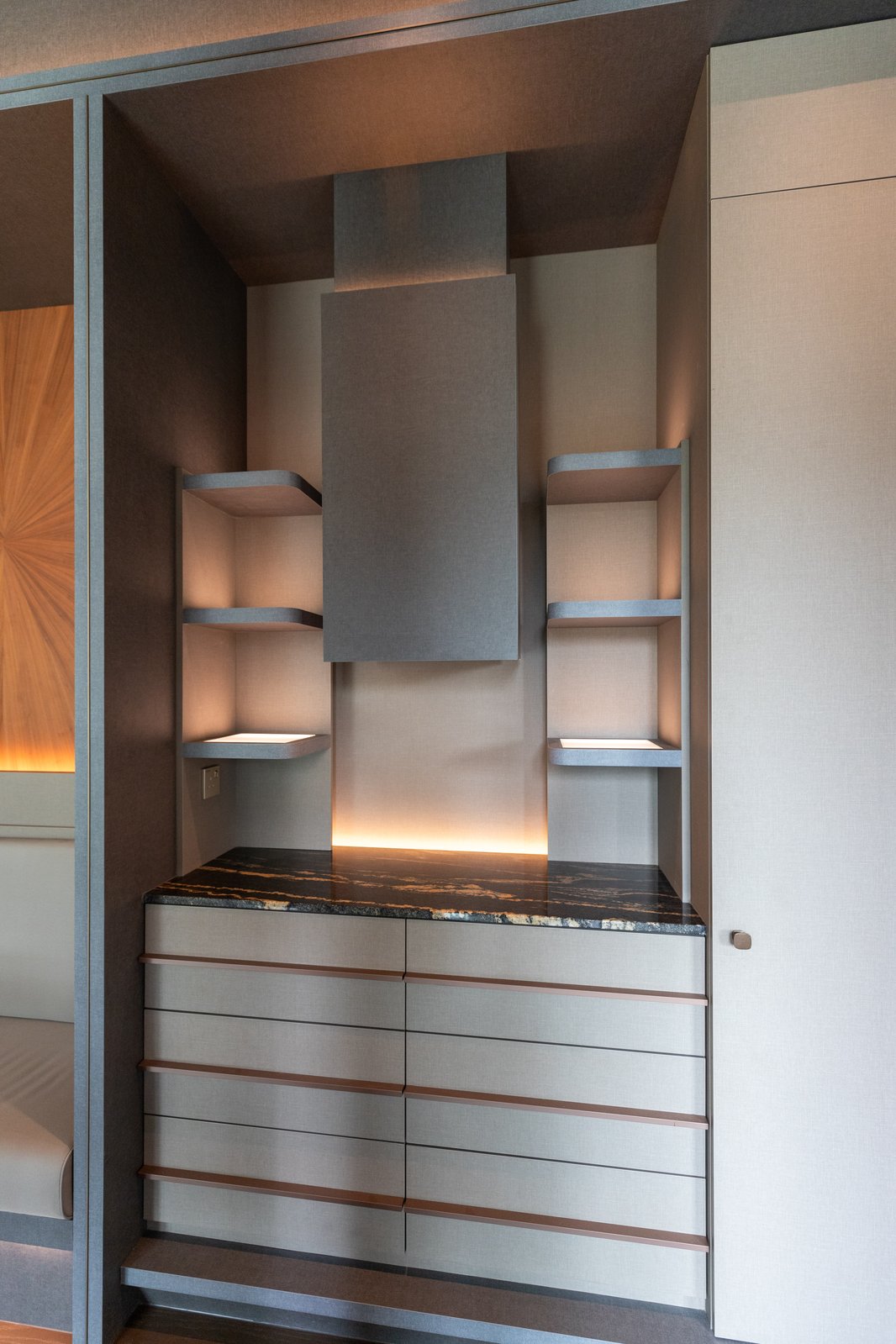
Repairing an old cabinet and rectifying newly imported luxury furniture are not the same task. A premium package can carry strict requirements for dimensions, veneer direction, laminate reference, colour, metal finish, door gaps, shadow lines, hardware, glass tint, stone pattern and lighting integration. The objective is not to make a defect merely “usable” — it is to restore the furniture as closely as practical to the approved requirement.
This matters most for premium interiors:
- Luxury residences
- Hotels
- Branded retail stores
- Executive offices
- Show apartments
- High-end restaurants and premium commercial interiors
A visible patch that might be acceptable inside a temporary site cabinet can be completely unsuitable on a luxury veneer feature wall. Rectification therefore requires judgement, not just tools.
The First Step Is Diagnosis, Not Cutting
When a component does not fit, the temptation is to modify it immediately. That can be a mistake. Before cutting, drilling or altering imported furniture, the team should establish why it does not fit.
- Factory manufacturing error
- Incorrect drawing revision
- Site measurement difference or building tolerance
- Wrong component allocation
- Installation sequence or adjacent-trade interference
- M&E conflict
- Shipping damage
A filler that appears 10 mm too wide may actually be correct according to the approved drawing — the real problem may be that an adjacent wall was constructed differently. If the installer cuts immediately, the modification hides the coordination issue instead of solving it. Experienced rectification begins with measurement and diagnosis.
Create a Clear Defect Record Before Rectification
When overseas manufacturers are involved, communication quality becomes critical. A useful defect record lets the factory understand the problem without physically visiting Singapore.
A good defect record can include:
- Project, floor, unit and room
- Furniture and component reference
- Drawing reference
- Description of the issue
- Actual vs required measurement
- Photographs and video where useful
- Proposed rectification
Instead of “Panel wrong, please send new one,” the local team can communicate: “Panel P-17 is 612 mm wide; verified site opening after finishes is 597 mm. Please confirm whether local trimming to 595 mm plus finishing allowance is acceptable, or whether replacement is required.” That difference can save days of back-and-forth.
Not Every Problem Needs a New Part From Overseas
Depending on the material, finish and design, suitable local modification may include trimming filler panels, adjusting internal shelves, re-drilling selected hardware positions, modifying concealed components, creating service openings, adjusting plinths or minor carpentry work. This is valuable when the modification will not compromise structural performance, the visible finish, manufacturer or warranty requirements, or the approved design intent.
A minor adjustment that takes an experienced local team a short time may otherwise require a replacement part to travel thousands of kilometres. But local modification should never become an excuse to alter premium furniture indiscriminately.
When Should the Original Factory Produce the Replacement?
Some components are much better replaced by the original manufacturer:
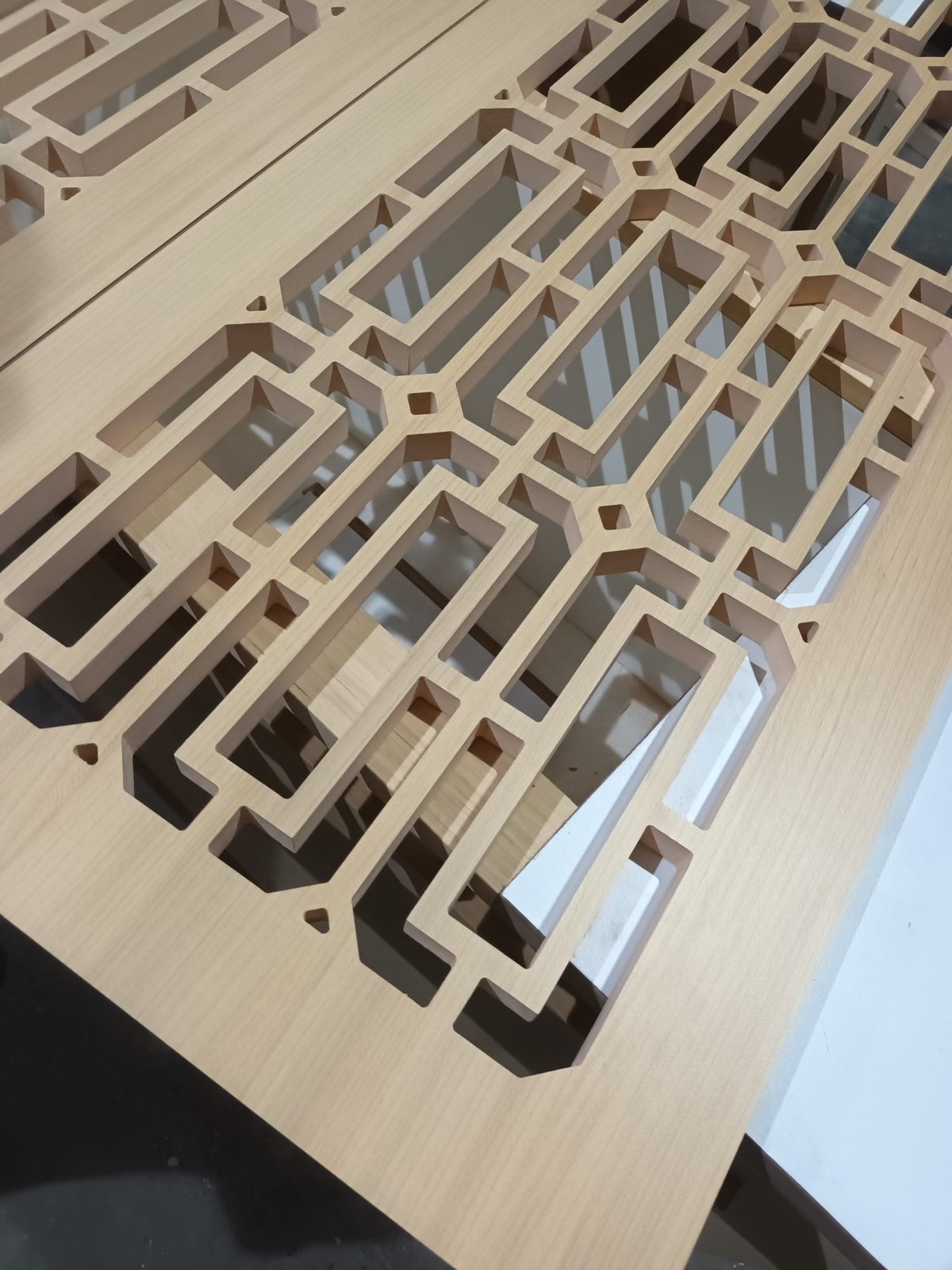
- Book-matched veneer panels
- Special lacquer colours
- Proprietary aluminium profiles
- Decorative metal finishes
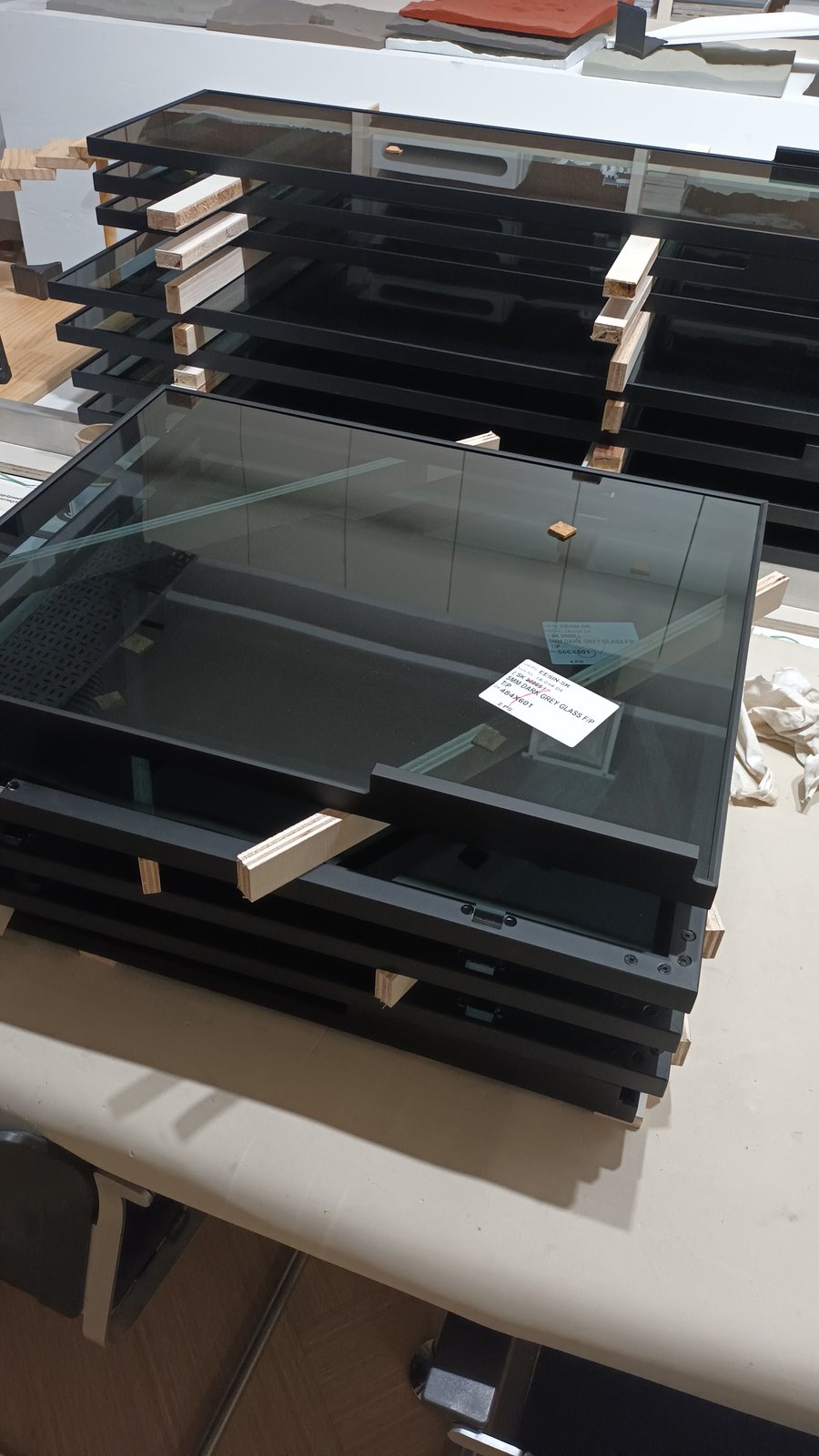
- Specially tinted glass
- Custom or branded hardware
- Factory-finished feature panels
The original factory may hold the exact material batch, CNC data, finish formulation, veneer stock and proprietary machinery. Attempting to reproduce such a component locally can create a visible mismatch. In those situations, the local team’s role changes from fabricator to technical coordinator — making sure the factory receives enough accurate information to manufacture the replacement correctly the first time.
Site Measurements for Replacement Parts Must Be Reliable
The last thing a project needs is for a replacement to arrive and still not fit. Before issuing dimensions, the installer should be clear whether the measurement is a finished, opening, manufacturing, cutting or clearance dimension — these are not always the same. The team should also indicate left/right orientation, the finished face, edge treatment, grain direction and drilling positions. A photograph with a tape measure helps; a properly marked-up drawing is usually better.
Missing Hardware Can Stop More Work Than Its Value Suggests
A small hardware component may cost very little, yet without it a large piece of furniture can remain incomplete — hinge plates, connector bolts, special screws, brackets, drawer fittings and shelf supports. Imported FF&E receiving should therefore include hardware control wherever practical, organised by project, floor, unit, room and furniture reference. Loose bags of unidentified fittings create avoidable delays.
Equivalent hardware can sometimes be sourced locally if it is a widely available standard product, but it must be checked for dimensions, load, hole pattern, function, finish and manufacturer compatibility. A component that “looks almost the same” is not necessarily interchangeable — for concealed hardware, a small difference can affect door position, drawer movement and soft-close performance.
Site Interfaces, M&E and Stone Each Have Their Own Rules
Local carpentry modification is particularly valuable at the interface between furniture and the building — wall and ceiling fillers, skirting interfaces, service openings, pipe penetrations, access panels and uneven-wall scribing. These dimensions are affected by final site conditions, so a capable local team can complete controlled adjustments during installation rather than returning every site-specific component to the overseas factory.
M&E conflicts — a socket behind a divider, a pipe where a shelf was planned, a driver without maintenance access — should be solved through coordination, not improvised holes. Stone components (vanity tops, counters, feature panels) may be trimmed or re-cut locally depending on material, thickness and visible location; local stone-processing capability can shorten the rectification cycle.
Track, Prioritise and Close Every Replacement
For larger FF&E projects, replacement items should not be managed only through messaging apps. A simple register can track the defect number, furniture reference, replacement required, responsible party, request date, factory production and shipping status, Singapore receiving, installation and closure date.
Prioritise replacement parts by programme impact:
- Priority A — prevents room handover
- Priority B — prevents another trade from proceeding
- Priority C — furniture functions but appearance is incomplete
- Priority D — minor cosmetic item for final snagging
Without prioritisation, a decorative shelf pin can be expedited while a missing wardrobe door keeps blocking handover. When replacement parts arrive, identification starts again — component reference, unit, room, dimensions, finish, orientation and condition should be verified before installation. And replacing the component is not always the end: doors, drawers, joints and shadow gaps may still need adjustment, silicone, touch-up and a lighting test so the whole piece — not just the replaced part — is restored.
A Practical Rectification Workflow
How Rongda Pacific Supports Imported Furniture Rectification
Depending on project requirements, Rongda Pacific Pte Ltd can support Singapore warehouse receiving, imported-furniture inspection, defect documentation, site measurement and drawing mark-ups, communication with overseas manufacturers, furniture assembly, local carpentry modification, site-interface adjustments, replacement-part coordination, hardware assessment, stone fabrication and modification, glass and metal coordination, Builder’s Works, making good, replacement-component installation, snagging and final rectification. This is particularly useful for overseas manufacturers that produce excellent furniture but need reliable Singapore-side technical support after their products leave the factory.
Frequently Asked Questions
Can imported furniture be modified locally in Singapore?
Depending on the material, finish, design, manufacturer requirements and nature of the modification, selected components may be suitable for controlled local modification.
Is it always faster to repair a wrong part locally?
No. Some specialised finishes and components are better replaced by the original manufacturer. The correct decision depends on quality, technical feasibility and programme.
Can Rongda Pacific measure replacement components for an overseas factory?
Yes. Depending on scope, site measurements, photographs, drawing mark-ups and component information can be prepared to support replacement-part coordination.
Can you replace missing furniture hardware locally?
Standard or compatible hardware may sometimes be locally available, but technical compatibility should be verified before substitution.
Can damaged stone furniture components be modified in Singapore?
Depending on the stone, thickness, required cut and condition, selected local stone fabrication or modification may be possible.
What if the furniture was built from the wrong drawing revision?
The team should first establish the approved, production and site-construction revisions before deciding rectification and responsibility.