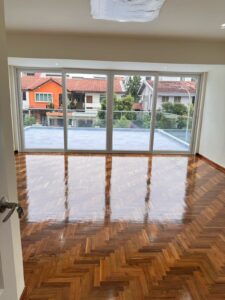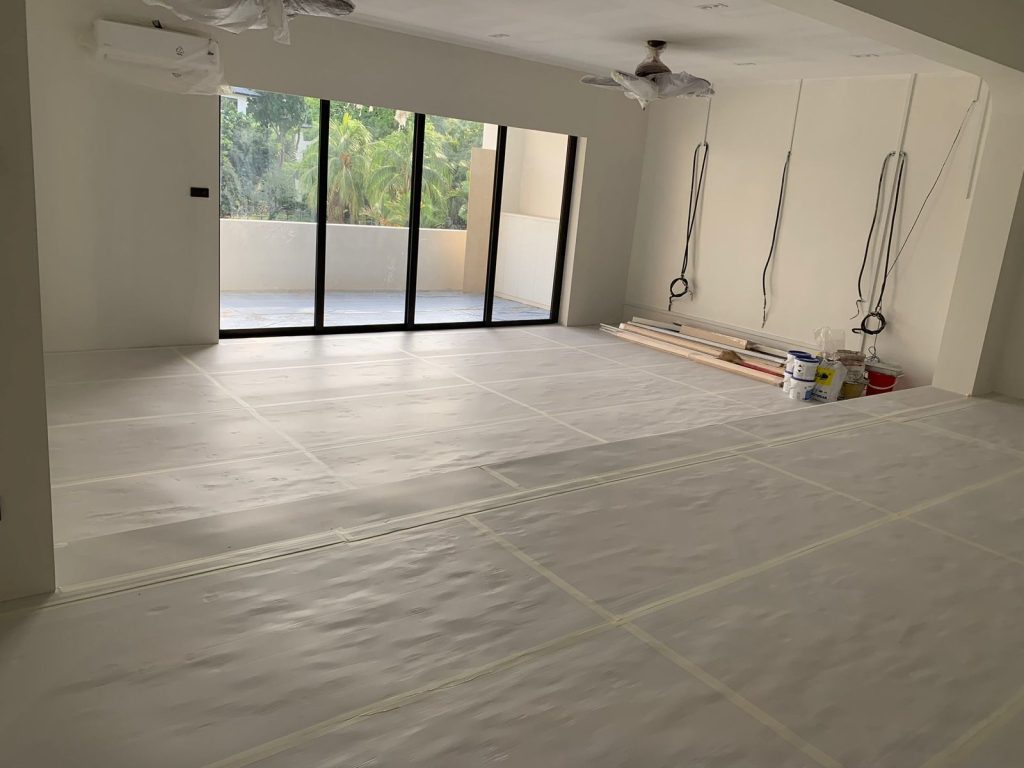
Level 8 is finished. The wardrobes are installed, aligned and covered, the stone tops are boarded, the room looks like the brochure. Level 9 is still being snagged and Level 10 is still receiving deliveries. Over the next three weeks, roughly forty people will walk through Level 8 to reach Level 10, one of them will put a ladder against a lacquered door, another will pull the protection off a vanity to test a tap and leave it off, and the cleaning crew will finish the job with an abrasive pad.
Covering the furniture was the easy part. What decides whether Level 8 is still finished at handover is the control system around it: who is allowed in, under what permission, what state each room is declared to be in, when protection comes off, and who checks it in between. This is a site-management problem, not a materials problem.
The material side — which protection suits which finish, why tape must never touch lacquer, why stone needs impact protection rather than a sheet — is covered in detail in our guide to imported furniture protection after installation, and the pre-installation side in furniture protection during installation. This article is about the zoning, access permits, inspection rounds and staged de-protection that make those materials actually work on a live site.
Physical Covering Alone Does Not Protect Anything
If thirty workers keep entering a room every day, the covering only changes what gets damaged, not whether damage happens. Protection material is a passive defence against incidental contact. It is not a defence against a trade that needs to work in that room, moves the protection to do it, and does not put it back.
The projects that arrive at handover with genuinely undamaged FF&E are the ones that treat a finished room as a controlled area with a declared status, an entry procedure and an owner — the same way a commissioned plant room or a completed clean area is treated.
Give Every Room a Declared Status
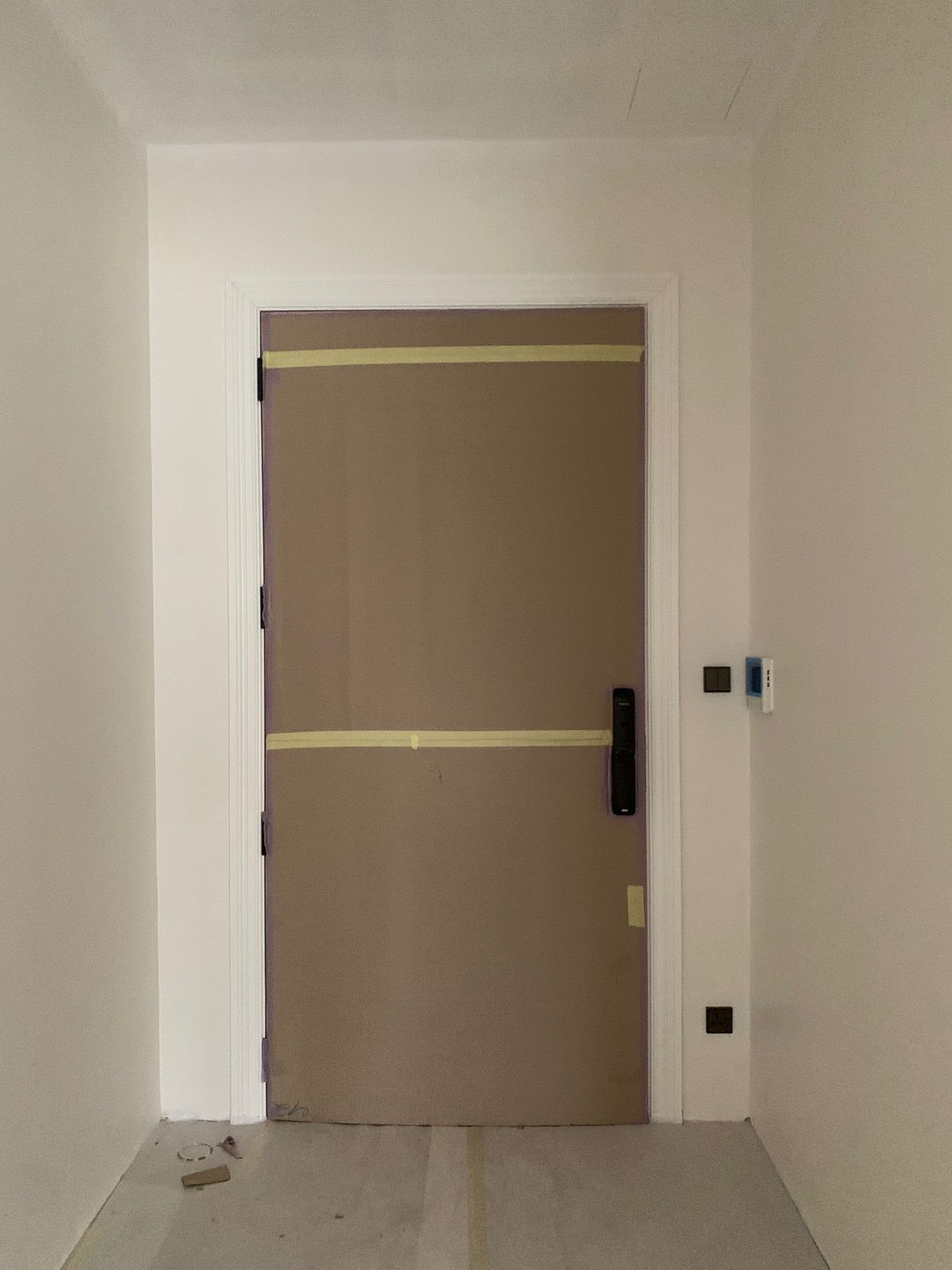
The most effective single change on a large FF&E project is also the cheapest: give every room one of four statuses, display it at the door, and make the status mean something in practice.
A four-state room status system that site teams actually follow:
- Open Work Area — furniture installation not yet complete; normal site access applies
- Restricted Finished Area — FF&E installed and protected; access only for planned, approved works
- Final Inspection Area — snagging and approved rectification only; no general trades
- Handover Ready — no uncontrolled construction activity of any kind
The value is not the label. It is that a status forces a decision: somebody has to declare when a room moves from open to restricted, and that declaration is the moment protection, access control and responsibility all start. Without it, rooms drift into “finished” without anyone taking ownership of keeping them that way.
Close Zones Floor by Floor, Not Room by Room
On large projects it is far easier to defend a floor than a scattered set of rooms. A hotel or serviced apartment tower can run Level 8 restricted, Level 9 in snagging and Level 10 in active installation, with the lift lobby and stair access on each level controlled accordingly. That keeps completed FF&E and active construction physically apart instead of interleaved.
It also makes the protection inspection round tractable. Walking one restricted floor daily is a routine; hunting for eleven finished rooms distributed across four levels is not, which is why in practice it stops happening by the second week.
Other Trades Will Need to Come Back — Give Them a Procedure
Sometimes a trade genuinely has to return to a restricted room. An electrician needs the socket behind the cabinet. The M&E contractor has to test equipment. The AV contractor still has an interface to complete. Refusing access is not realistic and is not the point; the point is that the return should be a controlled event rather than an unannounced one.
Re-protection deserves the explicit line item. A room gets opened for consultant inspection, client review, photography, snagging or testing; the covering comes off, the visit ends, everyone leaves — and nothing goes back on. The room then sits exposed for another week with its status board still saying “Restricted”. Responsibility for reinstating protection after temporary removal has to be defined, not assumed.
Inspect the Furniture Before You Protect It — and Photograph It
Do not cover a defect and forget it. The sequence that avoids that is short and worth enforcing as a rule.
For high-value FF&E, the photographs should capture door faces, stone tops, glass, hardware and the overall room condition. That record answers the only question that matters when damage surfaces later: was this present when the installer finished, or did it happen afterwards? The purpose is not primarily to assign blame — it is to get to the correct rectification route quickly, because an installation defect, a manufacturing defect and post-installation damage have different owners, different lead times and different fixes.
Record When Protection Went On
Long-term temporary protection is forgotten with remarkable consistency. A simple register per room — furniture reference, protection type, date applied, condition before protection, planned removal date — turns it into a tracked item. On a large hotel or residential development this is what stops a covered wardrobe sitting untouched for five months and being discovered, wet, during de-protection week.
This pairs naturally with room-by-room asset tagging at handover: the same room and item references carry through from protection to snagging to the handover schedule.
Protection Needs Inspecting Too
Temporary covering goes loose, torn, wet, dirty or displaced. Once it does, the furniture underneath is no longer protected — but the room still looks protected from the doorway, which is exactly why nobody notices. Regular site walks through restricted zones should be checking the protection itself, not only the presence of protection.
What a protection inspection round is actually looking for:
- Coverings that have slipped, torn or been partly removed and not reinstated
- Wet cardboard or foam in contact with a finished surface
- Dust that has worked its way between a sheet and a high-gloss panel
- Tape that has migrated onto a finished face rather than onto protection material
- Protection blocking air-conditioning grilles, appliance vents or access panels
- Rooms whose displayed status no longer matches their real condition
Wet protection is the one to act on immediately. If cardboard or foam becomes wet, leaving it against the furniture lets moisture mark finishes, affect timber-based substrates, create odour and hide the water damage underneath it. The source has to be found and the furniture checked — our guide to humidity and environmental control for imported furniture covers what that exposure does to the materials involved.
Trapped dust is the quieter version of the same failure. Fine construction dust is abrasive; once it is between a protective sheet and a glossy panel, ordinary movement grinds it into the finish. Protection only works when the surface and the material are both clean when they meet.
Protect the Floor and the Route, Not Only the Furniture
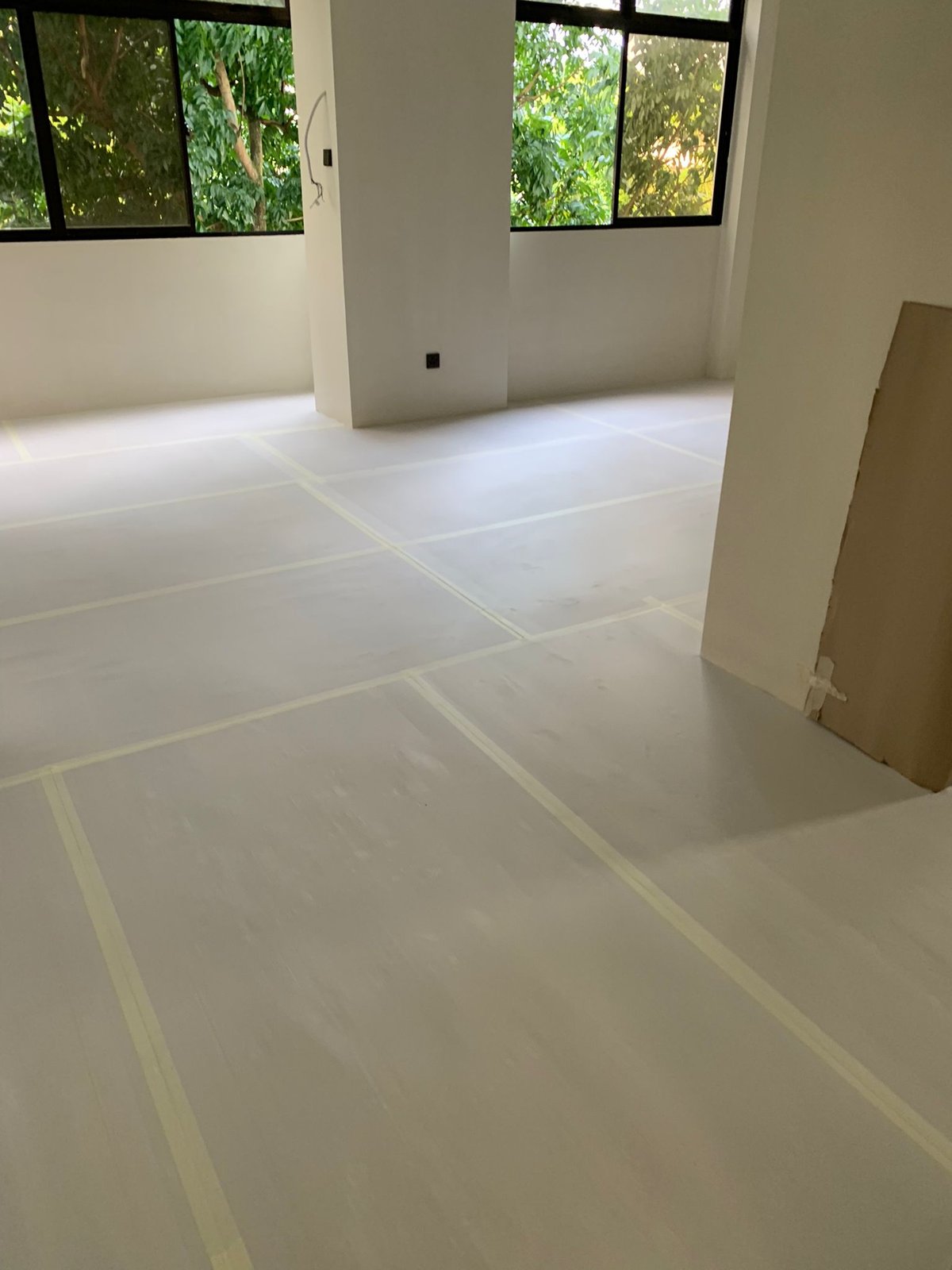
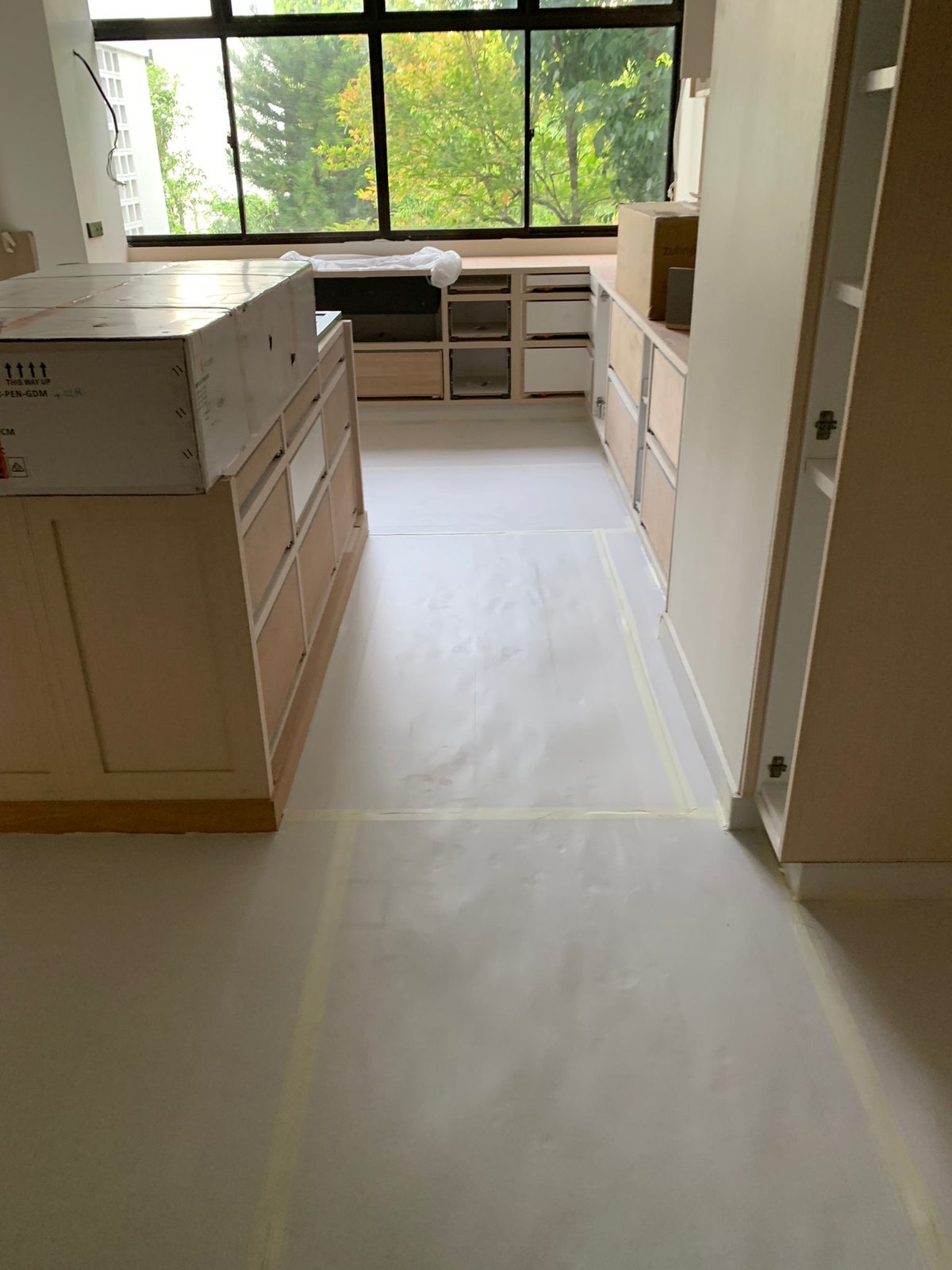
Heavy furniture, completed flooring, trolleys, ladders and tool boxes all occupy the same square metres. Floor protection around wardrobes, reception counters and built-in furniture prevents damage to the floor and reduces the chance that unstable equipment tips into adjacent cabinetry. The delivery and access route into a restricted zone deserves the same treatment — most damage on a finished floor happens in transit, not at the destination.
Protection also has to stay out of the way of the building's own systems. Temporary covering should never blind an air-conditioning grille, electrical ventilation, an appliance vent or an access panel, and it must be removable where functional testing is required. Integrated appliances — oven, refrigerator, wine chiller, dishwasher — need protection from dust, impact, paint and debris, but the protection strategy has to respect manufacturer requirements and ventilation if the appliance is energised. Our guide to integrated appliance installation in imported cabinets covers that interface in detail.
Commercial and Partial Handover: Draw the Boundary Physically
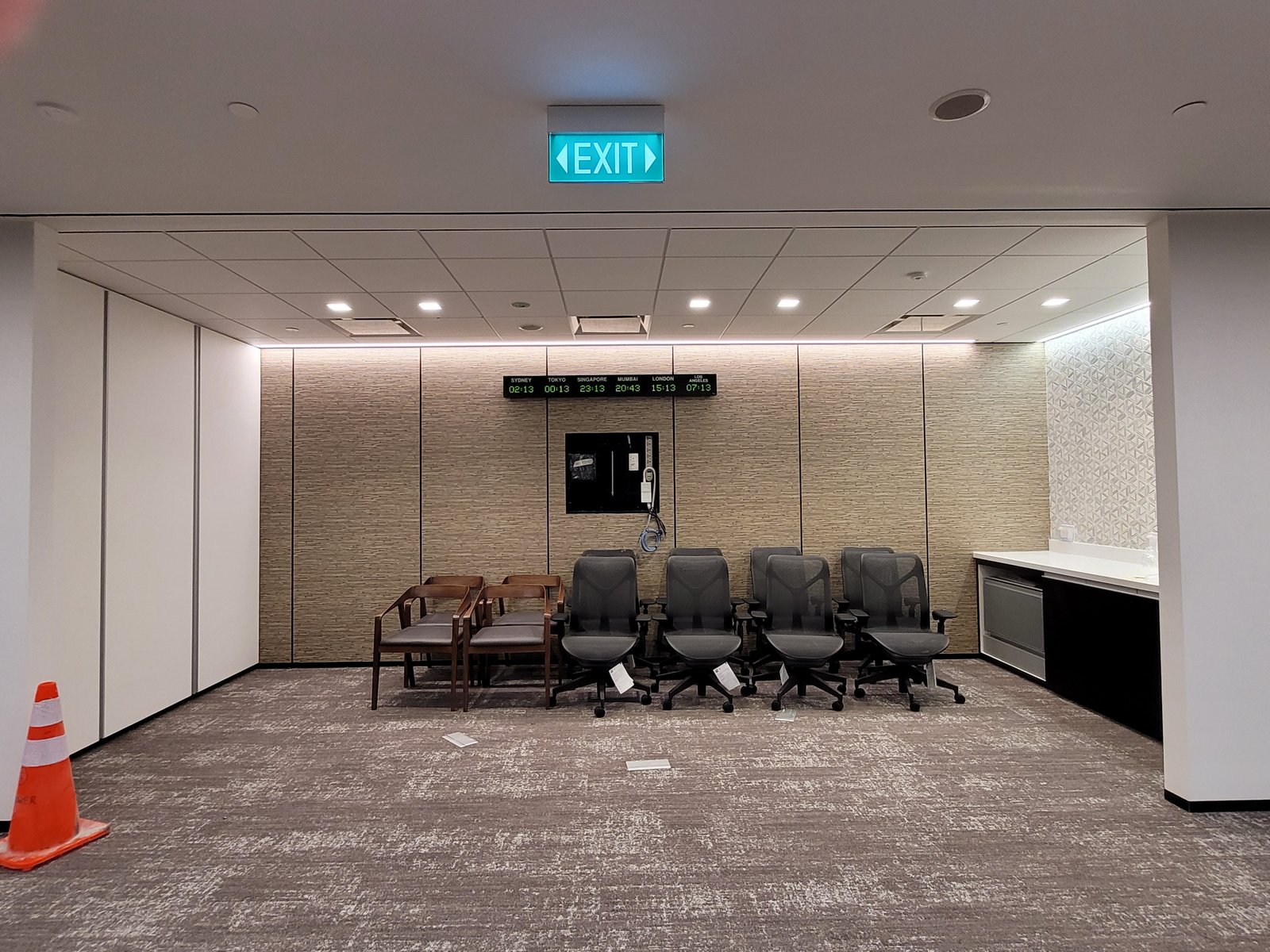
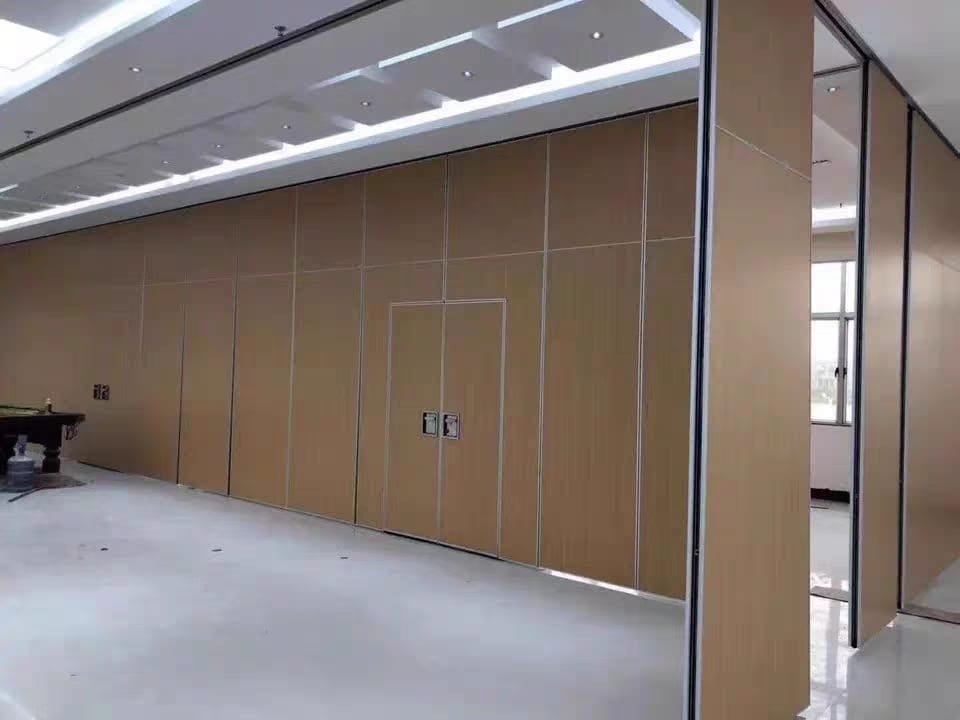
Commercial spaces frequently hand over in phases. One office zone is operational while the next is still under construction, and the boundary between them is where completed furniture gets damaged. A completed area has to be separated physically and operationally from active works, material storage and worker circulation — not merely on the programme.
Where the boundary is real, protection can be reduced early in the released area and concentrated at the interface. Where it is notional, protection has to stay on everything for longer, which costs money and delays snagging. Our guide to office FF&E installation and commercial fit-out covers how these phases are usually structured.
De-Protection Is a Stage, and It Has a Rate Limit
Removing protection too early re-exposes the furniture. Removing it too late hides defects, adhesive residue and moisture problems until there is no time to fix them. The controlled sequence matters, and so does the pace.
The rate limit is the part most programmes miss. Do not strip protection across an entire project if the inspection team can only review a handful of rooms a day. De-protect at the rate the inspection, rectification and cleaning capacity can absorb, following the handover sequence — everything not yet reached stays protected, which is exactly what protection is for. This is the same logic our guide to FF&E snagging and defect rectification applies to the snagging list itself.
The Last Cleaning Operation Is a Real Risk
A surface that has survived months of construction gets scratched during final cleaning more often than anyone expects. The usual causes are abrasive pads, dirty cloths, over-strong chemicals and excess water, and the usual root cause is treating final cleaning as construction cleaning performed by whoever is available.
Cleaning chemicals affect lacquer, metal, stone, leather and laminate differently. Where the furniture manufacturer has issued cleaning instructions, they should reach the cleaning team rather than staying in the O&M file. It is worth briefing this explicitly before de-protection week starts.
Repeated Damage Is a System Problem, Not a Repair Backlog
If one door is scratched, it was an accident. If two dozen doors are scratched at the same stage, the protection system has failed and repairing them one by one will not stop the next two dozen. That pattern should trigger an investigation into protection material, access control, cleaning method, other-trade activity and the delivery route.
Prevention is worth more than rectification capability, even good rectification capability. Rongda Pacific can support local carpentry modification, spray-paint rectification, and stone and glass replacement coordination — and every one of those adds labour, time and risk. Imported lacquer panels and bespoke veneer are particularly punishing: a replacement front means re-ordering against the original finish specification, freight and a lead time the project usually does not have. Bookmatched stone is worse again, because a replacement slab has to match a sequence that may no longer exist. Special glass can be replaced, but not quickly.
Damage categories worth tracking separately, because the owner differs:
- Installation defect — for example, a door not correctly aligned at completion
- Manufacturing defect — for example, an incorrect or faulty finish from the factory
- Post-installation damage — a scratch or chip caused after the furniture was signed off
- Protection-system failure — repeated damage of the same type, in the same stage, across many rooms
Hotels: Standardise the Detail So It Can Be Inspected
A 300-room hotel contains thousands of protected surfaces. Protection has to be standardised, easy to inspect and consistent between teams, because a good method repeats room by room — and so does a poor one. Establishing a standard detail per item type is what makes an inspection round a five-minute check rather than a judgement call.
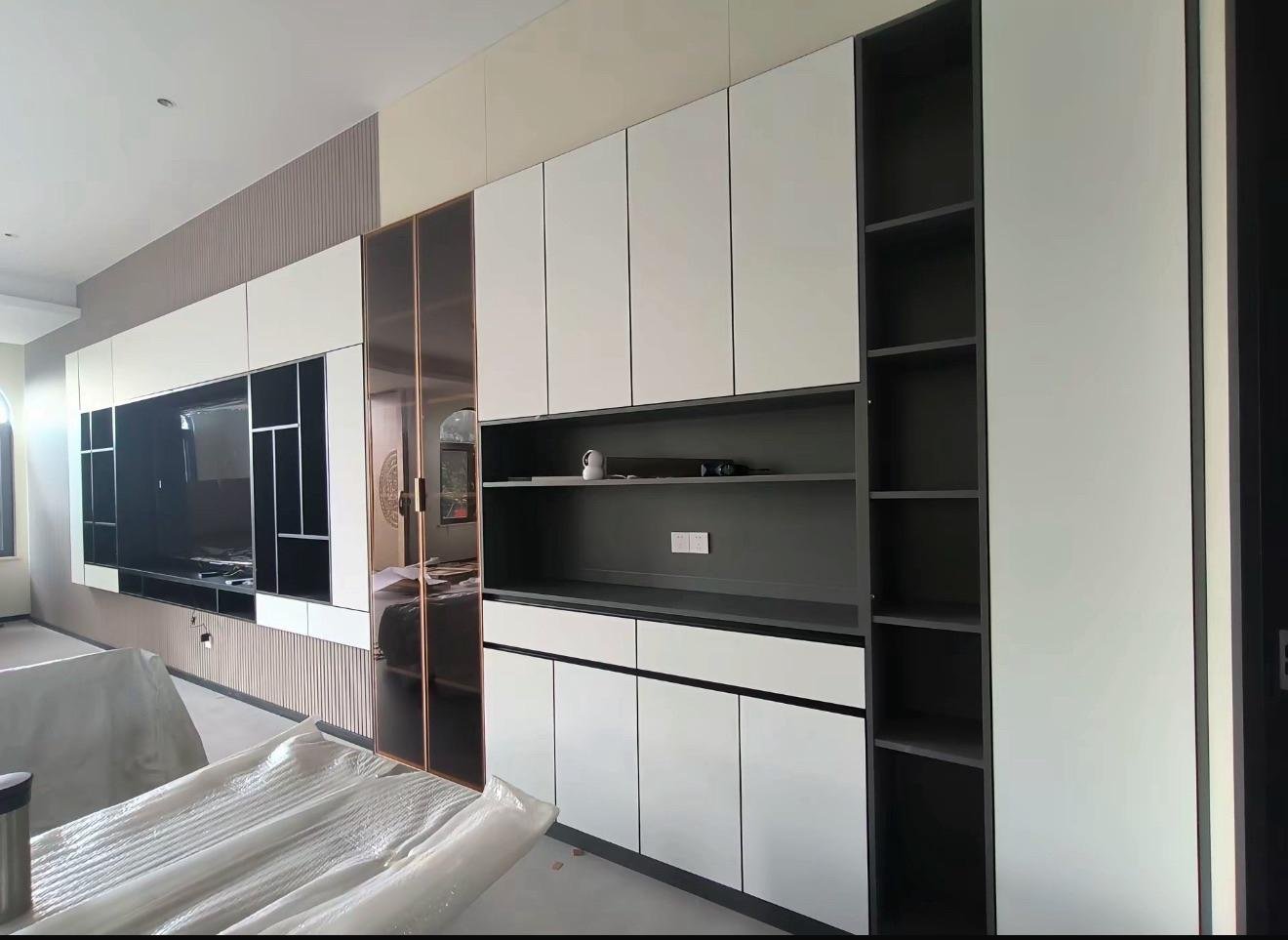
For example, every guestroom wardrobe receives door-face protection, edge guards, internal dust protection and track protection; every vanity receives a stone-top board, edge protection and a basin cover. Once the detail is fixed, an inspector can see a deviation from the doorway. Our guide to hotel FF&E installation for imported furniture covers how this fits the wider room rollout.
Luxury Residences: Temporary Work Should Look Like the Final Work
In a high-end home close to handover — or already partly occupied — protection still has to be clean, controlled, non-damaging and easy to remove. Rough site wrapping in a finished residence reads as damage even when it is not, and poor-quality protection material can itself mark premium finishes. The standard of the temporary work should reflect the standard of the permanent work.
Late in the programme the strategy usually changes as well. Once consultant inspection is complete but the client has not taken possession, heavy construction protection can give way to lighter final protection sized to who still needs access, how long the gap is and what the remaining risk actually is.
Put Protection Status on the Handover Checklist
Temporary protection should appear on the same room-by-room checklist as everything else that has to be true before a room is released.
A room-by-room handover line that includes protection:
- Furniture installation — complete
- Functional testing — complete
- Protection — applied, then removed on the recorded date
- Final inspection — passed
- Outstanding defects — closed
- Handover — ready
This is also where DLP begins. A clean, well-documented final condition is what makes after-sales assessment accurate later: when a scratch is reported two months after handover, knowing the condition at handover, the handover photograph, the location and the furniture reference is the difference between a quick answer and a dispute. Our guide to after-sales support and the defect liability period covers what that record is used for, and final inspection and project handover covers the release itself.
How Rongda Pacific Supports Zoned Handover Control
Rongda Pacific Pte Ltd works as the Singapore-side installation and handover partner for overseas furniture manufacturers and main contractors. On the handover-control side, that includes setting the protection standard per item type, applying and maintaining protection on installed FF&E, holding the room status and protection register, attending controlled trade access into restricted areas, running protection inspection rounds, planning and executing staged de-protection against the snagging and cleaning programme, and carrying out local rectification where damage has occurred.
The aim is straightforward: the room the installer finished should be the room the client receives, and everything between those two moments should be somebody’s declared responsibility rather than an assumption.
Frequently Asked Questions
What is zoned handover control on an FF&E project?
It is the practice of giving each completed room or floor a declared status — open, restricted, final inspection or handover ready — with a defined entry procedure, an owner, and rules on when protection is applied and removed. It turns protection from a passive covering into a managed process.
How do we let other trades back into a finished room without causing damage?
Use a short access procedure: a request naming the room and work, a protection check before entry, attendance by the furniture contractor for high-value items, a condition check on completion, and a named party responsible for reinstating protection afterwards. The last step is the one most often skipped.
When should protection be removed?
After heavy works and major cleaning in that zone are complete, and at a rate the inspection, rectification and cleaning team can actually absorb. Stripping an entire project at once leaves finished furniture exposed while it waits for an inspector.
Who is responsible for damage to installed furniture before handover?
It depends on the stage and cause, which is why photographing the condition at protection stage matters. Installation defects, manufacturing defects and post-installation damage have different owners and different rectification routes even when the physical repair looks similar.
Does protection need to be inspected while it is in place?
Yes. Covering goes loose, torn, wet, dirty or displaced, and once it does the furniture is exposed while the room still looks protected. Wet protection in contact with a finished surface should be removed and the cause investigated immediately.
How is this different from protecting the furniture itself?
Choosing the right protection material for each finish is a materials question, covered in our guide to imported furniture protection after installation. Zoned handover control is the site-management layer around it: room status, access permits, inspection rounds and the de-protection sequence.
Can protection be reduced for a partial handover?
Yes, provided the boundary between the released area and active works is physical rather than notional. Where the separation is real, protection can be reduced in the released zone and concentrated at the interface.
What should a room-by-room handover checklist include for protection?
Protection applied and the date, protection removed and the date, condition recorded before protection, final inspection result, outstanding defects closed, and handover readiness — using the same room and item references as the asset tagging schedule.