
The container is opened, the packing looks clean, the veneer is flat and the lacquer doors are aligned exactly as they left the factory. Two weeks later, on a site with no air-conditioning running and screed still drying in the next room, a tall wardrobe door starts catching on its neighbour, one veneer panel no longer reads flat under raking light, and a hinge shows the first bloom of surface rust. Nothing was dropped and nothing was mishandled. The furniture is simply reacting to an environment that is nothing like the one it was built in.
Related service: FF&E installation services in Singapore.
Imported FF&E does not stop behaving like a material the moment it passes factory QC. Timber, veneer, engineered board, adhesive, upholstery and leather all continue to respond to temperature and moisture, and Singapore’s warm, humid climate is often very different from the workshop, warehouse and packing hall the furniture came from. Between those two points sits a container that can spend weeks cycling between day and night temperatures, tropical and temperate regions, and open port storage.
This article is about managing that transition — what acclimatisation actually means, what to look for when a container is opened, how warehouse and room conditions affect finished furniture, and when environmental readiness should be treated as part of "room ready" rather than an afterthought. It sits alongside our guides to container unloading and FF&E receiving and warehouse receiving and quality inspection, which cover the logistics side of the same handover.
What Acclimatisation Actually Means
Acclimatisation is the process of letting materials and completed furniture components adjust to the conditions where they will be stored or installed. It matters most for anything that exchanges moisture with the surrounding air: solid timber, natural veneer, engineered timber panels, MDF-based components, plywood, upholstery, leather, and certain adhesives and coating systems.
It does not mean opening every carton and leaving furniture exposed for a fixed number of days. The correct approach depends on the material, the packaging, the site condition, the storage condition and the manufacturer’s own recommendation. The underlying principle is narrower and more practical: avoid exposing sensitive furniture to sudden, uncontrolled environmental change where that change can reasonably be managed.
Why Singapore’s Climate Is the Variable That Changes
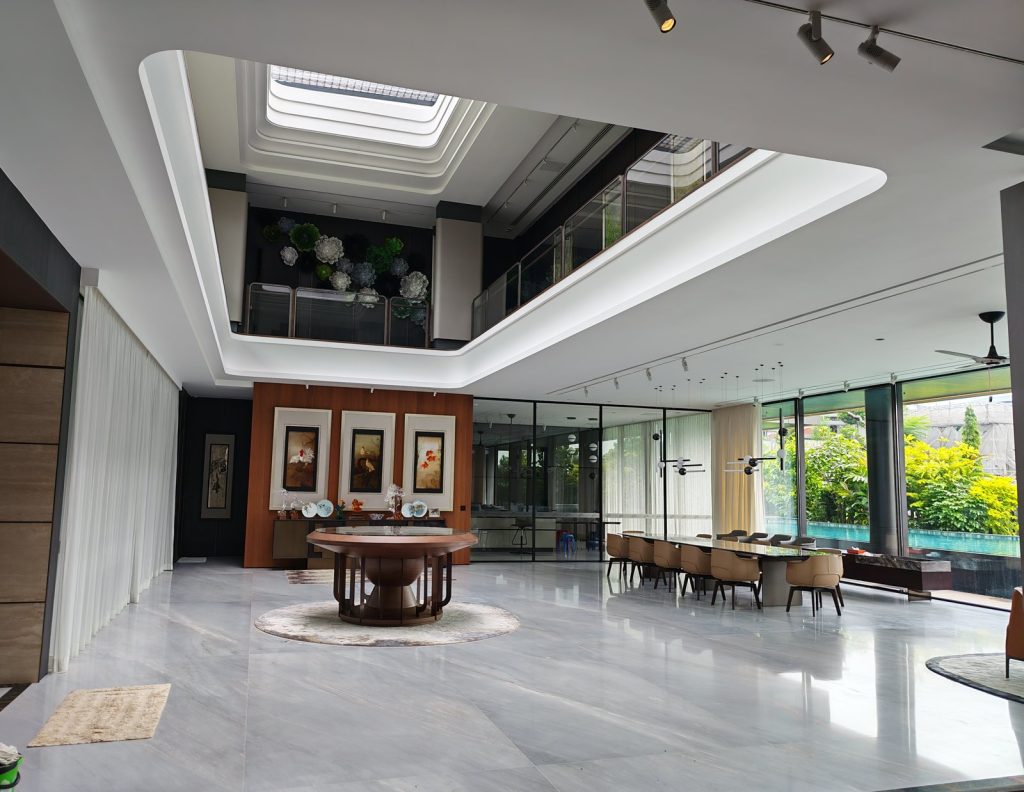
Singapore is warm, humid and wet, and its interiors are air-conditioned. That creates a significant gap between two environments the same piece of furniture will pass through: an active construction area with open windows, wet trades and no cooling, and a completed interior running at a stable, conditioned temperature. A room can be physically finished and still be nothing like the condition the furniture will eventually live in.
That gap matters because many furniture materials contain or interact with moisture. Timber-based products in particular can respond dimensionally when the environmental moisture around them changes, and the change happens whether or not the project programme has allowed for it.
Timber Is Hygroscopic, and Engineering Only Reduces the Effect
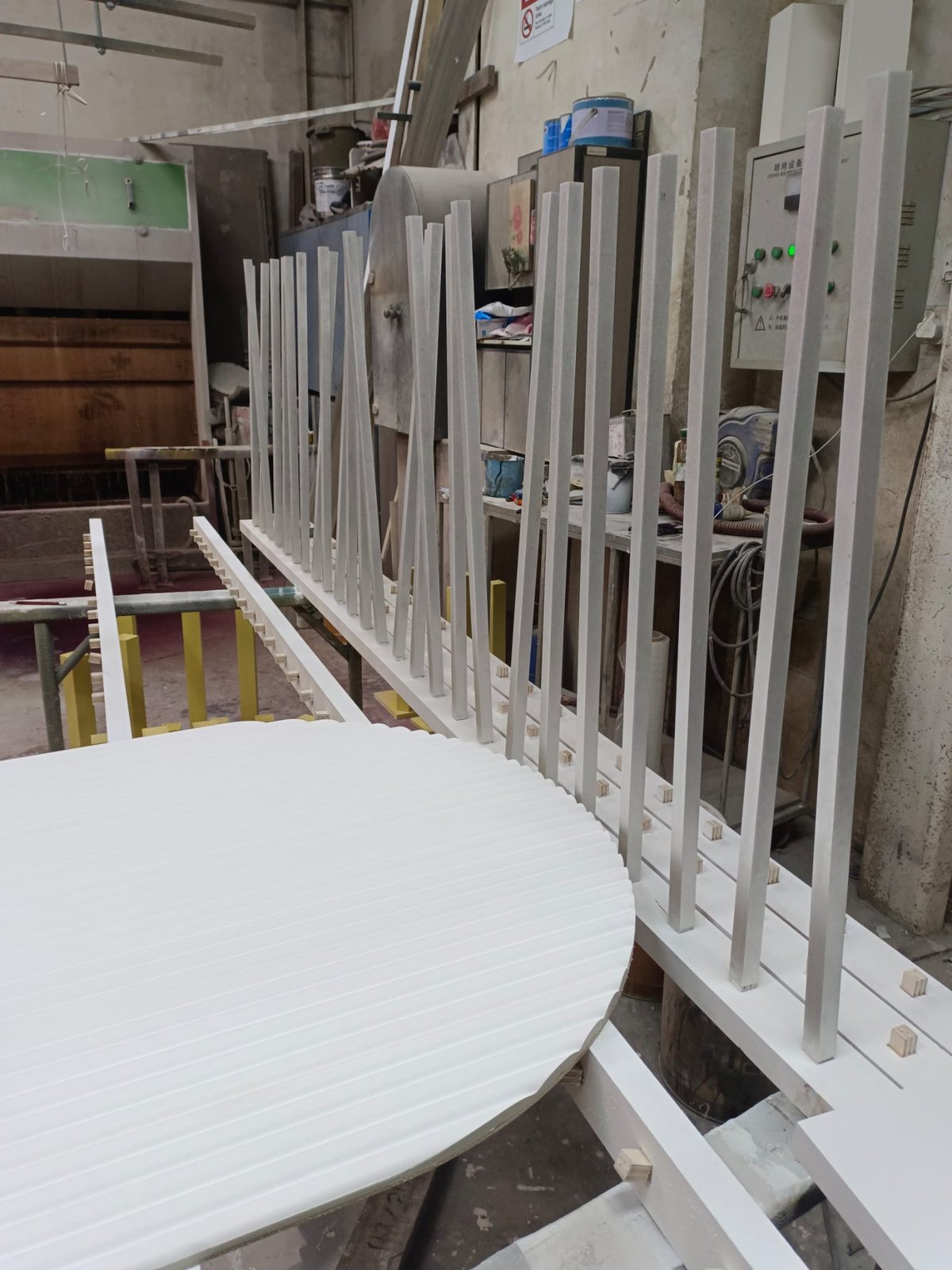
Timber exchanges moisture with the surrounding air. When humidity changes, it gains or loses moisture until it gradually approaches equilibrium with its surroundings, and that can influence width, thickness, flatness and joint behaviour. How much movement occurs depends on species, grain direction, component size, construction and surface finish.
Engineered furniture products are designed to improve stability, and they do — but improved is not the same as immune. A cross-laminated or layered panel moves less than a wide solid board; it does not move by nothing.
Materials worth treating as environmentally sensitive on an imported FF&E package:
- Solid timber components, especially wide or long members
- Natural veneer over MDF or plywood substrates
- MDF-based spray-painted and lacquered panels
- Plywood carcasses with exposed or lightly sealed edges
- Upholstery, fabric panels and leather
- Adhesive-dependent assemblies and edge treatments
Veneer Combines Materials, So It Combines Behaviours
Natural veneer is a thin layer of real timber bonded over MDF, plywood or another engineered substrate. The finished panel is generally more stable than a large solid-timber board, but it is still a sandwich of different materials and adhesives, and extreme moisture variation or unsuitable storage can contribute to movement, surface irregularity, edge stress or adhesion concerns.
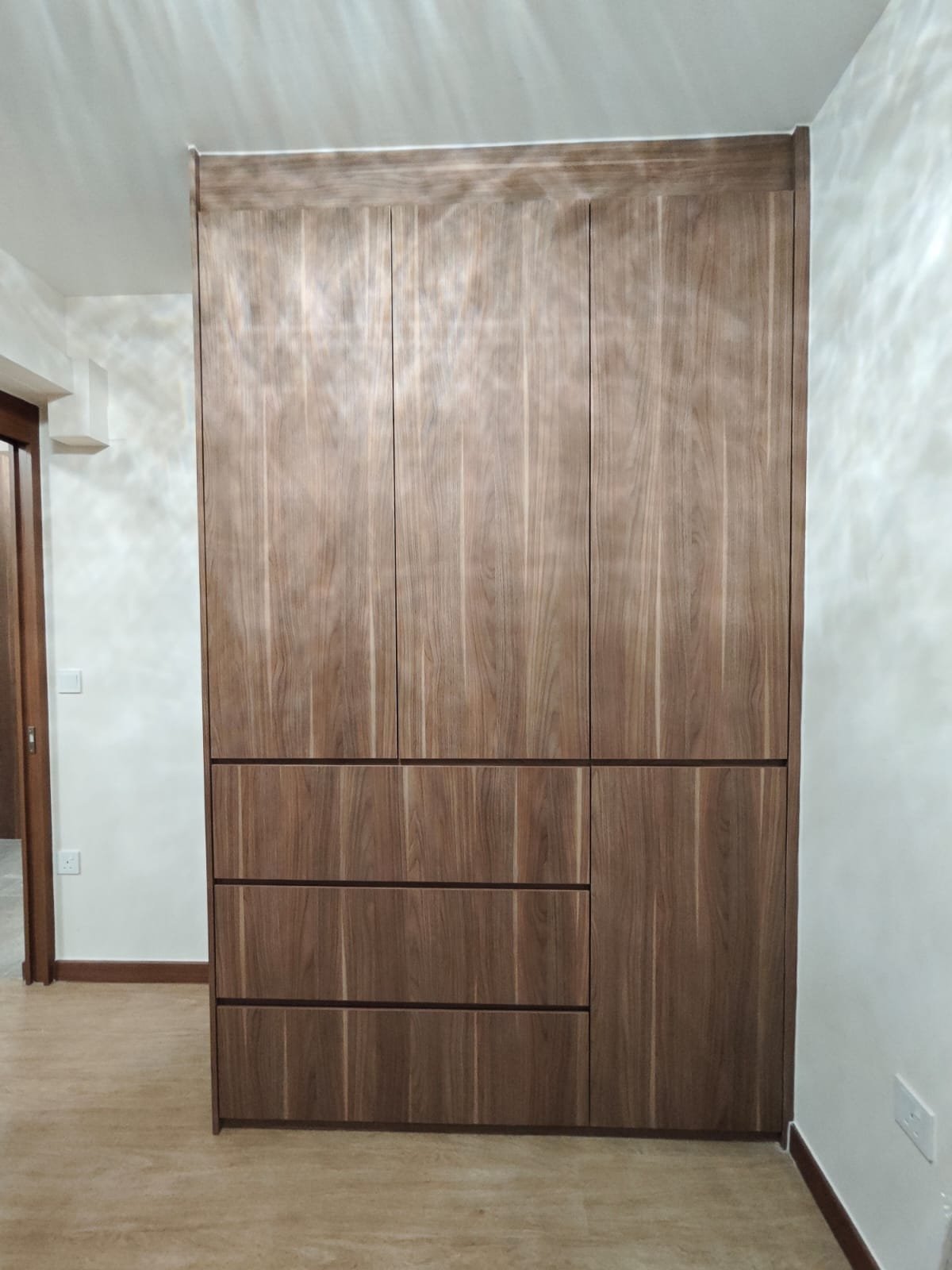
For high-value veneer FF&E — feature walls, tall wardrobe fronts, bookmatched panels — controlled storage and installation conditions are worth the coordination they cost. These are also the surfaces where a small change is most visible, because the eye reads a long flat plane under raking light far more critically than it reads a small cabinet door.
Plywood Is Stable, Not Immune
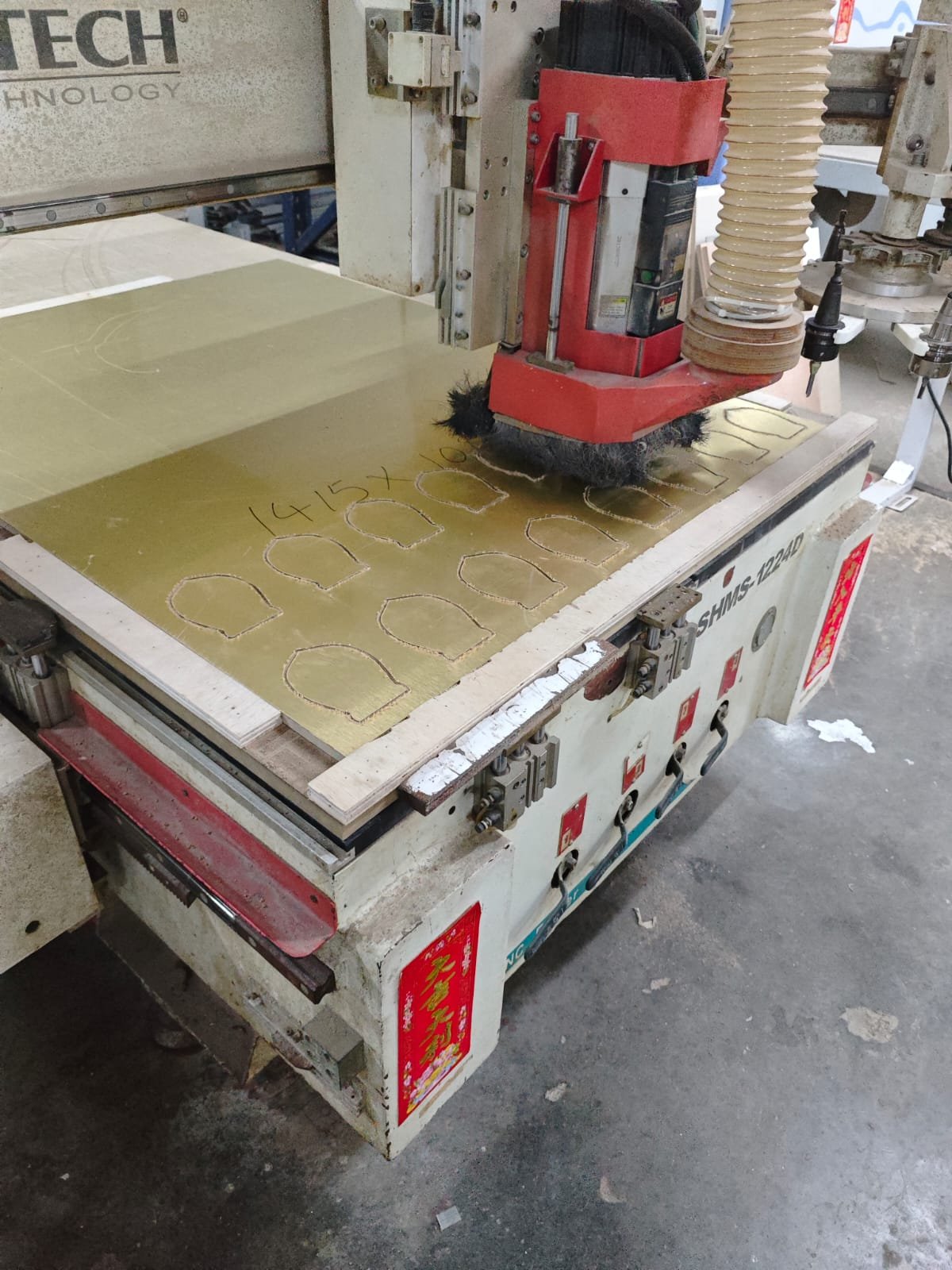
Plywood is widely used for cabinetry because cross-laminated construction gives better dimensional stability than solid timber in most applications. That is a reason to specify it, not a reason to stop protecting it. Prolonged or excessive moisture exposure can still affect edges, cause surface swelling, stress adhesives or damage the finish, and the actual performance depends heavily on plywood grade, adhesive system, edge treatment, surface finish and how long the exposure lasted.
Our guide to plywood for tropical joinery — glue line and core quality covers why the adhesive system and core matter so much in this climate. A high-quality panel still deserves appropriate storage and installation conditions.
MDF-Based Painted Furniture Needs Dry Conditions Most of All
Spray-painted and lacquered furniture usually sits on an engineered panel substrate. Kept dry and stable, that substrate gives the flatness and smooth surface that make a good lacquer finish possible. The vulnerability is at the places where water can reach the core: cut edges, damaged coating, unsealed openings and service cut-outs.
Once a substrate swells, refinishing the surface alone will not solve the underlying problem. This is the single most important reason storage condition matters even for furniture that looks completely sealed — the visible face tells you almost nothing about what the back edge has absorbed.
A Shipping Container Is Its Own Climate
A container is not a climate-controlled showroom. Across an international voyage it experiences day and night temperature swings, different geographic regions and periods of open port storage, and temperature fluctuation can produce condensation inside the container environment. This is why competent furniture export packing uses moisture control materials, protective wrapping, appropriate packaging and ventilation strategies where suitable.
None of that removes the receiving team’s job. When the container reaches Singapore, someone has to look for the evidence.
Moisture indicators worth checking as the container doors open:
- Visible condensation on the container roof, walls or cargo
- Damp or softened carton surfaces
- Water staining on packaging or crates
- Wet timber crates and pallets
- Unusual odour when the doors are first opened
- Corrosion or oxidation on exposed metal parts and fixings
None of these automatically mean the furniture is defective. All of them should trigger closer inspection, and a package suspected of moisture exposure should not simply be absorbed into general warehouse inventory where nobody will find it again until installation day.
Know Which Stage the Moisture Came From
Moisture reaches furniture at different stages, and the stage changes the response. Shipping-stage exposure points to container condensation or packing failure. Warehouse-stage exposure points to ventilation, roof condition or floor contact. Site-stage exposure points to unfinished wet trades, washing, rain through unglazed openings or simply high ambient humidity in an unconditioned room.
Understanding when the exposure happened determines whether the item should be inspected, whether it can dry safely, whether the substrate is damaged and whether a claim or replacement is justified. It also determines who the conversation is with — the factory, the freight forwarder, the warehouse or the main contractor.
The Warehouse Is Not a Neutral Environment
Imported furniture may sit in Singapore storage for days, weeks or months before installation. Over that period the warehouse is doing something to the furniture whether or not anybody has decided what. Cleanliness, ventilation, roof condition, floor moisture, distance from external openings, rain exposure, air circulation and storage against damp walls all matter, and none of them are visible on a delivery note.
Practical warehouse rules that cost very little to apply:
- Keep packaged furniture off the slab on pallets or suitable supports
- Do not store packages tight against exterior walls for long periods
- Keep sensitive packages away from roller shutters and rain-exposed openings
- Maintain package identification so a suspect item can be found again
- Segregate any package flagged for moisture rather than shelving it with the rest
Do Not Unpack Into a Wet Room
Picture a package that has stayed sealed inside good export wrapping all the way from the factory. It arrives at a project where air-conditioning is not running, painting is in progress, floors are being washed, wet plaster is curing and the windows are open. Stripping all the packaging at that moment exposes the furniture to the most humid environment it will ever see, at the exact point it has the least protection.
A more controlled unpacking sequence is usually available, and the decision should weigh manufacturer guidance, the need to inspect, installation timing and the actual moisture risk in that room on that day.
“Room Ready” Should Include Environmental Readiness
Most projects define room readiness structurally: walls complete, floor complete, ceiling complete, M&E complete. For sensitive imported furniture that list is incomplete. An empty room is not necessarily a suitable furniture room.
Five questions worth adding to a room-readiness check for imported FF&E:
- Is the room dry, or are wet trades still active in it or immediately adjacent?
- Is any water testing, screeding, tiling, grouting or heavy washing still scheduled?
- Is air-conditioning available, or at least is the space weather-tight and ventilated?
- Are openings glazed and sealed against driving rain?
- Is there enough air circulation to avoid a stagnant, saturated pocket?
Air-Conditioning Readiness and Final Alignment
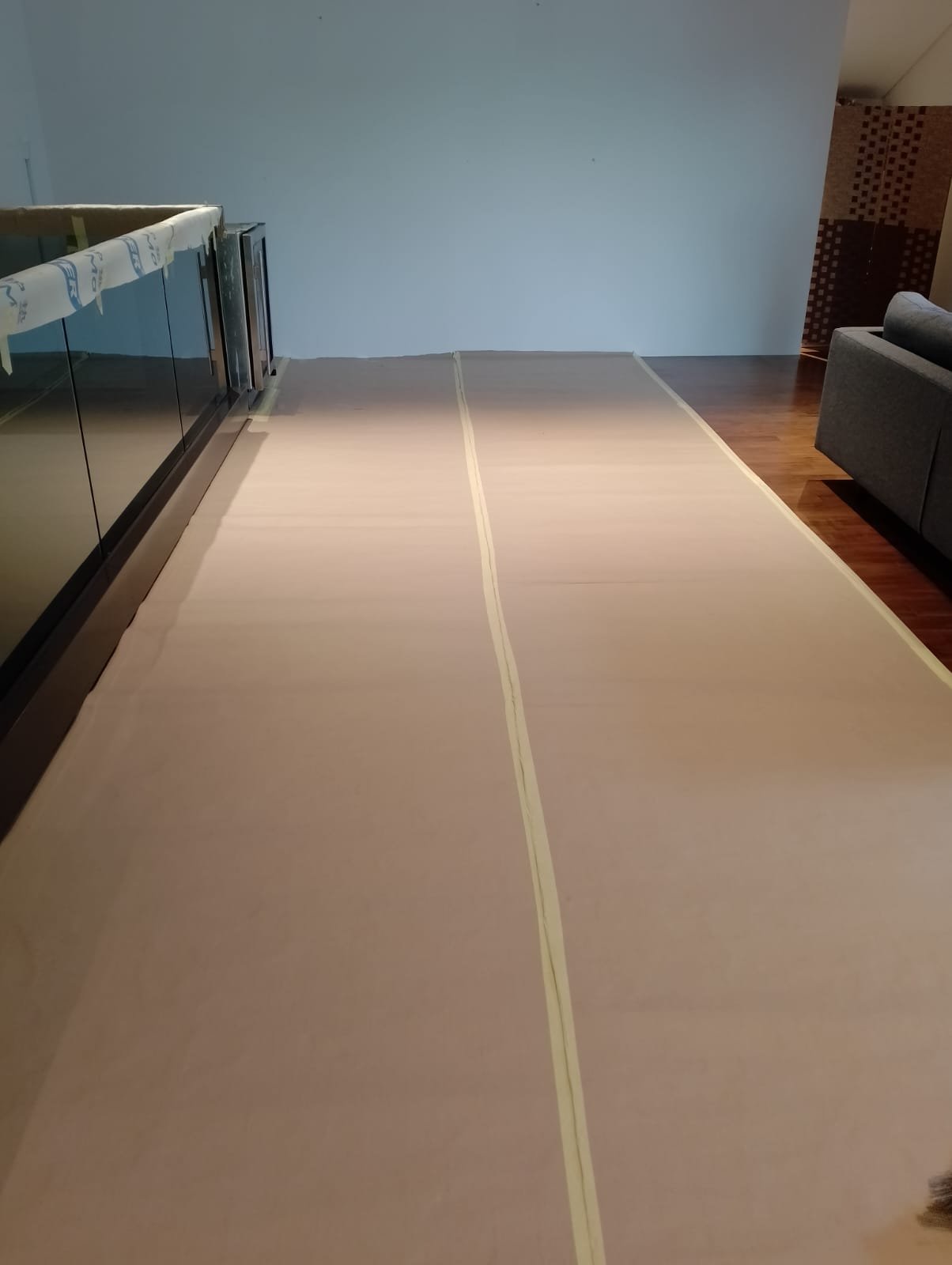
Luxury residential, hotel and commercial interiors will ultimately operate under air-conditioning. Installing and aligning furniture in conditions close to the final operating environment is genuinely beneficial for high-specification items — large timber doors, natural veneer installations, high-end joinery and sensitive upholstery — particularly at final adjustment and handover.
This does not mean every project must run full air-conditioning throughout construction. It means the last alignment should not be performed in conditions the furniture will never see again. Tall cabinet doors are sensitive to small dimensional and mechanical change; if they are set perfectly in a humid, unconditioned room and the building then cools and dries, the gaps that were correct on the day will not be the gaps the client sees.
There Is No Universal Acclimatisation Period
There is no rule that says every imported cabinet must acclimatise for exactly 48 hours. The correct period depends on the material, the manufacturer, the packaging, the size of the environmental difference and how the furniture is constructed. Arbitrary numbers repeated between site teams are folklore, not specification. If a period is going to be written into a programme, it should come from the material supplier or the furniture manufacturer.
Moisture Meters and Humidity Records Are Diagnostic Tools, Not Verdicts
For selected timber-based materials a moisture meter helps during receiving inspection, defect investigation and comparison between affected and unaffected areas of the same item. Readings still need interpreting: different materials require different settings or test methods, and a single reading is not proof of a defect on its own.
Where several components of the same type are showing similar changes, recording room temperature, relative humidity, air-conditioning status, date and furniture condition is more useful than any single measurement. It is what allows the team to separate normal installation adjustment from environmental movement from an actual manufacturing issue.
Design Has to Respect the Material Too
Solid timber moves more than engineered board, and more across the grain than along it. Furniture using solid timber should be designed with appropriate joint design, expansion allowance and fixing method — a solid component should not be rigidly constrained the way a highly stable engineered panel can be.
Mixed-material furniture compounds the problem. A luxury item may combine timber, metal, stone and glass, and those materials respond differently to environmental change. A timber cabinet may undergo slight dimensional change while the stone top above it stays effectively rigid, so the connection detail has to avoid creating unnecessary stress. The more materials an item combines, the more the interface detail decides how it ages. Our guide to interface coordination for imported furniture covers the site side of the same problem.
Not Every Hairline Is a Paint Failure
Spray-painted built-in furniture can reveal slight movement through hairline joints, shadow lines and panel transitions. Before deciding on rectification, the project should establish whether the condition is caused by substrate movement, joint design, building movement or genuine coating failure — those have different fixes and different owners.
Before respraying a panel, confirm:
- Is the panel dimensionally stable now, or is it still moving?
- Is moisture still present in or behind the component?
- Has the room environment normalised to operating conditions?
- Is the substrate itself damaged, or only the finish?
If a painted defect is driven by an unstable substrate or an unresolved environmental condition, immediate repainting hides the symptom temporarily and the same defect returns — usually during DLP, when it is most expensive. Our guide to spray-paint rectification during DLP covers the repair side once the cause is settled.
Upholstery, Leather and the Hardware Nobody Checks
Imported upholstery — sofas, headboards, dining chairs, fabric panels, banquettes — absorbs moisture, odour and dust. Unpacking it early into an active construction environment is a false economy, because cleaning contaminated fabric is harder than keeping it protected until the room is genuinely ready. Leather is a natural material and reacts to prolonged exposure to moisture, heat, direct sunlight and construction dust.
Protection cuts both ways, though. If moisture has already entered the packaging, leaving an item sealed indefinitely traps it against the material. Where receiving inspection suggests possible moisture exposure, the package needs controlled opening and assessment rather than more wrapping.
Exposed metal is the most useful early warning available. Even when timber surfaces look normal, hinges, screws, brackets, connectors and decorative metal parts show surface rust, oxidation or water marks first. And modern furniture increasingly contains LED drivers, sensors, power modules and motorised hardware — a cabinet can look visually acceptable while concealed electrical components have been affected, so any water-exposed package containing powered systems deserves inspection before it is energised.
Hotels: Environmental Readiness Varies Floor by Floor
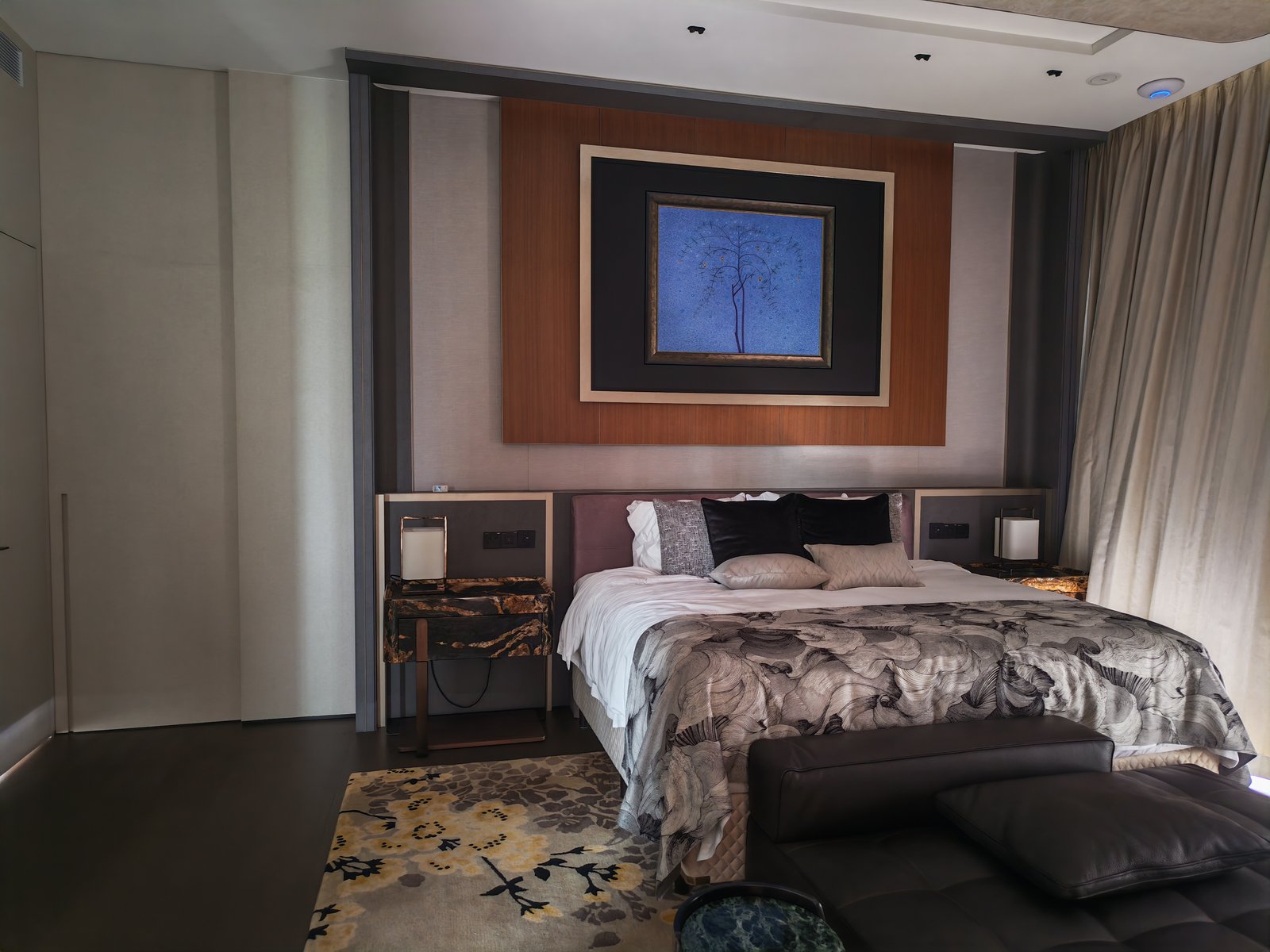
Hotels install large quantities of wardrobes, headboards, minibars, upholstery and loose furniture before the building is operational. Some guestrooms are still undergoing M&E testing, cleaning or ceiling works while others are finished, and conditions can vary significantly from floor to floor within the same tower. A phased installation programme should therefore assess construction readiness and environmental readiness together, per zone, rather than assuming one site condition.
A mock-up or first room is the cheapest way to learn how the imported FF&E behaves once it has actually spent time in the Singapore site environment. Watch door alignment, panel stability, veneer appearance, upholstery condition and hardware operation after the furniture has sat in the real conditions, and feed any adjustment into mass installation before it is repeated three hundred times. Our guide to hotel FF&E installation sequencing covers how that phasing is built into the programme.
Luxury Residences and Commercial Interiors Have Different Failure Modes
Premium homes concentrate risk in large natural-material surfaces: veneer feature walls, tall painted wardrobes, solid timber elements and bespoke upholstered panels. These are visually sensitive, and a small change reads far more clearly across a three-metre panel than across a standard cabinet door.
Commercial fit-out has the opposite problem — the environment itself is inconsistent. An office may be cooled during working hours and warm overnight. A retail project may run temporary cooling until the permanent systems are commissioned. Furniture should be designed and installed with realistic operating conditions in mind, and a single temporary site reading should never be treated as representative of the building’s long-term environment.
Connect Logistics to Environment, Not Just to the Programme
The ideal process asks two questions of every package: where has this furniture been, and where is it going next. A timber package stored in a reasonably controlled warehouse should not be unpacked and left for two weeks in a wet, unconditioned site simply because the delivery programme happened to have space that week.
Staged, just-in-time release reduces the time sensitive furniture spends inside uncontrolled construction areas. Warehouse → site storage → corridor → room storage → installation is four opportunities for moisture, dust and damage that the shorter route simply does not create. Our guide to imported furniture logistics and last-mile delivery covers how that release is sequenced.
Inspect Before You Close Anything In
Some imported components become effectively uninspectable after installation — back panels, hidden timber surfaces, internal electrical parts. If packaging indicates possible moisture exposure, inspect those areas before the item is permanently closed into a wall recess, feature panel or full-height run. A hidden moisture problem is straightforward to address before installation and expensive to address during DLP.
A moisture record that is actually useful contains:
- Package reference and room or location
- Photograph of the condition as found
- Moisture indicator or meter reading, with the method used
- Date and the storage condition at that time
- Action taken: released, monitored, rectified or replaced
Judgement: Natural Variation Versus Real Movement
Two opposite mistakes are equally common. The first is calling ordinary material character a defect — timber and veneer vary in grain, tone and texture, and a humidity investigation should not be confused with natural variation. The second is dismissing genuine movement as “natural”: if a door repeatedly binds, a panel distorts significantly or an edge has visibly swollen, that needs investigating on extent, function, specification and cause.
The same discipline applies after handover. When an owner or operator reports that a door was fine before and is now rubbing, the possible causes include hinge movement, loading, cabinet settlement and environmental change — not only a factory defect. A technician should inspect the whole condition before concluding anything, because the right diagnosis usually points to a much cheaper fix. Our guides to after-sales and defect liability and replacement parts and local rectification cover what happens next in each case.
Adjust, or Replace — the Decision Rule
If a stable cabinet only needs hinge adjustment, drawer alignment or door levelling, replacement is unnecessary. Replacing an entire imported door because of an adjustment issue adds cost, freight, waste and delay to solve a problem a technician could close in an hour.
But adjustment cannot restore a panel that has genuinely swollen, delaminated or structurally distorted. Where moisture has caused that, the sequence has to start with the cause — repairing furniture without solving the moisture source simply schedules the same failure again.
Put Environmental Control in the Method Statement
For larger projects, the FF&E installation method statement can state storage requirements, package inspection procedure, wet-area restrictions, room readiness criteria, air-conditioning status expectations and protection procedures. That turns environmental control from an informal assumption into a shared expectation between main contractor, furniture contractor, warehouse and site management — before anybody is arguing about a swollen panel.
A Practical Environmental-Control Workflow
How Rongda Pacific Supports Environmental Control for Imported FF&E
Depending on project requirements, Rongda Pacific Pte Ltd supports imported furniture receiving, packaging-condition inspection and moisture-related defect identification; warehouse coordination, room readiness assessment and staged furniture release; imported furniture installation, veneer and timber inspection, lacquered furniture assessment and door and drawer alignment; first-unit and mock-up monitoring; furniture protection; and DLP inspection, local carpentry rectification, selected spray-paint rectification, replacement-part coordination and final handover support.
For overseas furniture manufacturers, that gives you a Singapore-side technical partner who understands not only the dimensions and installation details of your furniture, but the environment your finished products are being introduced into — and who will tell you when a room is not ready for it yet.
Frequently Asked Questions
What is furniture acclimatisation?
It is the process of allowing materials or completed furniture components to adjust to the environmental conditions where they will be stored or installed, so that moisture-sensitive materials are not exposed to sudden, uncontrolled change.
Does every imported furniture item need a fixed acclimatisation period?
No. There is no universal number of hours or days. The requirement depends on material, packaging, manufacturer recommendation and how large the environmental difference actually is. Arbitrary periods repeated on site are not a specification.
Why does Singapore humidity matter for imported furniture?
Timber-based and other moisture-sensitive materials respond to environmental humidity, and Singapore’s warm, humid climate can differ significantly from the conditions where the furniture was manufactured, stored and packed.
Can plywood furniture be affected by moisture?
Yes. Plywood is generally dimensionally stable, but prolonged or excessive exposure can still affect edges, adhesives, finishes and overall performance depending on grade, core, adhesive system and edge treatment.
Should imported furniture be installed while wet works are ongoing?
Ideally not. Finished furniture should not be unnecessarily exposed to active wet trades such as screeding, tiling, grouting, plastering or water testing. The appropriate timing depends on project conditions and manufacturer requirements.
Does air-conditioning need to be running before furniture installation?
Not always, but for high-value timber, veneer or sensitive FF&E, conditions closer to final operation are beneficial — particularly for final alignment and commissioning of tall doors and long runs.
What should we check when a container is opened?
Condensation, damp or softened cartons, water staining, wet timber crates, unusual odour and corrosion on exposed metal. None of these prove a defect, but all of them justify closer inspection before the package enters general inventory.
A painted panel has developed a hairline at a joint. Should we respray it?
Not until you know why. Establish whether it is substrate movement, joint design, building movement or coating failure, and whether the panel and the room are now stable. Resprayed too early, the same line usually returns during DLP.
More in FF&E Installation
 Rectifying FF&E in a Hotel That Has Already Opened: Room Nights, Housekeeping Access and the Remove-and-Return Cycle
 How Many Spares Should an Imported FF&E Package Carry? A Risk-Based Alternative to the 2% Line
 Large Residential Development FF&E in Singapore: Unit-by-Unit Handover, Defect Patterns and a Liability Period in Occupied Homes