
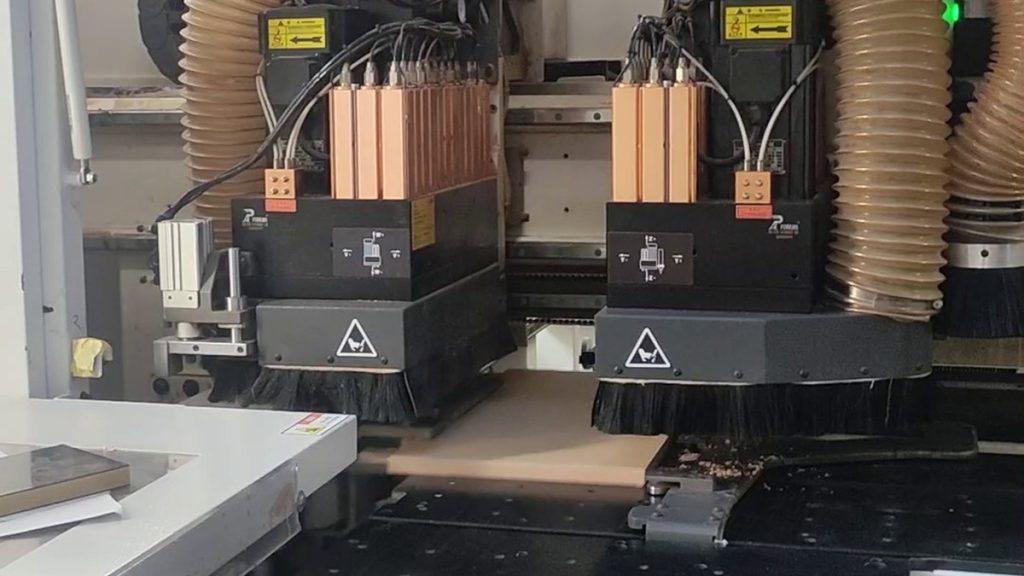
A board with an impeccable emission certificate can still delaminate, sag or lift its laminate. Emission grade and construction quality are separate specifications, and in the tropics you need both.
Related service: custom carpentry and joinery in Singapore.
For Singapore interiors we choose plywood on emission grade, bond performance, edge protection, construction and site conditions together, not on the emission grade alone.
Low-formaldehyde grading has rightly become the main question when panel materials get specified. It should not be the only one. A board with an impeccable emission certificate can be built on a voided core, bonded with an adhesive that fails in a wet area, or delivered at a moisture content that guarantees movement once it is installed. Those are the failures that generate a callback two years after handover.
Bond Performance: The Line People Leave Out
Emission grade describes what leaves the board. Bond performance describes what the glue line survives. Different properties, and both need stating.
One caution before the table. “MR”, “WBP” and “marine” are long-standing trade labels rather than a single graded scale, and their meaning varies between markets and suppliers. Treat them as shorthand for a conversation, not as a specification in themselves.
| Common market description | Adhesive commonly used | Typical intended exposure | What must be verified |
|---|---|---|---|
| INT / dry | Urea-formaldehyde | Concealed dry joinery, backing panels | Referenced product standard and bond test |
| MR | Melamine-urea-formaldehyde | Interior humidity, occasional damp | Referenced product standard and bond test; the label alone carries no fixed meaning |
| WBP | Phenol-formaldehyde | Humid, wet or exterior use | The actual test method and pass criteria. Do not rely on the label alone |
| Marine | Phenolic, with core quality requirements | Severe exposure | A named marine plywood standard, with veneer and bond requirements stated |
There is a tension here worth knowing about. Phenol-formaldehyde is the classic high-durability adhesive and it is formaldehyde-based, although comparatively stable and low-emitting once cured. MDI resins use no added formaldehyde and are highly water-resistant. So a demanding wet-area specification with a strict emission requirement is achievable, but it narrows the available products a long way. Check supply before you write it.
How to write the bond requirement
- Do not rely on “MR”, “WBP” or “marine” as standalone labels on a quotation.
- State the applicable product standard and the bond test the board is to be certified against.
- State the intended exposure: dry interior, humid interior, wet area, semi-exposed or external.
- State the documentary evidence required, and who checks it at delivery.
What to Look for in the Board
Most of a plywood’s real quality shows on its edge. Two minutes with a sample is worth more than a page of product literature.
- Core voids and gaps. Look along the edge for hollows between veneers.
- Veneer count and balance. More thin plies of consistent thickness give a flatter, more stable board than a few thick ones, and the build should be symmetrical about the centre or the panel will bow.
- Overlaps in the core. Overlapped veneers create ridges, gaps create hollows, and both show on a finished surface.
- Glue line continuity. A clean unbroken line at every interface with no starved patches.
- Face quality. Patches, sanding-through and species consistency, which matter most where the board is clear-finished rather than laminated.
- Flatness and thickness tolerance. A board that will not lie flat on a stack will not lie flat in a wardrobe door.
Moisture Content, and the Tropical Problem
Wood-based panels move with the moisture in the air around them, and a Singapore fit-out puts them through a demanding cycle. Manufactured and shipped in one climate. Stored in a warehouse at 75% to 85% relative humidity. Installed in a space that is then air-conditioned to a much drier equilibrium for the rest of its life.
Handling that avoids it
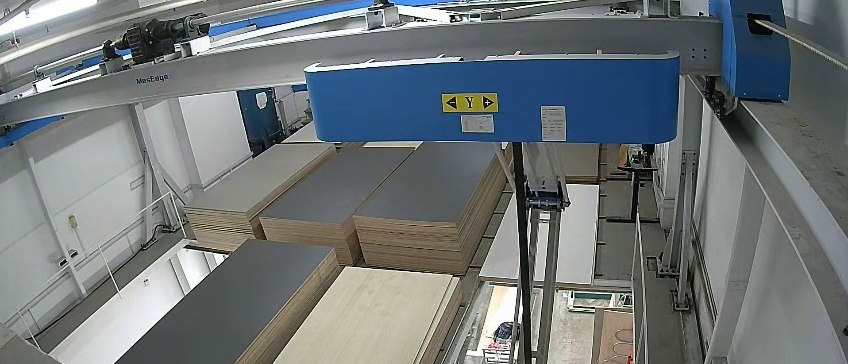
- Store flat and off the floor. On bearers in a dry covered store, never leaning against a wall.
- Acclimatise before machining. Let boards sit in conditions resembling their final environment before they are cut.
- Seal all six faces. Backs, edges and cut-outs included. Sealing one face only encourages the board to cup.
- Keep wet trades away. Joinery installed before screeds and plaster have dried takes up that moisture and later loses it.
- Design for movement. Shadow gaps, scribes and adjustable fixings absorb what the material will do anyway.
Matching the Board to the Job
- Bedroom wardrobes and dry carcass work. Moisture-resistant plywood or a good MDF-core board, E0, edges banded on every exposed face.
- Kitchen and vanity carcasses. Board tested to a stated bond-performance standard suitable for humid and occasionally wet service, with sealed cut-outs around sinks and taps, where most real failures begin.
- Shelving and long spans. Thickness and support centres matter more than grade. Deflection is a stiffness problem and no certificate prevents a sagging shelf.
- Feature panelling and clear-finished faces. Face veneer quality and consistency of figure, with panels selected and sequenced before cutting.
- Semi-exposed and external. Board certified to a bond-performance standard suitable for weather exposure, detailed so water drains rather than sits.
A complete panel specification has four parts: emission grade, bond performance, construction and face quality, and thickness. Write all four and most of the arguments later in the job never happen. For the emission side, see ENF, E0 and E1 explained and how to specify and verify it.
Frequently Asked Questions
Plywood or MDF for kitchen carcasses in Singapore?
Plywood handles occasional wetting better and holds screws in the edge, which matters for hinges and runners. Moisture-resistant MDF gives a flatter surface for laminating and a cleaner machined edge. Plenty of good kitchens use both: plywood where the water and the fixings are, MDF where flatness and finish matter.
Does a higher emission grade mean better durability?
No, and confusing the two is an expensive mistake. Emission grade is about air quality. Durability comes from bond performance, core quality and construction. Specify them separately or you will get one without the other.
Why did my joinery doors go out of alignment after a few months?
Usually moisture movement: boards installed damp and then dried out by air conditioning, or a panel sealed on one face and left to cup. Occasionally it is an unbalanced construction or an inadequate fixing. Acclimatisation, sealing all faces and adjustable hinges deal with nearly all of it.
Can you supply low-emission board that also performs in wet areas?
Yes. We supply ENF, E0 and E1, and E0 board is available with bond performance suitable for humid and occasionally wet service. Specify the bond requirement against a named product standard and test rather than by trade label. Availability in particular thicknesses, sizes and faces is narrower than for standard products, so ask us to confirm supply before it goes into a specification.
The information in this article is general project guidance. Final material grades, fabrication methods, tolerances and acceptance criteria should be confirmed against the project specification, approved drawings, applicable standards and actual site conditions. ENF, E0 and E1 classifications depend on the referenced standard and test method. They are not universal statutory grades for composite wood products in Singapore and should not be compared by grade name or numerical value alone.
More in Custom Carpentry & Joinery
 How to Maintain Spray-Painted Furniture in Singapore: Cleaning, Wear Zones and What Belongs in the Handover Record
 Integrated Appliances & Imported Cabinetry in Singapore: Why Fridges, Ovens and Dishwashers Need Early FF&E Coordination
 Local Spray-Paint Rectification for Imported Furniture in Singapore: Repairing DLP Defects Without Shipping Panels Overseas