
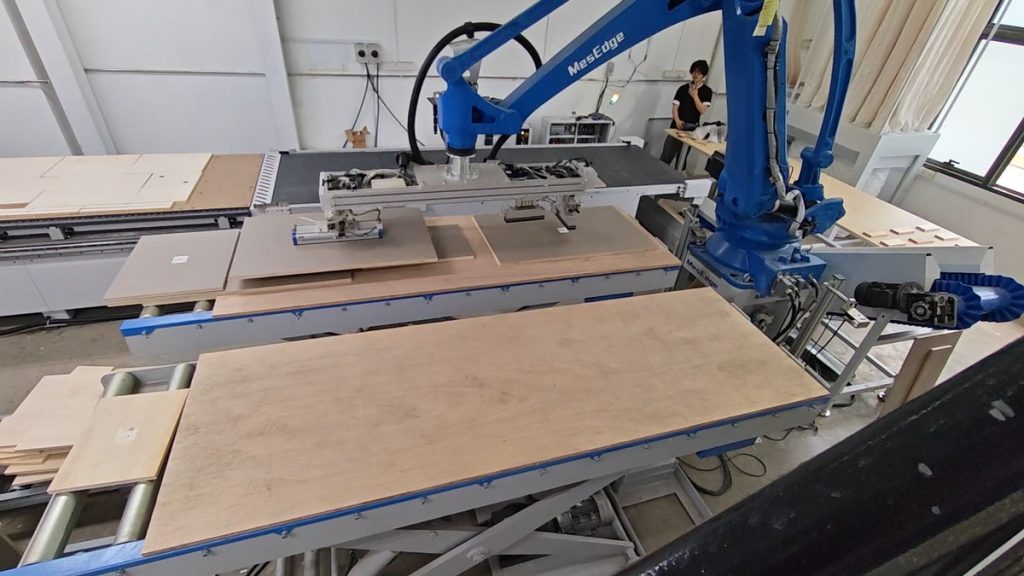
Writing “E0 or better” into a specification is easy. Making sure the board that arrives is the board that was tested takes a process.
Related service: custom carpentry and joinery in Singapore.
We handle the material-submission process in Singapore, supply ENF, E0 and E1 board, fabricate the joinery, and check what arrives against the approved documents.
Low-emission grades only deliver what they promise if the specification is written precisely, the documentation is checked before order, and the delivery is verified against it. At the time of publication, Singapore does not impose a single statutory formaldehyde-emission limit on composite wood products used across all interior projects. In practice the requirement arrives through the project specification, through green rating and product certification schemes, and through whichever standards the consultant chooses to reference. Which puts the weight on how the specification is drafted and administered.
Write It So It Cannot Be Read Two Ways
“Low formaldehyde”, “eco-friendly” and “environmentally certified” are adjectives, not specifications, and they are unenforceable the moment a substitution turns up. A clause that holds names the grade, the standard, the test method and the evidence required.
A clause that works
- Grade and limit. “E0 grade, formaldehyde emission ≤ 0.050 mg/m³”, or whichever class the project requires, written as a number rather than a letter alone.
- Standard and method. “Tested to GB/T 39600-2021 by 1 m³ climate chamber”, or the equivalent scheme your consultant requires.
- Evidence. “Test report from an accredited laboratory, issued within the last 12 months, identifying manufacturer, product, thickness and construction”.
- Scope. Which elements it applies to: carcasses, doors, shelving, panelling, ceiling boxing.
- Related materials. Adhesives, laminates, edge banding, coatings and sealants, with their own emission requirements.
- Verification. Documentation before order, labels checked at delivery, and who may authorise a substitution.
That second-to-last point gets skipped often. A specification that controls the board and says nothing about the contact adhesive, the laminate and the lacquer has controlled part of the problem. What reaches the air comes from the whole assembly.
Green Rating and Certification Routes
Where a project chases a green rating, low-emitting materials are usually a credit category with their own evidence requirements. In Singapore the routes you meet most often are BCA Green Mark, the Singapore Green Building Council’s Singapore Green Building Product labelling scheme, and on internationally benchmarked projects the LEED and WELL low-emitting-material credits. Requirements and versions change, so confirm the criteria applying to your project with the consultant before ordering.
Two practical cautions. A product certificate covers a defined range, so check it covers the thickness, face and construction you are buying rather than a sibling product. And certificates expire; one that lapsed two years ago will not be accepted at submission.
The Substitution Problem
The realistic risk on a fit-out is not a forged certificate. It is substitution. An approved E0 board is specified and priced, supply runs short or a cheaper source appears, and an unlabelled board of unknown grade goes into the carcass work where nobody will ever see the edge. Once it is installed and laminated, it is effectively unverifiable without destructive testing.
- Approve the specific product before order. Manufacturer, product name, thickness, construction and grade, with the test report attached to the approval.
- Check at delivery, not at handover. Panel labels and delivery order against the approved product, before the boards enter the workshop.
- Photograph the labelled stack. A dated photograph on arrival is cheap evidence for a submission file.
- Require written approval for substitutions, with equivalent documentation, in advance, from the person named in the contract.
- Keep the paperwork together. Reports, certificates, delivery orders and photographs in one file, assembled as the job runs rather than reconstructed at the end.
What Helps on Site
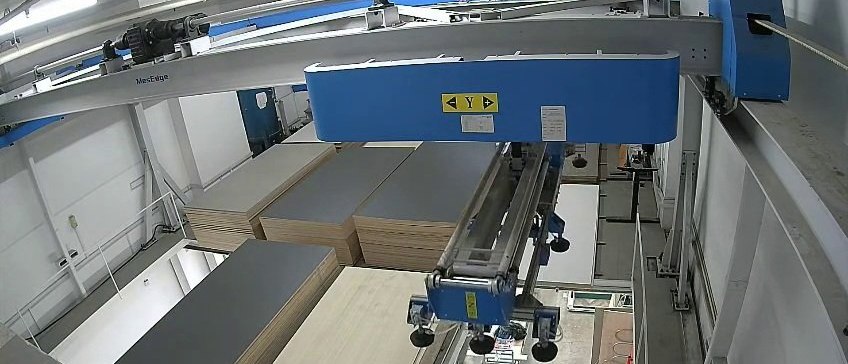
Specification does most of the work, but a few site habits genuinely reduce what occupants breathe. Seal raw edges and cut-outs, since an unbanded edge emits out of all proportion to its area. Let joinery air in a ventilated space before the room is closed up, and ventilate hard through the first weeks of occupancy when emission is at its highest. Choose low-VOC adhesives, lacquers and sealants so they do not undo the board grade. Keep panels dry in storage, because damp boards in a humid warehouse emit more and lose dimensional stability at the same time.
Frequently Asked Questions
Is there a mandatory formaldehyde limit for plywood in Singapore?
At the time of publication there is no single statutory limit covering all interior panel work. Requirements commonly arise through project specifications, procurement policies and voluntary certification schemes, which is why the wording of your specification does the real work. Confirm the current position for your project with your consultant.
Can you supply test reports for the boards used on my job?
Yes. We provide test documentation for the panel materials we supply and check labels against it at delivery. Where a project needs an evidence file for a green submission, we build it as the job runs rather than at handover.
What if the specified board is unavailable mid-project?
We come back to you with an alternative and its documentation, in writing, for approval before ordering. A silent substitution is a specification failure whether or not the replacement happens to be adequate.
Does specifying a low-emission board guarantee good indoor air quality?
No. It removes one significant source. Adhesives, laminates, paints, sealants, carpets and furniture all contribute, and so does the ventilation rate. Treat the board grade as one part of an indoor air quality strategy.
The information in this article is general project guidance. Final material grades, fabrication methods, tolerances and acceptance criteria should be confirmed against the project specification, approved drawings, applicable standards and actual site conditions. ENF, E0 and E1 classifications depend on the referenced standard and test method. They are not universal statutory grades for composite wood products in Singapore and should not be compared by grade name or numerical value alone.
More in Custom Carpentry & Joinery
 How to Maintain Spray-Painted Furniture in Singapore: Cleaning, Wear Zones and What Belongs in the Handover Record
 Integrated Appliances & Imported Cabinetry in Singapore: Why Fridges, Ovens and Dishwashers Need Early FF&E Coordination
 Local Spray-Paint Rectification for Imported Furniture in Singapore: Repairing DLP Defects Without Shipping Panels Overseas