
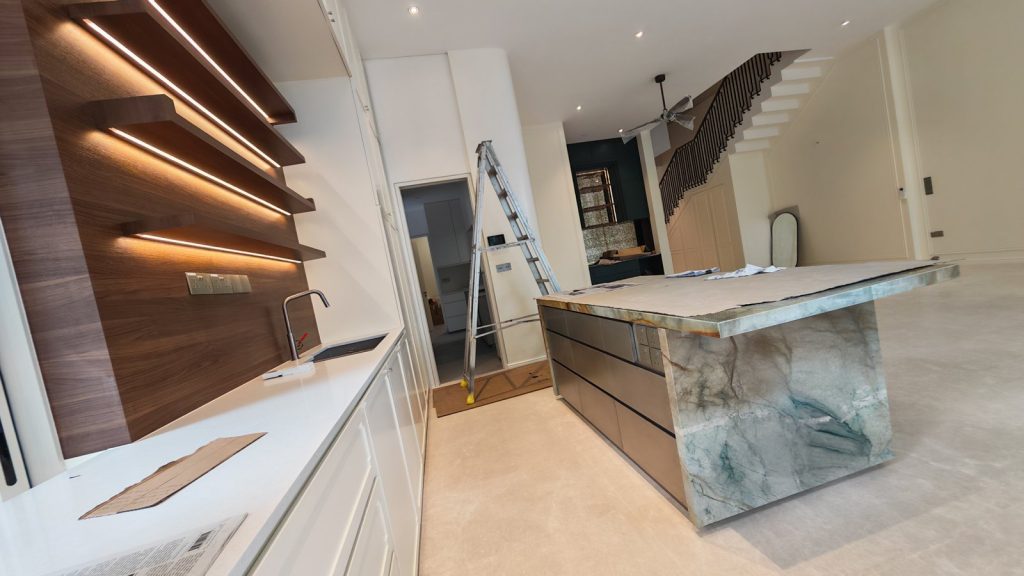
Modern luxury kitchens and commercial interiors increasingly hide appliances inside custom cabinetry — a refrigerator behind matching doors, an oven in a tall unit, a dishwasher behind a furniture front, a wine chiller beneath a counter, a coffee machine or steam oven built into an appliance wall. Done well, the result looks clean and architectural. But integrated appliances create one of the most demanding interfaces in imported furniture installation.
Related service: custom carpentry and joinery in Singapore.
A cabinet can be manufactured perfectly to one set of dimensions, and the appliance perfectly too — yet the two may still not work together if the appliance model changes, the door system differs, ventilation is insufficient, power is positioned wrongly, plumbing conflicts, service access is blocked or door clearances were misunderstood. Integrated appliances should not be treated as items “added later” after furniture installation. They are part of the furniture system, and the appliance model should ideally be known before cabinetry production begins.
Model Numbers and Manufacturer Drawings Matter
It is not enough to say “60 cm oven.” Two ovens with similar external dimensions can require different cabinet openings, ventilation gaps, electrical requirements, mounting details and door clearances — the same applies to integrated refrigerators, dishwashers, wine chillers, coffee machines, microwaves and steam ovens. The exact product model should be confirmed, and for imported cabinetry the overseas factory should ideally receive the current manufacturer installation drawing for the specific appliance.
Appliance installation drawings typically define:
- Required niche width, height and depth
- Ventilation requirements
- Power location
- Water connection and drainage
- Door swing and furniture-panel dimensions
- Mounting details
The furniture shop drawing should coordinate these requirements rather than rely on the visible appliance dimensions alone. A built-in appliance is not simply a box inside another box — it is a technical interface.
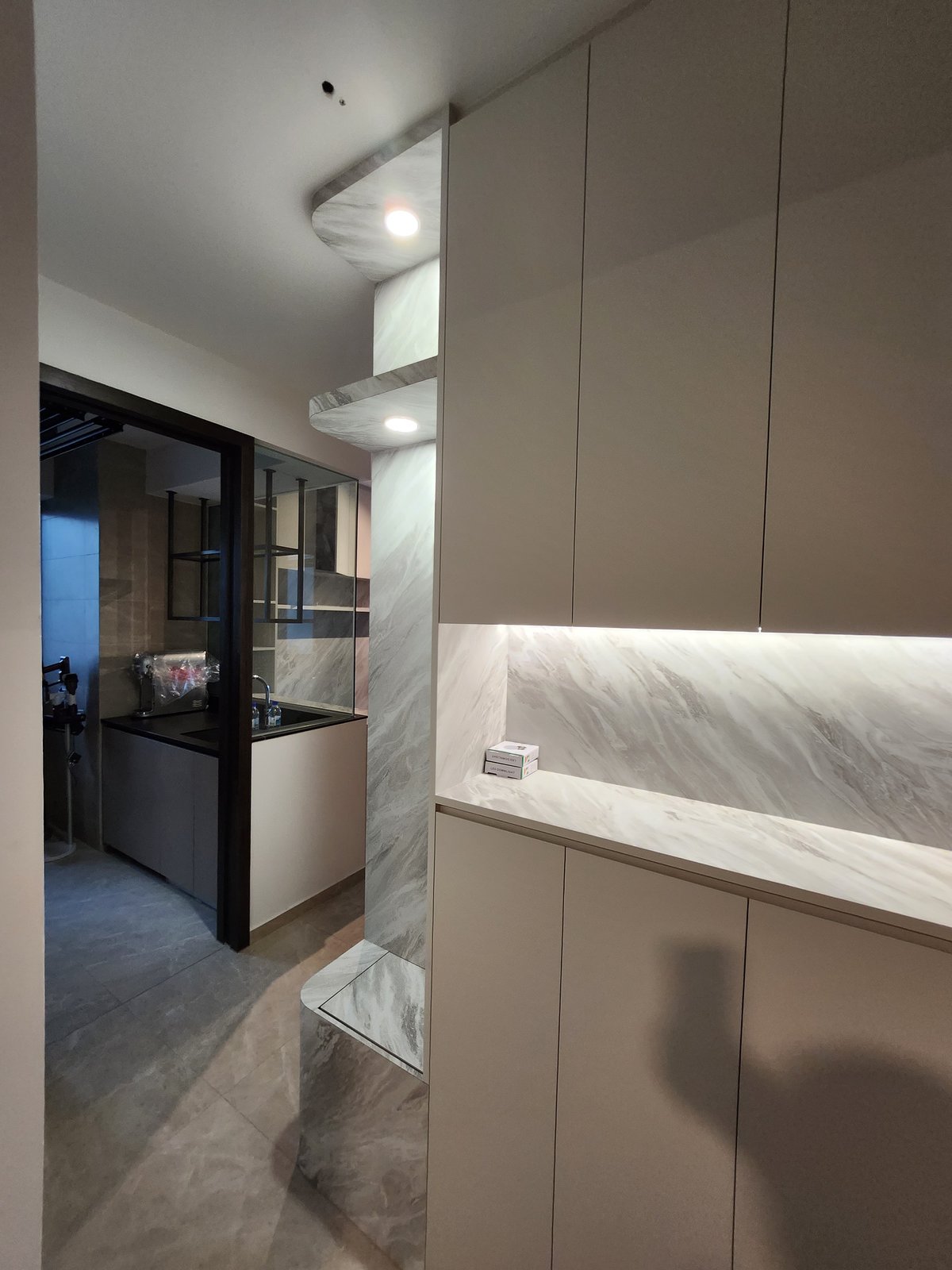
Integrated Refrigerators and Ovens Need the Most Attention
Integrated refrigerators are among the most demanding appliances to coordinate. The furniture door may connect to the appliance door via sliding-door or fixed-door systems and manufacturer-specific brackets, and the cabinet must let the appliance open correctly, ventilate, remain serviceable and align visually with adjacent furniture. Small errors in cabinet geometry show as uneven door gaps, misaligned panels, door rubbing, incomplete opening or hinge stress — and a fridge can settle slightly under its own weight after installation, so final adjustment is part of commissioning.
Crucially, the furniture door and appliance door move together — every time the fridge is opened, both move, repeatedly loading the hinges, brackets, panels and alignment systems. A gap that is visually perfect at handover may still need future adjustment through normal daily use, so the team should use the appliance manufacturer’s adjustment system correctly and avoid unrealistic expectations of permanently fixed millimetre gaps on frequently moving integrated doors. On a full-height fridge panel a 2 mm difference is obvious, so the cabinet must first be level, plumb and square before the appliance door is adjusted.
Ovens add heat, air movement, electrical supply, support and adjacent-clearance requirements; for stacked appliance walls (oven, microwave, steam oven, coffee machine) the cabinet should be designed around the complete equipment arrangement, and if one appliance changes late the vertical alignment of the whole tall cabinet may need review. Luxury kitchens rely on strong horizontal lines, so a replacement appliance with a different fascia height can disrupt the entire composition — product selection and cabinetry design should be coordinated before production.
Ventilation, Dishwashers, Services and Depth
Integrated appliances generate heat. A cabinet that looks beautifully seamless but does not provide the required airflow creates operational problems — ventilation should follow the manufacturer’s requirements (below, behind, above or through a dedicated grille) and must not be reduced simply for a cleaner appearance. Wine chillers in particular need their own ventilation strategy; placing a freestanding unit into a tight enclosed cabinet just because it fits dimensionally can cause overheating.
Integrated dishwashers need more than an opening — width, depth, plumbing, drainage, power, door panel, plinth clearance and door-opening geometry all interact. If the decorative panel is too tall or the plinth too deep, the door may hit the plinth and fail to open fully; this is easy to overlook in drawings, so a first-unit or mock-up installation is extremely useful. Water connections for the dishwasher, sink, filter, ice maker and refrigerator should remain accessible, and coffee machines and steam ovens need access for water tanks, drip trays, cleaning and descaling — design review should consider the appliance in use, not only when closed.
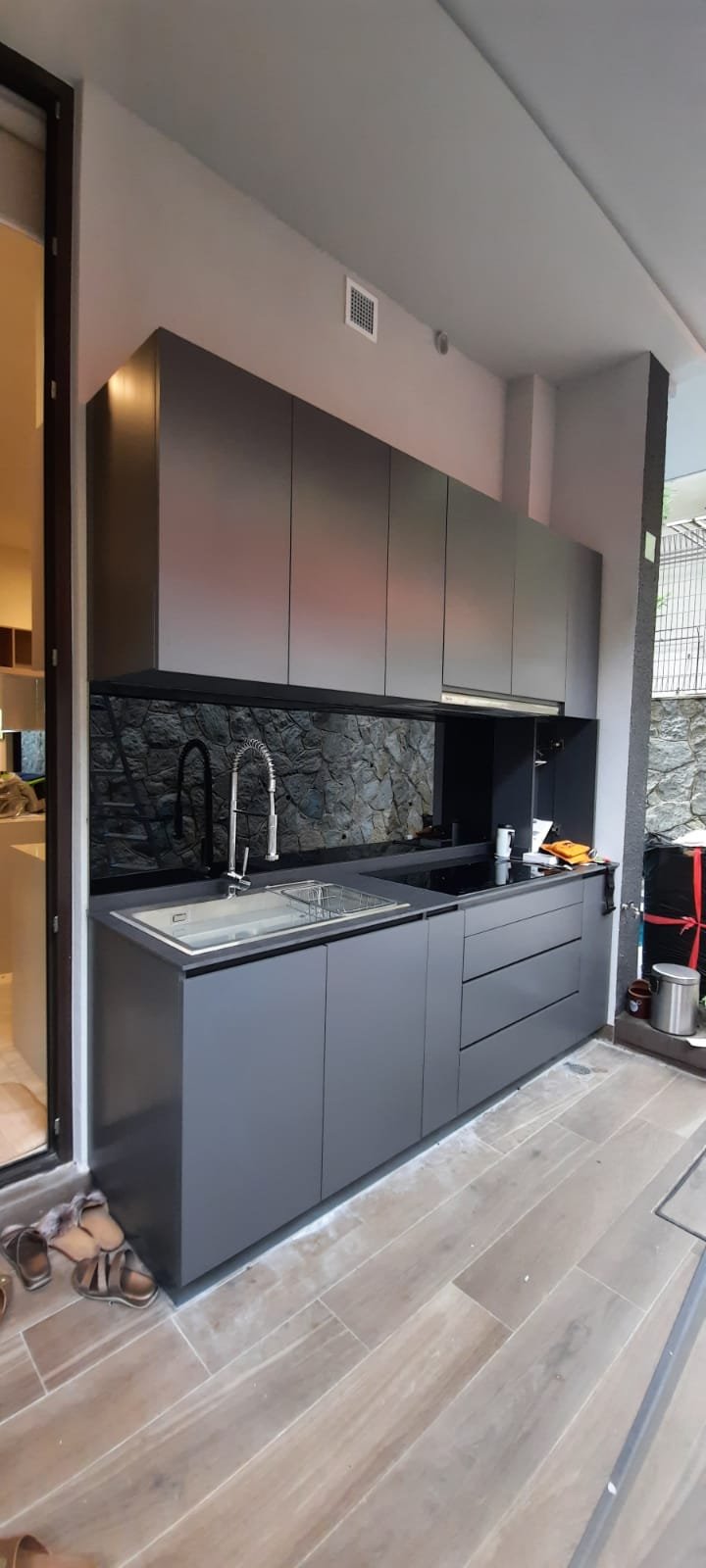
Door swing must be checked against adjacent handles, wall returns, island edges and passageways — a fridge may fit the niche but fail to open far enough for its internal drawers to be removed. Power points should not sit directly behind an appliance where they reduce usable depth or become inaccessible; depending on the appliance, power is often better located in an adjacent accessible cabinet. And nominal appliance depth rarely includes the plug, hoses, ventilation and door or handle projection, while site pipework, conduit or wall irregularity can reduce usable cabinet depth — so site verification remains important even when appliance and cabinet drawings are accurate.
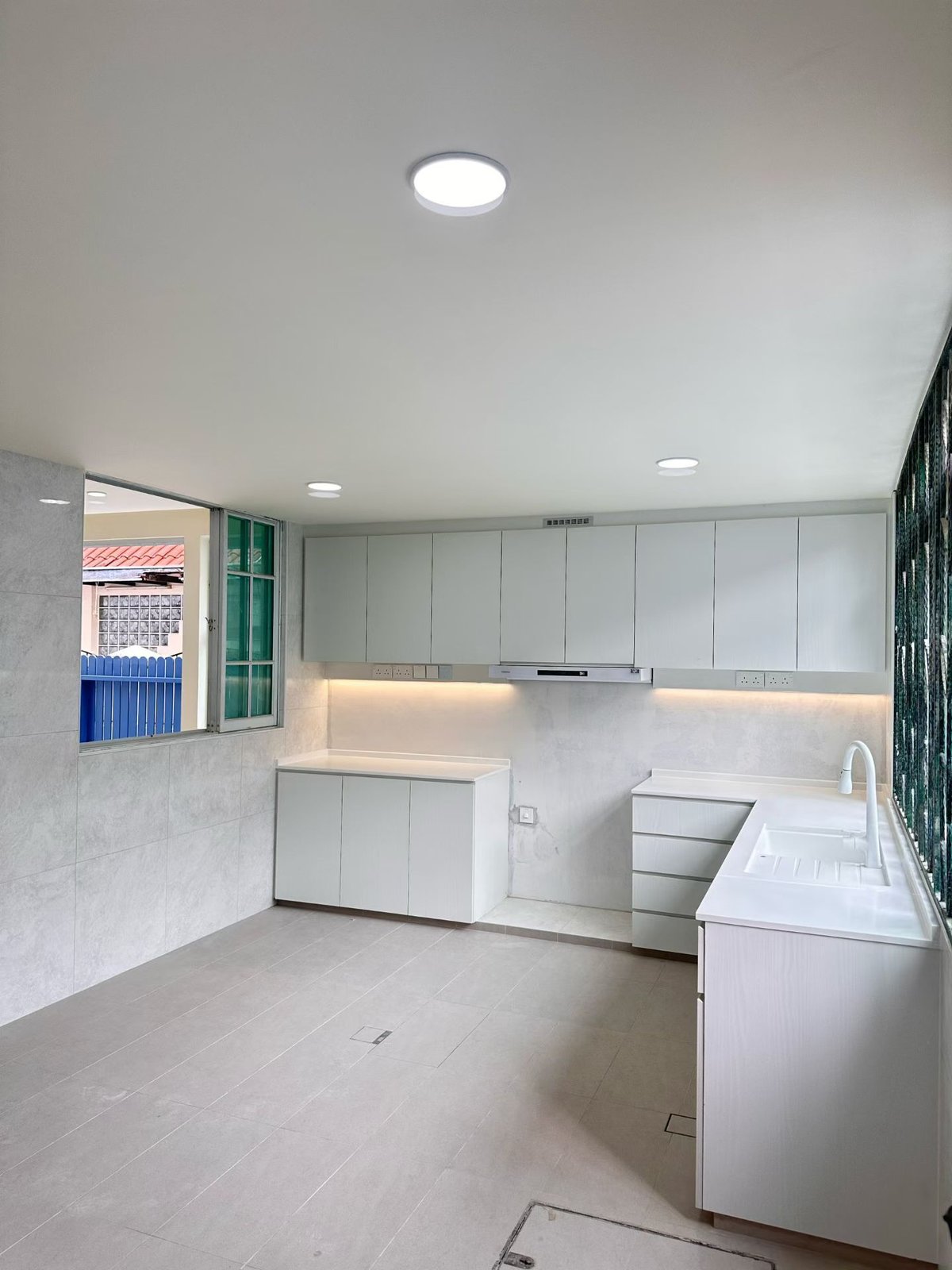
Commission the Furniture and Appliance as One System
After installation, test power, water, drainage, door opening, drawer removal, ventilation and appliance function before closing every decorative panel — do not complete all closing panels and only then discover the appliance must come back out. Service panels (removable plinths, side panels, access openings) should be designed intentionally and remain removable without damaging adjacent furniture. Imported cabinetry may still need controlled local modification for site conditions, preserving structural integrity, appliance requirements and the visible finish; significant or visible changes may still be better handled by factory replacement.
Consider future replacement too — if a cabinet is designed around one very specific appliance size, future upgrades may be limited, which matters most for integrated fridges, wine chillers and specialty appliances. And an appliance problem is sometimes misdiagnosed as a furniture problem: a slightly misaligned fridge door after frequent use may be appliance hinge movement, levelling or bracket adjustment rather than poor cabinet manufacturing. Proper diagnosis considers both systems, and final inspection should check the completed system — appliance level and function, ventilation, furniture-door alignment, full opening and service access — together.
How Rongda Pacific Supports Integrated-Appliance Projects
Depending on project requirements, Rongda Pacific Pte Ltd can support imported-furniture receiving coordination, appliance drawing review, site measurement, M&E coordination, imported cabinet and full-height appliance-cabinet installation, appliance-niche verification, local carpentry modification, service-opening coordination, plinth and filler adjustment, stone coordination, Builder’s Works, appliance-front alignment, snagging, defect rectification and final handover support — resolving the appliance interfaces that depend on actual site conditions.
Frequently Asked Questions
Should appliance models be confirmed before imported cabinets are manufactured?
Ideally yes. Exact model information lets the factory coordinate niche dimensions, ventilation, service access and door systems correctly.
Can a built-in fridge use a normal cabinet door?
Integrated refrigerators typically require a specific door-connection system and panel arrangement per the appliance manufacturer; the exact requirements depend on the model.
Why does an integrated fridge door sometimes need future adjustment?
The furniture panel is mechanically connected to the appliance door, and frequent daily use can affect alignment over time — adjustment may be part of normal maintenance.
Can a dishwasher panel hit the plinth?
Yes. Incorrect decorative-panel height or plinth geometry can interfere with the dishwasher door opening.
Should ventilation openings be reduced to make the kitchen look cleaner?
No. Required ventilation should follow the appliance manufacturer’s technical requirements.
Where should appliance power points be located?
Per the appliance and electrical design — compatible with the manufacturer’s requirements and not obstructing the appliance; often in an adjacent accessible cabinet.
Do integrated appliances require final commissioning?
Yes. The appliance should be tested together with door operation, furniture alignment, ventilation and service access before handover.
- Builder’s Works for Furniture Installation
- Imported Furniture Interface Coordination
- Trial Assembly: Proving the Build Before It Is Repeated
- Scribing, Fillers & Making Good for Imported Furniture
- Smart Furniture & Integrated Technology Installation
- Residential Development FF&E: Unit Handover and the Liability Period
More in Custom Carpentry & Joinery
 How to Maintain Spray-Painted Furniture in Singapore: Cleaning, Wear Zones and What Belongs in the Handover Record
 Local Spray-Paint Rectification for Imported Furniture in Singapore: Repairing DLP Defects Without Shipping Panels Overseas
 Reception Counters and Feature Joinery Installation for Corporate Offices