
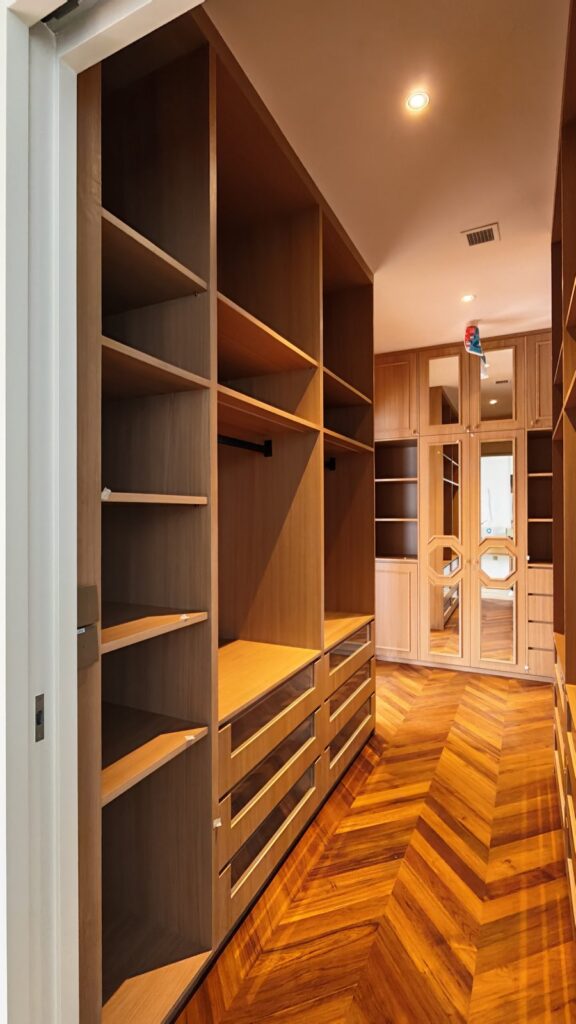
A hotel tower hands over once, to one operator, against one inspection regime. A three-hundred-unit condominium hands over three hundred times, to three hundred separate purchasers, each of whom walks their own apartment with their own expectations and produces their own defect list. The furniture package is identical. The execution problem is not remotely the same.
Related service: FF&E installation services in Singapore.
Large residential developments are where imported FF&E either works at scale or quietly consumes a project’s last two months. The individual installation is straightforward – a wardrobe is a wardrobe. What is difficult is doing it six hundred times with consistent quality, against a handover programme that releases units in batches, while a growing defect list is being reported by people who are not construction professionals and have no reason to be forgiving.
This article is about that case specifically. The hospitality equivalent, where sequencing and operator handover dominate, is covered in our guides to hotel FF&E installation and hotel FF&E sequencing.
Repetition Multiplies Everything, in Both Directions
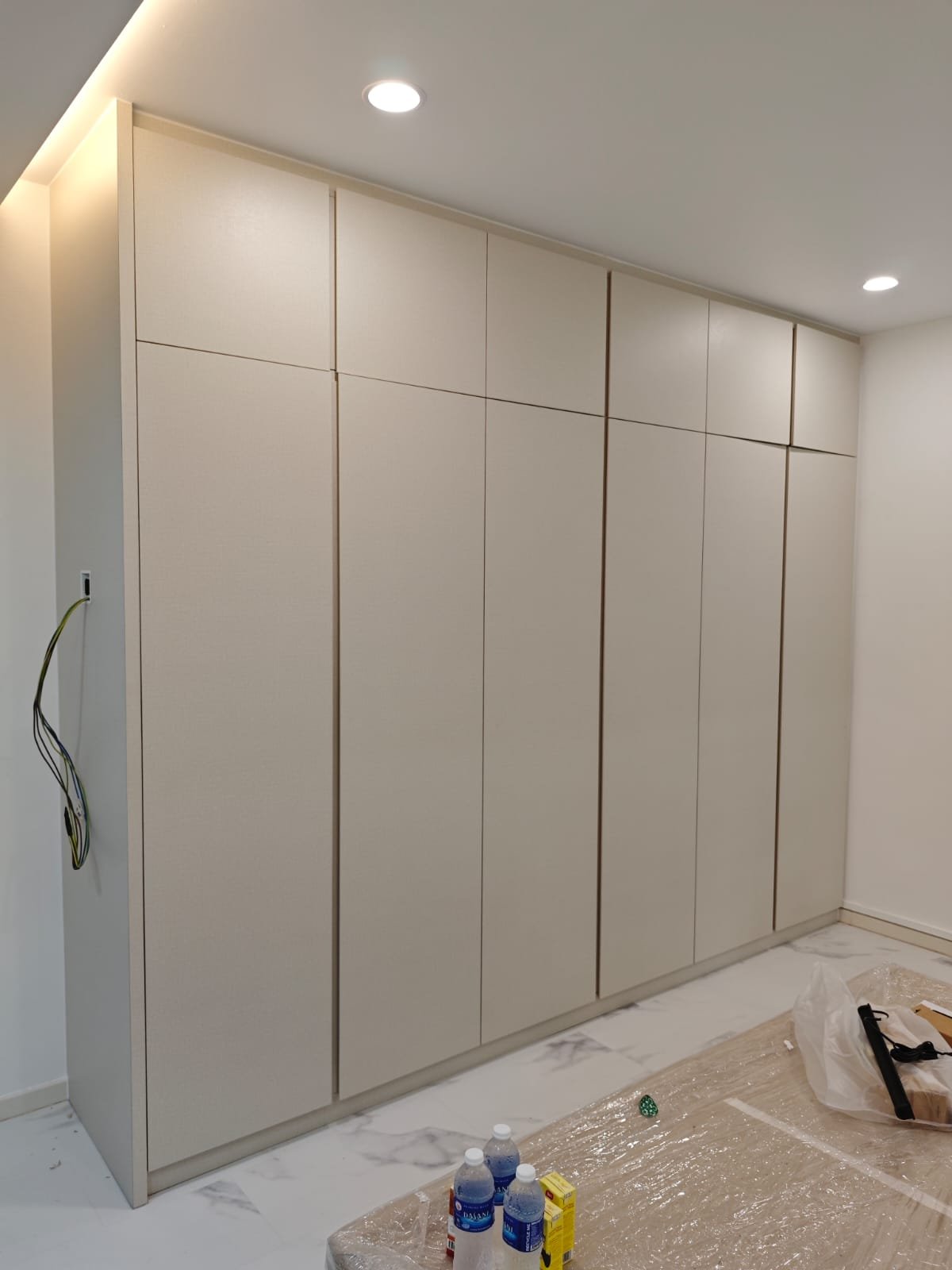
On a single apartment, a missing shelf pin pack is an inconvenience. On a development with two hundred identical wardrobes, the same shortfall is two hundred incomplete units, an installation crew standing down, and a fortnight lost while a replacement is airfreighted. Repetition is what converts small discrepancies into programme items.
It cuts the other way too, and this is the part that is usually under-exploited. A problem identified in the first ten units can be corrected before it reaches the remaining two hundred and ninety. That only happens if somebody is looking for patterns rather than closing individual defects.
Defects that become programme risks purely through repetition:
- Carton labelling that does not map to the unit numbering used on site
- Hardware packs short-shipped against a repeated unit type
- A wall tolerance that is consistently out in one stack of units
- A fixing detail that does not suit the actual substrate
- Edge damage occurring at the same point in the handling sequence
- A finish batch that does not match across a delivery
- A hinge or runner failing in a consistent way
Close the Instance, Investigate the Pattern
The instinct on a large site is to repair whatever has been reported and move on, because the defect list is long and the programme is short. On a repeated product that instinct is expensive – it treats three hundred symptoms of a single cause as three hundred separate jobs.
When the same defect appears in more than a handful of units, the useful response is to stop and establish which of five things is actually happening, because the remedy is different in each case.
The value of finding a root cause in week two rather than month four is the difference between amending a production run and rectifying a completed development.
Delivery Follows Unit Readiness, Not the Shipping Date
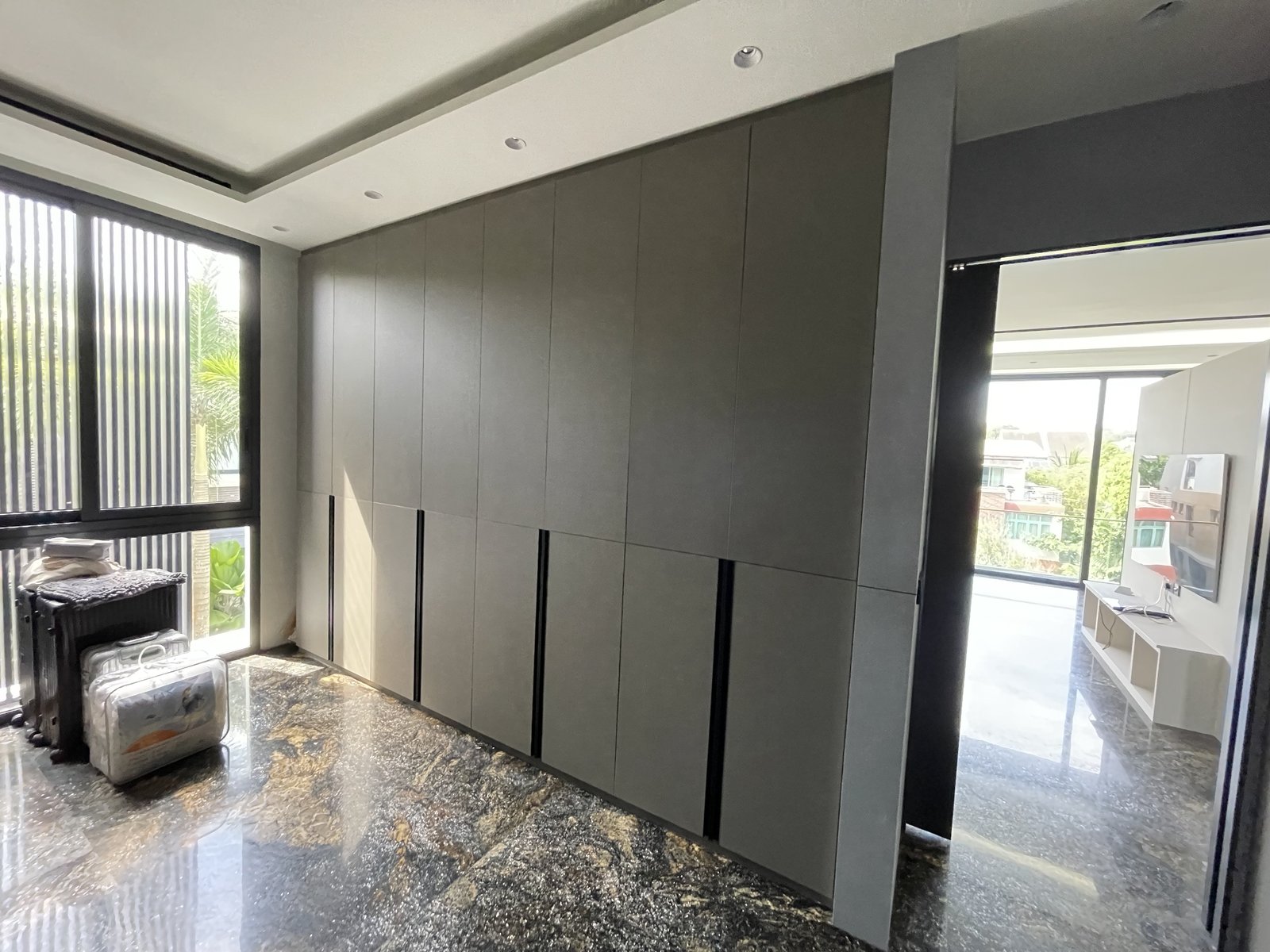
The most common self-inflicted damage on a large residential package is delivering furniture into units that are not ready. Once it is in an unfinished apartment it gets moved out of the way by other trades, stacked in a corner, mixed between units, exposed to dust from wet trades, and handled three or four more times than the installation sequence required.
Release therefore has to follow actual unit readiness, which means holding stock in a warehouse and issuing it by unit or stack as rooms become available. Our guides to room-by-room kitting and staged delivery and warehouse receiving and inspection cover how the staging is organised.
What has to be true before a unit is released for installation:
- Wet trades complete and the unit dry
- Finished floor level laid and protected
- Ceiling closed where joinery abuts it
- M&E first fix complete and positions verified against the FF&E drawing
- Power available for installation and adjustment
- A clean, lockable unit with a controlled access route
- Protection in place on the delivery path and lift lobby
The Unit Register Is the Control Document
On a development of any size, the thing that actually gets managed is not the furniture – it is the status of every unit. Without a register at unit level, a project loses visibility surprisingly quickly: nobody can say with confidence how many apartments are installed but not inspected, or inspected but awaiting a part, and the answer changes daily.
The register only works if it uses the same unit and item references as the rest of the project – the FF&E schedule, the carton labelling and the handover documentation. Where those three use different conventions, most of the site’s effort goes into translation. Our guide to asset tagging and room-by-room handover records covers how the references are normally structured.
Local Rectification Capacity Sets the Closure Rate
At volume, the constraint on closing a defect list is not how quickly items can be inspected. It is how quickly they can be rectified. If every issue – a scratched lacquer door, a damaged edge, a panel that needs trimming, a failed runner – can only be resolved by a replacement from the factory, the outstanding list grows faster than it closes, and it keeps growing through the entire handover period.
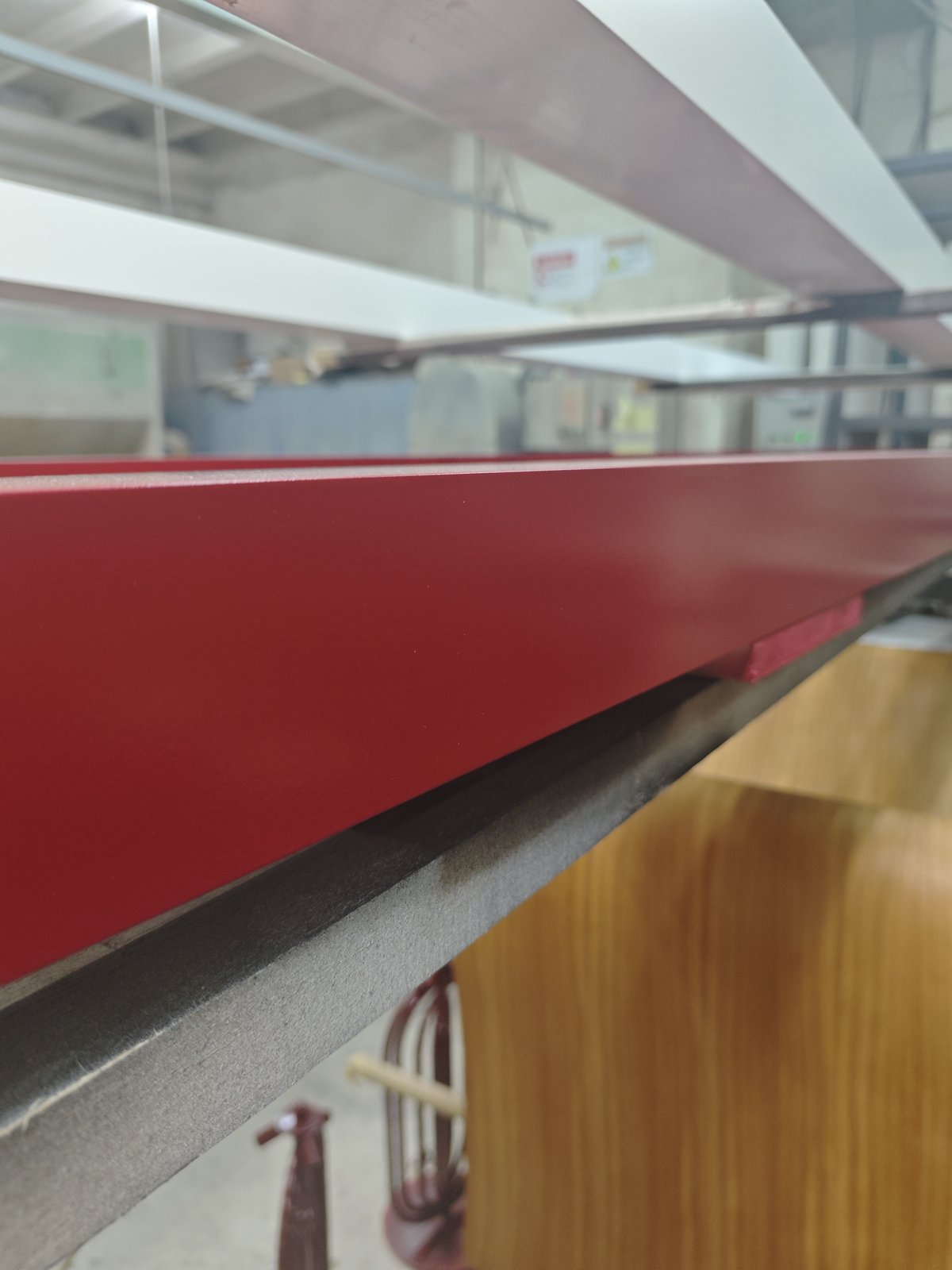
Where a local team can adjust, modify, refabricate a component and rectify a spray finish, most items close within days. The proportion that genuinely requires the original factory is small, and it is worth identifying that proportion early so those orders are raised in one consolidated batch rather than singly over four months. Our guides to on-site modification and spray-paint rectification cover what can be resolved here.
The Buyer Inspection Is Not a Consultant Inspection
A consultant inspects against a specification. An individual purchaser inspects against expectation, in daylight, with time, and usually with a checklist downloaded from a forum. They will find things a professional inspection does not prioritise – a door gap that is within tolerance but reads uneven, a filler that looks improvised, a soft-close that closes at a different speed from the one beside it, a joint visible under raking light.
Very few of those are defects in a contractual sense, and all of them are real to the person receiving the apartment. The practical response is to treat perceived-quality items as part of the finishing pass rather than arguing them at handover, because the argument costs more than the adjustment. Consistency across a run matters more here than absolute tolerance – two doors that are both slightly off but identical will pass, and two doors that differ from each other will not.
What buyer inspections consistently raise on FF&E:
- Uneven gaps and misalignment between adjacent doors and drawers
- Soft-close behaviour that differs between identical units
- Filler and scribe work that reads as improvised rather than deliberate
- Visible joints, edge chips and touch-up marks under natural light
- Colour or sheen variation between components in the same room
- Shelf pins, keys, spare parts and manuals missing from the handover pack
- Drawers and doors that catch, rub or do not hold position
Residential DLP Runs Unit by Unit, for a Long Time
A hotel’s liability period is administered by an operator with a maintenance team and a single reporting channel. A residential development’s is administered by hundreds of individual owners, reporting at unrecoverable moments, through a managing agent, over a period of a year or more – with occupancy already in place, which means access has to be arranged, appointments kept, and work carried out in somebody’s home.
That changes what the support arrangement has to look like. It needs local attendance, an appointment system, a classification that distinguishes furniture defects from building defects and from wear, a consolidated route back to the factory for genuine warranty items, and records good enough to establish responsibility when a claim is disputed. Our guides to after-sales and defect liability and warranty and after-sales support cover how this is normally set up, and containment for works in a live building covers rectifying inside an occupied home without disrupting the neighbours.
What a residential DLP arrangement has to provide:
- A single local channel the managing agent can use
- Appointment-based access into occupied apartments
- Classification separating furniture defects, building defects and wear
- Local rectification for the items that do not need the factory
- Consolidated batch ordering for the items that do
- A record per unit that survives a change of owner
- Attendance that lasts the full liability period, not the first month
What Changes Between Twenty Units and Three Hundred
Developers who have delivered smaller residential projects sometimes scale the same approach up, and it does not scale. Three things change qualitatively rather than quantitatively.
The three that change in kind, not degree:
- Tracking – informal knowledge of unit status stops working somewhere around forty units and has to become a register
- Rectification – the defect list stops being a snagging exercise and becomes a throughput problem with a closure rate
- Root cause – a repeated defect stops being an irritation and becomes the most valuable diagnostic signal on the project
A development that plans for all three from the start typically closes out in a fraction of the time of one that treats a three-hundred-unit package as a large version of a twenty-unit package.
How Rongda Pacific Supports Large Residential FF&E
Rongda Pacific Pte Ltd works as the Singapore execution scope on large residential and mixed-use developments, for developers, main contractors and the overseas manufacturers supplying them. On a package of this type that typically means receiving and inspecting the shipment, holding and releasing stock against unit readiness, installing to the manufacturer’s drawings, running the unit-level register, investigating repeated defects rather than only closing them, rectifying locally – including spray finishes in our own facility – and attending through the liability period.
The objective on a development is not to install furniture quickly. It is to keep the closure rate ahead of the inspection rate, so the outstanding list is shrinking during handover rather than growing.
Frequently Asked Questions
How is a residential development different from a hotel FF&E package?
A hotel hands over once to one operator with a professional inspection regime. A development hands over unit by unit to individual purchasers, each raising their own list, over months – and then the liability period runs in occupied homes. Sequencing dominates a hotel; closure rate and consistency dominate a development.
Why does a unit-level register matter?
Because informal tracking stops working at around forty units. Without a register nobody can say how many apartments are installed but not inspected, or inspected but waiting on a part, and the handover programme cannot be planned against a number nobody has.
What should be done when the same defect appears in many units?
Stop and find the cause before rectifying the rest. Establish whether it is production, a consistent site dimension, the installation method, packaging or a failing component – the remedy differs in each case, and finding it early can prevent hundreds of later defects.
Can imported FF&E defects be rectified locally at this scale?
Most can, after technical assessment – adjustment, modification, local refabrication, hardware replacement and spray-finish rectification. Identifying early which items genuinely need the factory allows those to be ordered as one consolidated batch instead of singly over several months.
How should buyer-inspection items be handled?
As part of the finishing pass rather than as a contractual argument. Most are perceived-quality items – gaps, alignment, soft-close consistency, touch-up visible in daylight – and consistency across a run matters more than absolute tolerance.
When should furniture be delivered to units?
Against actual unit readiness, not the shipping date. Furniture delivered into an unfinished apartment is moved, stacked, mixed between units and exposed to dust, and every extra handling is an opportunity for damage.
Can Rongda support DLP after the overseas team has left Singapore?
Yes, and on residential developments this is usually the most valuable part of the scope. It requires local attendance, appointment-based access into occupied homes, a classification system and records that survive a change of owner.
Do you work for the developer or for the overseas supplier?
Either, and sometimes both on the same project under separate scopes. What matters is that the responsibility split between factory and site is written down before the first container arrives.
More in FF&E Installation
 Rectifying FF&E in a Hotel That Has Already Opened: Room Nights, Housekeeping Access and the Remove-and-Return Cycle
 How Many Spares Should an Imported FF&E Package Carry? A Risk-Based Alternative to the 2% Line
 Design Approved Is Not Released for Production: The Gate That Stops a Repetitive FF&E Package Being Made Wrong at Scale