
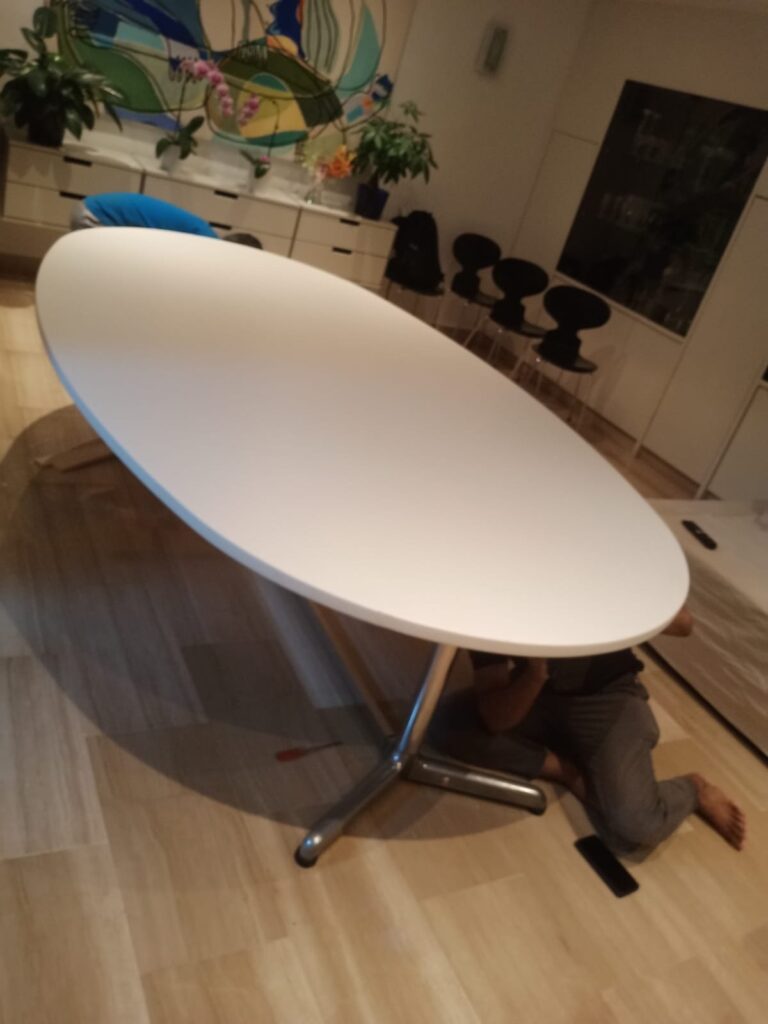
Most damage to a painted finish does not arrive through use. It arrives through cleaning – a general-purpose spray applied to a matte lacquer, a scouring pad on a high-gloss door, an alcohol wipe used on a reception counter every morning for eight months. By the time anybody notices, the surface has changed in a way that cannot be polished back, and the conversation becomes a warranty claim that it is not.
Related service: custom carpentry and joinery in Singapore.
Spray-painted joinery is one of the most expensive finishes on a project and one of the least understood after handover. This article is about keeping it intact: what the finishes actually are, what cleaning does to them, what a safe routine looks like, and what has to be handed over so that whoever maintains the building knows any of it.

“Spray-Painted” Is Not One Finish
The term covers a range of coating systems with different hardness, different chemical resistance and different failure modes. A two-pack polyurethane on a commercial counter behaves nothing like a decorative lacquer on a residential door, and both behave differently again at different sheen levels.
What varies between painted finishes:
- Coating system – two-pack polyurethane, acid-catalysed lacquer, water-based, UV-cured
- Sheen level – matte, satin, semi-gloss, high gloss
- Film build and how many coats were applied
- Substrate – MDF, plywood, solid timber, metal
- Whether the surface was polished after spraying
- Age, and how fully the coating has cured
This is why generic advice is close to useless and why the handover record matters more than any rule of thumb. The right cleaning method for a specific item depends on which of these applies to it.
Why Cleaning Changes the Appearance
A painted surface reflects light according to its microscopic texture. Cleaning alters that texture in two opposite directions, and both are visible.
On a matte or satin finish, repeated wiping with pressure burnishes the surface – the micro-texture that scatters light is flattened, and the area becomes shinier than its surroundings. It reads as a patch, usually around handles and door edges, and it cannot be reversed by cleaning harder. On a high-gloss finish the opposite happens: fine scratches accumulate and scatter light, and the mirror becomes a haze. Neither is a coating failure. Both are cumulative and both are avoidable.
A Routine That Does Not Damage Anything
The safe method is dull and consistent, which is exactly why it gets abandoned in favour of whatever is under the sink.
Where a detergent is genuinely needed, a very dilute neutral one applied to the cloth rather than to the surface, followed by a clean damp wipe and a dry cloth, is the usual approach – and it should be tested somewhere inconspicuous first, on that specific item, before it becomes routine.
What Should Not Be Used
Most of the damage we are asked to rectify comes from this list, applied by somebody acting in good faith with a product that works perfectly well on a different surface.
Keep away from painted joinery:
- Scouring pads, melamine foam erasers and any abrasive cream
- Solvents – thinner, acetone, methylated spirits, lacquer thinner
- Alcohol-based sanitiser and disinfectant wipes used repeatedly on the same area
- Bleach and strong alkaline or acidic cleaners
- Furniture polish and silicone-based sprays, which build up and complicate later repair
- Wax, which alters sheen unevenly and interferes with any future touch-up
- Glass cleaner, generally ammonia-based, on adjacent painted frames
- Steam cleaners, anywhere near a painted panel or its edges
Silicone deserves a particular mention. Polishes containing it leave a residue that is difficult to remove completely and that causes defects in any subsequent refinishing – so a product used for years to keep a surface looking good can make it considerably more expensive to repair later. Our guide to spray-paint rectification during installation and DLP covers what that repair involves.
Spills, Heat and Adhesives
Three categories account for most of the permanent marks on painted furniture in commercial use.
The recurring causes of permanent damage:
- Spills left to sit – coffee, ink, marker, cleaning product, anything coloured or acidic
- Hot items placed directly on a painted surface, which can soften or mark the film
- Heat and direct sun through glazing, which shifts colour unevenly over months
- Adhesive tape, labels and stickers, which lift coating when removed
- Attempts to remove adhesive residue with solvent, which removes the finish with it
- Suction cups, adhesive hooks and cable clips on painted faces
- Trolleys, equipment and luggage making contact with the same edge repeatedly
Adhesive removal is worth its own instruction, because the instinct is always wrong. Peeling tape from a painted surface often takes coating with it, and reaching for thinner to clean the residue almost always destroys the finish under it. Warmth and patience, then a neutral cleaner, then stop – and if that does not work, the item needs a finisher rather than a stronger product.
Singapore’s Indoor Environment Is Part of the Equation
Painted joinery here lives in a narrower band than it looks. Air-conditioning cycles create daily temperature and humidity swings; unconditioned periods over a weekend or a shutdown let humidity climb; large glazed facades deliver direct sun to whichever run happens to face them.
The visible consequences are colour shift on sun-facing surfaces, movement at joints where substrate and coating respond differently, and moisture ingress at edges and cut-outs where the film is thinnest. None of this is dramatic over a week and all of it is obvious over two years. Our guide to humidity, acclimatisation and environmental control for imported furniture covers the same physics on the installation side.
High-Touch Zones Differ by Building Type
Wear is not evenly distributed, and knowing where it concentrates is most of a maintenance plan.
Where painted finishes wear first:
- Reception and front-of-house counters – contact at one height, all day, plus equipment dragged across the top
- Door and drawer edges around handles, where hands and rings reach
- Kick and skirting zones on full-height runs, where trolleys and cleaning equipment make contact
- Pantry and coffee-point joinery, where heat, moisture and spills combine
- Hotel guest-room desks, wardrobe fronts and luggage-bench surrounds
- Lift-lobby and corridor joinery on the route housekeeping and service trolleys take
- Meeting-room credenzas where equipment is set down and cables are dragged
In a hotel the pattern is different again, because the same surfaces are cleaned several times a day by a rotating team working to a time standard. Where rectification does become necessary in a property that is already trading, the method changes as well – see our guide to rectifying FF&E in a hotel that has already opened.
Cleaning Staff Need Surface-Specific Instructions
A cleaning contractor arrives with a standard method and a standard trolley. Unless somebody tells them that the counter is matte two-pack, the wardrobe fronts are high gloss and neither should meet an alcohol wipe, they will apply the same method to both – correctly, by their own standards.
What a cleaning brief should specify, per surface type:
- Which finish it is, and at what sheen
- The approved cloth and cleaning product, by name
- What is explicitly prohibited
- Frequency, and which areas need daily rather than weekly attention
- What to do about a spill, and how quickly
- Who to report a mark to, rather than escalating the cleaning method
- A named contact for anything not covered
That last line prevents most serious damage. Almost every deep scratch and burnished patch we see began with somebody trying something stronger because the normal method was not working.
What the Handover Record Has to Contain
None of the above is usable unless the information survives handover. The building will change facilities managers and cleaning contractors several times during the life of the furniture, and the specification will not be obvious from looking at it.
Hand over, per painted item or item type:
- The coating system, colour reference, sheen level and production batch
- Retained approved samples and a control panel, stored locally
- A small quantity of the approved coating with its batch reference recorded
- The cleaning and prohibited-product instruction
- Which items are high-touch and warrant closer attention
- Who to contact for rectification, and what is covered by warranty
The control panel is the part most often skipped and the part most useful later, because a colour code will not tell anybody whether a sheen has drifted, and a photograph will not settle it either. Our guides to spare parts strategy for imported FF&E and asset tagging and room-by-room handover records cover how that material and its references are held.
Cleaning Damage Is Not Always a Defect
This distinction becomes uncomfortable during the liability period, so it is better established beforehand. A coating that lifts, cracks, blisters or fails to adhere is a defect. A surface that has been burnished by pressure, hazed by abrasion, etched by solvent or stained by something left overnight is damage – and the two have different owners and different remedies.
Establishing which is which usually comes down to pattern: a manufacturing defect tends to appear in the same place across multiple identical items, while cleaning damage concentrates around handles, edges and whichever surface a particular routine reaches. Our guides to after-sales and defect liability and warranty and after-sales support cover how that is normally handled.
When Touch-Up Is Appropriate, and When It Is Not
Small, isolated marks on a low-sheen finish in a non-critical location can often be touched up successfully. Large areas, high-gloss surfaces, anything on a prominent horizontal plane, and anything where the damage crosses a joint generally cannot – a touch-up on high gloss is usually more visible than the mark it replaced.
The decision is technical and made per item, and it is one of the main reasons to keep the retained coating and control sample. Where the right answer is removal and refinishing rather than in-place repair, that is a workshop job, and a component designed to be removable is the difference between a half-day and a week.
How Rongda Pacific Supports Painted Finishes After Handover
Rongda Pacific Pte Ltd operates its own spray facility and spray team in Singapore, which means the same party that applied a finish can assess it later. In practice, post-handover support covers issuing the cleaning and prohibited-product instruction at handover, retaining approved samples and batch-matched coating, assessing whether a mark is damage or defect, carrying out touch-up where it is appropriate, and removing components for workshop refinishing where it is not.
The cheapest version of all of this is the instruction sheet that reaches the cleaning contractor in week one.
Frequently Asked Questions
How should spray-painted furniture be cleaned day to day?
Dust dry first, then wipe with a clean soft microfibre cloth that is damp rather than wet, using light pressure in one direction, and dry immediately with a second clean cloth. Deal with spills when they happen rather than at the end of the day.
Can I use a general-purpose cleaner or disinfectant wipe?
Not as a routine. Alcohol-based wipes, ammonia-based glass cleaner, bleach and strong alkaline or acidic products all affect painted finishes over time. Where a detergent is needed, a very dilute neutral one applied to the cloth and tested somewhere inconspicuous first is the usual approach.
Why has the matte finish around the handles gone shiny?
That is burnishing – repeated wiping with pressure flattens the micro-texture that makes a matte surface matte, so it reflects more light than the area around it. It is cumulative, it concentrates where hands reach, and it cannot be corrected by cleaning more thoroughly.
Why does my high-gloss door look hazy?
Accumulated fine scratches, usually from dust being wiped across the surface or from an abrasive cloth or pad. On gloss, the fix is professional polishing or refinishing rather than any cleaning product.
Is furniture polish a good idea?
No. Silicone-based polishes leave a residue that is hard to remove and that causes defects in any later refinishing, so a product used to keep a surface looking good can make eventual repair considerably more expensive.
How do I remove sticker or tape residue?
Warmth and patience, then a neutral cleaner, then stop. Peeling tape often lifts coating, and using thinner or acetone on the residue will remove the finish underneath. If that does not work, the item needs a finisher rather than a stronger product.
Is cleaning damage covered by warranty?
Generally not. A coating that lifts, cracks, blisters or fails to adhere is a defect; a surface burnished by pressure, hazed by abrasion, etched by solvent or stained by a spill left overnight is damage. The distinction is easier to establish if it is agreed at handover rather than argued later.
What should be handed over with painted furniture?
The coating system, colour reference, sheen and batch; retained approved samples and a control panel held locally; a small quantity of the approved coating with its batch reference; the cleaning and prohibited-product instruction; and a named contact for rectification.
More in Custom Carpentry & Joinery
 Integrated Appliances & Imported Cabinetry in Singapore: Why Fridges, Ovens and Dishwashers Need Early FF&E Coordination
 Local Spray-Paint Rectification for Imported Furniture in Singapore: Repairing DLP Defects Without Shipping Panels Overseas
 Reception Counters and Feature Joinery Installation for Corporate Offices