
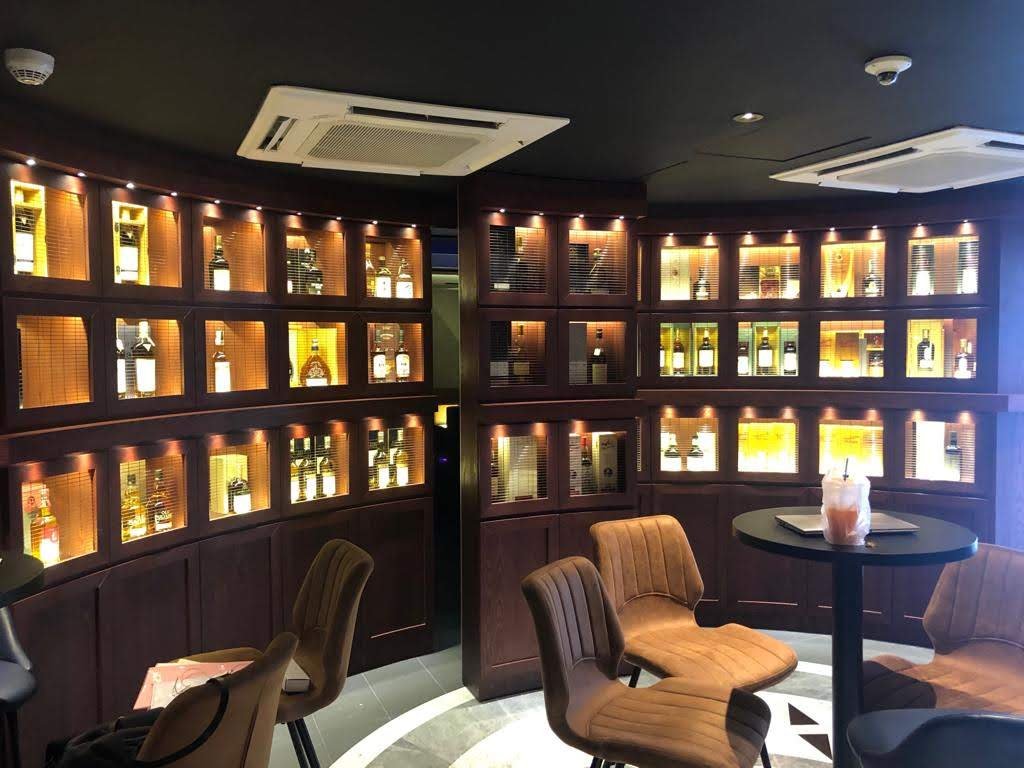
The crate is opened in a Singapore warehouse and the door fronts are a shade off. Not wrong, exactly – just not the same as the approved sample, and visibly not the same as each other under the building’s own lighting. Everybody agrees it is a problem. Nobody agrees whose. And the thing that would have settled it cost about a day of somebody’s time, three weeks earlier, two thousand kilometres away.
A pre-shipment inspection is the last point at which a manufacturing problem is cheap. After the container is sealed, every defect becomes a logistics problem, a programme problem and a commercial argument. This article sets out what to inspect at the factory, who should be in the room, how to record it, and why passing a factory inspection does not remove the need to inspect again on arrival.
A pre-shipment inspection is not the factory’s own QC
Factories run internal quality control, and good ones run it well. But internal QC answers the question “does this meet our standard?” A pre-shipment inspection answers a different one: “does this meet the approved project reference, and will it work on the actual site in Singapore?” Those are not the same question, and the second one cannot be answered by anybody who has not seen the site.
It is also a different question from the check that happens after the goods land. Our guide to pre-delivery inspection in Singapore covers the warehouse check before installation; this article is the earlier control point, while the goods can still be corrected by the people who made them.
Freeze the reference before anybody travels
An inspection without an agreed reference is just two opinions in a factory. Before the date is set, the parties should be able to point at one frozen set of documents and samples and say: this is what the goods are being measured against.
The inspection reference set:
- Approved shop drawings at a stated revision, with the revision frozen for the inspection
- The approved physical finish samples – colour, sheen, grain, edge – not photographs of them
- The approved mock-up or first-off unit, where one was produced
- Hardware schedule with makes and model numbers, not categories
- The specification clauses that actually bind, including any fire or emission requirement
- The packing and shipping-mark specification
Where a mock-up room or first-off unit was built, it becomes the production reference and should be inspected first – see our guides to mock-up rooms and sample units and trial assembly of the first unit. A first-off inspection catches a systematic error once instead of five hundred times.
Who attends, and what a Singapore-side eye looks for
A factory inspection attended only by the factory is a self-assessment. The useful combinations are a client or consultant representative, a third-party inspection agency, or the Singapore installation contractor – and the last of those sees things the other two often do not.
What the installer looks for that an inspector may not:
- Whether the piece can physically get into the building – lift car, lobby, corridor, door swing
- Whether it can be handled by the number of people who will actually be on site
- Whether the fixing method suits the substrate that is really there, not the one on the drawing
- Whether the assembly sequence works in a finished room rather than an open factory floor
- Whether site tolerance has been allowed for, or the piece has been made to a perfect dimension
- Whether the packing can be moved through the building’s access route in one piece
Quantity and dimension first, because those cannot be fixed with a cloth
Count against the packing list and the order, by item and by room. A short delivery discovered at the factory is a production issue; discovered in Singapore it is an air-freight decision. Then measure – not everything, but the critical dimensions on a sample across the production run, and every dimension that is dictated by site rather than by the drawing.
Where site measurement drove the manufacture, check that the factory built to the measured dimension rather than the original design dimension. This is the single most common cause of an expensive problem, because the piece is perfect and still does not fit. Our guide to dimensional control and hold points covers how that drift happens.
Colour and finish across the whole run, not one approved sample
One perfect sample proves the factory can make one perfect piece. What matters on a hotel or a residential development is whether piece three hundred matches piece one, and whether the drawer front matches the door beside it.
Check across the run, under consistent light:
- Colour against the approved physical sample, not against a photograph or a screen
- Sheen level, which drifts between batches more often than colour does
- Grain direction and veneer matching where the specification calls for it
- Batch-to-batch variation between pieces that will sit next to each other
- Edge treatment – banding, radius, finish wrap, and whether the edge matches the face
- Visible surfaces that were treated as hidden, such as the underside of an overhang
Spray-painted work, and Singapore’s formaldehyde rule on interior paints
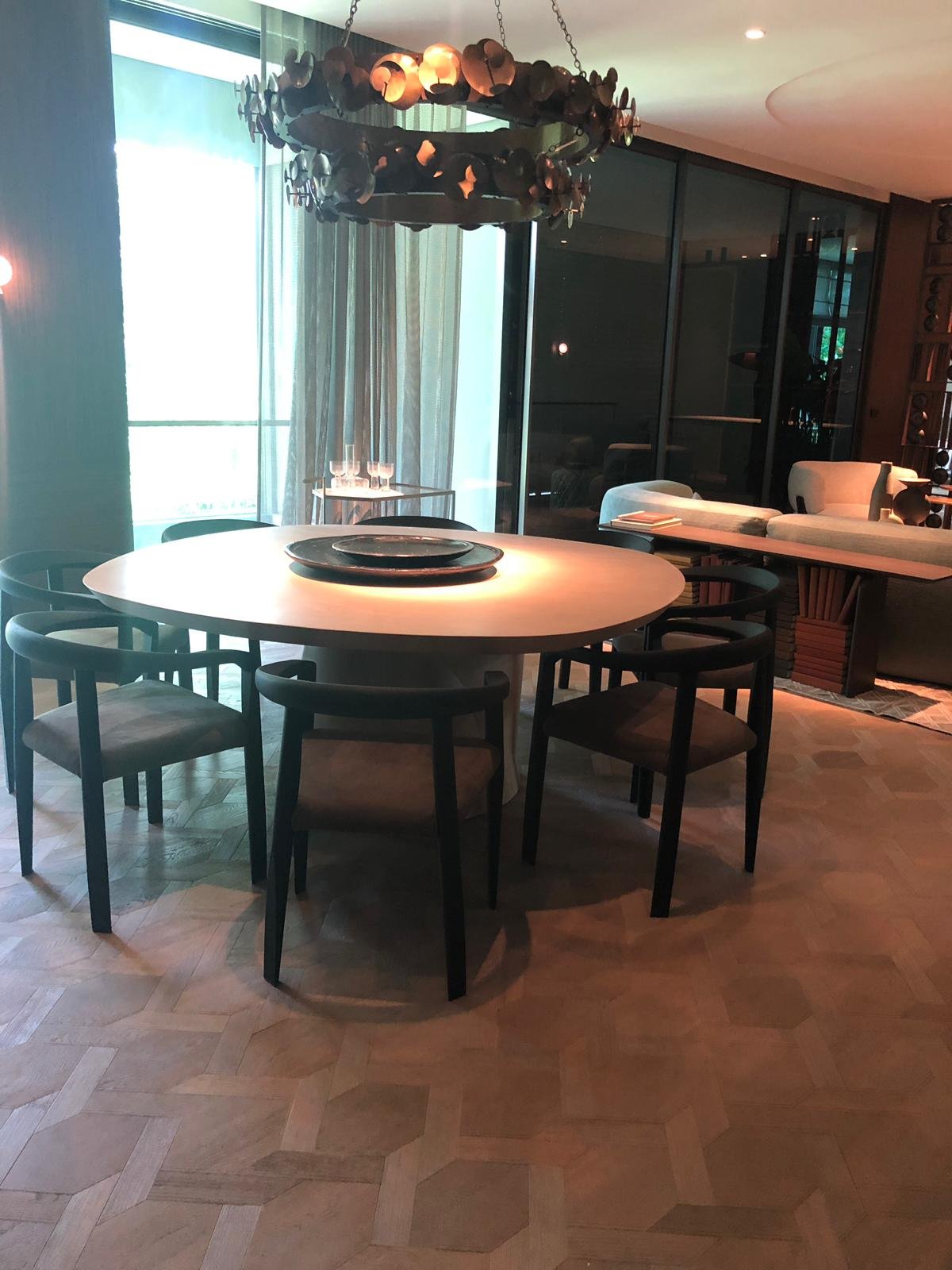
Spray-finished joinery needs its own checks, because the failures are specific: orange peel, runs and sags, dust inclusion, uneven film build at edges and returns, poor coverage inside recesses, and a sheen that varies across a long run. Check these under raking light rather than flat overhead light, which hides exactly the defects you are looking for.
There is also a regulatory point that has changed recently and is worth raising with any factory supplying coated work into Singapore. Since 1 January 2026, the National Environment Agency has prohibited the manufacture, import and sale for local use of interior paints containing formaldehyde at 0.01% by weight (100 ppm) or more. Manufacturers and importers have to hold test reports from accredited laboratories showing the measured in-can content sits below that limit, so it is a reasonable thing to ask a factory for before a coated batch ships. Industrial and outdoor paints are outside the ban but must be labelled where they are at or above that level.
What this does and does not say:
- It is a limit on formaldehyde in the paint product, not a volatile organic compound limit – no VOC content limit for architectural coatings applies here
- It bites on paint manufactured, imported or sold for use in Singapore, which includes anything your local finisher applies on site or in a local spray booth
- Whether a pre-finished imported article falls within the same control is a question for NEA, not for a contractor or a supplier, and should be put to them directly
- Either way, the useful question to the factory is which coating system was used, with the product data sheet to support it
- Confirm the current position with NEA before relying on any of this
This sits alongside the panel question rather than replacing it. Formaldehyde emission from the board itself is graded separately, and our guide to ENF, E0 and E1 formaldehyde grades sets out what those grades mean and how to specify them. A low-emission board finished with a non-compliant coating is not a low-emission product.
Hardware, function, and the interfaces nobody owns
Hardware substitution is the most common quiet downgrade in imported joinery, because a hinge that looks the same costs a fraction and fails in two years. Check the stamped model number against the schedule, not the appearance. Count the hinges per door – a specification calling for three and a production run using two is a real and frequent finding.
Function test, on a sample from every type:
- Every drawer opened and closed to full extension, loaded if the specification requires it
- Every door swung, checked for alignment, and left closed to see whether it stays
- Soft-close and push-to-open mechanisms actually operating, not merely fitted
- Locks, catches and adjustable feet or levellers working through their range
- Knock-down items trial-assembled, with the fittings and instructions that ship with them
- Anything electrical powered up, with the correct plug type and voltage for Singapore
Most of what goes wrong in imported joinery goes wrong at a junction with something the factory did not make. Appliance apertures sized to the wrong model, a cut-out that does not allow for the appliance’s ventilation clearance, a stone top templated to a cabinet that was later adjusted, a metal frame that does not line up with the carcass it is bolted to, or no provision at all for the power and data that the piece is supposed to conceal.
Where appliances and stone are involved, the physical items should ideally be present at the inspection, or their templates should. Our guides to integrated appliances in imported cabinetry and interface coordination between trades cover the clearances and sequences these depend on.
Classify defects by severity, and never let packaging hide one
A list of two hundred photographs with no severity ranking is not an inspection report, it is a photo album. Classify, because the classification is what drives the decision.
Agree the acceptable number of minor defects before the inspection rather than arguing it during one. And be alert to the reverse failure: a defect wrapped carefully so that it is not found until the piece is unwrapped on site. Packing that is unusually thorough over one face is worth opening.
Packing is part of the product, and it should be packed for the Singapore site
Packing is specified least and causes damage most. Corners, edges and high-gloss faces take the impact; glass, stone and mirror need their own protection; and anything that will be stored before installation needs protection that survives storage rather than just transit.
Packing specified for the receiving end, not the despatching end:
- Room-based or zone-based packing where the project is a hotel or a residential development, so that a crate maps to a location rather than to a product type
- Shipping marks that carry project, room or zone, item reference and a handling instruction, in English
- Weight marked where a crate needs more than two people or mechanical handling
- Fragile and this-way-up marked where it matters, and meant
- A packing list that matches what is inside, item by item
- Photographs of each crate’s contents taken before it is closed
Room-based packing changes installation efficiency more than almost any other decision, because it removes a sorting operation from a live site where there is nowhere to sort. Our guide to container unloading and warehouse receiving covers what happens to a container that was packed by product type instead.
The report, the punch list and who releases the shipment
A usable report says what was inspected, against what reference, by whom, on what date, and what was found – with each finding carrying a location, a severity, a photograph with context and a required action. A photograph of a scratch with no indication of which unit it is on cannot be actioned.
The report should close with a factory punch list and an explicit decision: release, release with recorded minor defects, or hold for rectification and reinspection. Where rectification is required, the reinspection verifies the corrective action rather than repeating the whole inspection. And the authority to release should be written into the contract, along with whatever payment milestone depends on it – our guide to progress claims and retention covers how off-site value is normally tied to these events.

Passing a factory inspection does not cancel the receiving inspection
Goods pass a pre-shipment inspection and still arrive damaged, because stuffing, sea transit, handling and de-stuffing all happen afterwards. The purpose of inspecting again on arrival is not distrust; it is to separate manufacturing defect from transit damage while that distinction can still be evidenced, because the two are recovered from different parties.
That separation is only possible if the factory condition was photographed. Without it, every defect found in Singapore becomes a negotiation. Our guide to local spray rectification during the defects liability period covers what can be repaired here and what has to go back, and the handover record for all of it belongs in the package described in our guide to fit-out handover documents.
How Rongda Pacific works at the factory end
Rongda Pacific Pte Ltd is a Singapore carpentry and joinery manufacturer as well as an FF&E installation contractor, which is the reason we are useful at an overseas inspection: we are reading the work as people who also produce it, and who will be the ones installing it.
What we bring to a pre-shipment inspection:
- The site dimensions and conditions, because we measured them
- A view on whether the piece can be delivered into the building and handled by the site team
- In-house spray finishing, so finish defects are assessed by people who produce that finish
- A realistic account of what we can rectify in Singapore and what has to be remade
- A packing specification written for the building’s access route and installation sequence
- A record set that survives into the handover documentation
Where local rectification is genuinely the better answer – and sometimes it is, for a small number of minor defects – that is a capability, not an excuse for a factory to ship work it should have corrected.
Frequently Asked Questions
What is a pre-shipment inspection?
An inspection of finished goods at the factory, before the container is sealed, against the approved project reference. It checks quantity, dimensions, colour and finish consistency, hardware, function, interfaces, workmanship and packing, and ends in a decision to release the shipment or hold it for rectification.
How is it different from the inspection when the goods arrive?
A pre-shipment inspection happens at the factory, where defects can still be corrected by the people who made the goods. The pre-delivery inspection happens in Singapore, before installation, and its main additional purpose is to separate transit damage from manufacturing defect. Both are needed; neither replaces the other.
Who should attend a factory inspection?
Not only the factory. A client or consultant representative, a third-party agency, or the Singapore installation contractor – ideally someone who has seen the site, because a large share of the costly findings are about whether the piece will get into the building and fit what is actually there.
Should every item be inspected, or a sample?
Sampling is normal for a large repetitive run, but 100% inspection is worth it for high-value items, bespoke one-offs, anything with a history of defects, and the first production batch. A first-off inspection on the first unit prevents a systematic error being repeated across the whole order.
What changed about formaldehyde in interior paints in Singapore?
Since 1 January 2026, NEA has prohibited the manufacture, import and sale for local use of interior paints containing formaldehyde at 0.01% by weight or more, under the Environmental Protection and Management Act. It is a limit on the paint product, not a VOC limit. Confirm the current position and its scope with NEA.
Does that rule apply to furniture that was painted overseas?
That is a question for NEA rather than for a contractor. The control as published addresses interior paint as a product. For imported pre-finished work the practical step is to ask the factory which coating system was used and to obtain the product data sheet, so that the question can be answered with evidence rather than assumption.
What should a pre-shipment inspection report contain?
What was inspected, against which frozen reference, by whom and when; each finding with a location, a severity classification, a photograph showing context, and the required action; a factory punch list; and an explicit release, conditional release or hold decision.
Is it cheaper to just rectify things in Singapore?
For a handful of minor cosmetic defects, often yes. For anything systematic it is far more expensive, because local rectification costs labour, space, programme time and sometimes a second delivery, and it happens when the site is already under pressure. Compare the cost of the inspection with the cost of the failure, not with zero.
More in FF&E Installation
 Rectifying FF&E in a Hotel That Has Already Opened: Room Nights, Housekeeping Access and the Remove-and-Return Cycle
 How Many Spares Should an Imported FF&E Package Carry? A Risk-Based Alternative to the 2% Line
 Large Residential Development FF&E in Singapore: Unit-by-Unit Handover, Defect Patterns and a Liability Period in Occupied Homes