A decade ago most custom furniture packages could be installed by experienced carpenters. Today’s luxury FF&E is a different object. One high-end display cabinet may combine timber, natural veneer, aluminium framing, tempered glass, decorative stainless steel, LED lighting, stone shelving and concealed electrical components – each with its own tolerance, its own handling rules and, usually, its own supplier.
Related service: metal fabrication in Singapore.
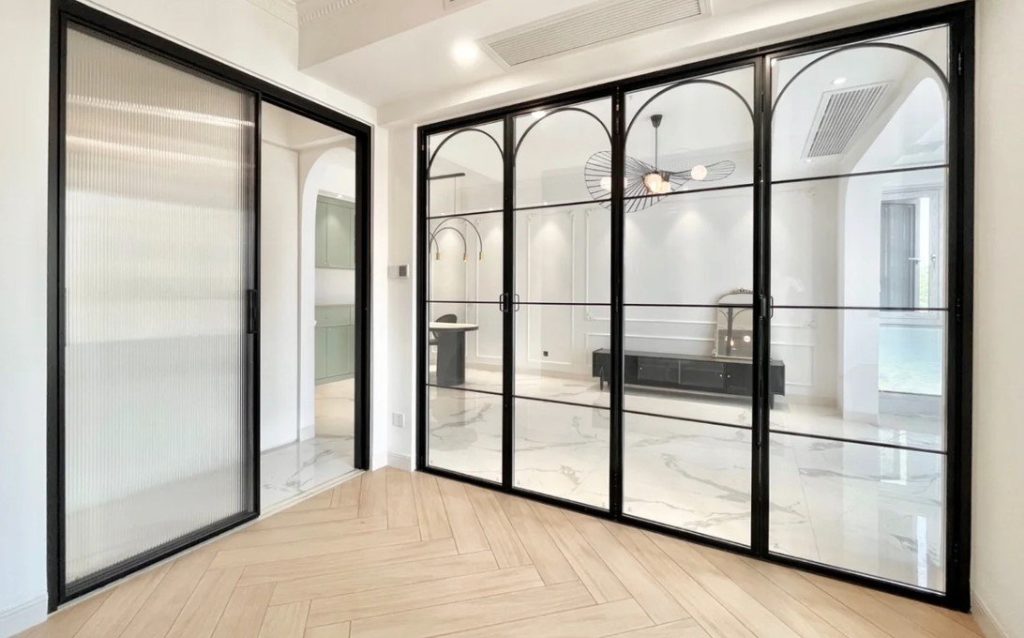
A luxury wardrobe may use slim aluminium-framed glass doors; a retail display wall may combine lacquered cabinetry, bronze metal, glass shelves and integrated lighting. That raises a question the drawings rarely answer: who coordinates all of these materials when they finally come together on a Singapore site? Successful installation here is not assembling individual components. It is making timber, glass, aluminium, metal, lighting, stone and the actual built condition work as one object.
A Cabinet Can Be Correct While the Furniture Still Looks Wrong
Consider a tall display cabinet. The timber carcass may be perfectly level, but if the aluminium frame is slightly twisted the glass doors will not close evenly. If the glass shelves are a few millimetres out of level, the lighting line makes it more visible. If the LED channel is misplaced, reflections in the glass expose wiring that was meant to stay concealed. Every contractor may have completed its own work correctly, and the finished furniture still fails.
This is the defining property of multi-material FF&E: the defect is usually not inside any one package. It sits at the boundary between two of them, where neither party’s scope, drawing or tolerance quite reaches. Which means it cannot be inspected out of the individual components – it has to be coordinated in.
Where multi-material furniture actually fails:
- Carcass square and plumb versus the tolerance a slim frame can absorb
- Frame-to-glass clearance, once the real glass thickness and edge treatment are known
- Shelf support position against the LED channel behind it
- Cable route versus the panel that later closes over it
- Stone thickness against the plinth or sub-top that was made for a different dimension
- Metal-to-timber junctions where two different finishes meet on one visible line
Tempered Glass Is Finished Before It Leaves the Factory
The single most important thing to understand about integrated glass is that it cannot be adjusted afterwards. Once glass is toughened it cannot be cut, drilled, notched or edge-worked – any attempt shatters the panel. Every hole for a hinge, every cut-out for a handle, every polished edge and every radius is fixed at the moment the order is placed, against dimensions taken from a drawing.
Timber absorbs error. A carcass three millimetres out can be scribed, filled or planed on site. Glass has no equivalent: a three-millimetre discrepancy between the drawing and the built cabinet means a new panel, a new lead time, and on a specified low-iron or coated glass that lead time is often measured in weeks. This is why the dimensions that glass depends on belong in the frozen set before production, not in the adjustable set. Our guides to design approval versus production release and professional site measurement cover how those dimensions are fixed and verified.
Fix before the glass is ordered, not after:
- Final opening dimensions taken from the built carcass, not the design drawing
- Glass thickness, and the clearance the frame actually provides for it
- Hinge and fitting positions, including any hole or notch
- Edge treatment and whether an exposed edge will be seen
- Coating, tint or low-iron specification, which drives the lead time
- Whether the panel has to pass through the door, lift and corridor in one piece
Aluminium-Framed Glass Doors Require Precise Cabinet Geometry
Slim aluminium-frame glass doors – used on wardrobes, wine cabinets, display cabinets and kitchen tall units – create a refined look, and the slim profile is exactly what makes an alignment error visible. A ten-millimetre timber door edge hides a lot; a twenty-millimetre aluminium frame with glass either side of it hides nothing.
So the door is not the first thing installed. The cabinet is checked and corrected first, and only then does the frame go on, because adjusting a door to compensate for a twisted carcass moves the error somewhere more visible rather than removing it.
Checked on the carcass before any frame or glass is fitted:
- Level across the full run, not per unit
- Plumb on both stiles, and square across the diagonal
- Opening dimensions at top, middle and bottom
- Hinge positions and their backing, including any reinforcement
- Whether the run is fixed to a wall that itself bows
- That the filler and scribe allowance is where the deviation will be absorbed
Glass and Decorative Metal Have Different Handling Rules
Timber tolerates controlled contact during assembly. Glass does not. It needs edge and corner protection, planned lifting, and somewhere specific to stand – never leaned against whatever wall is nearest while the installer works elsewhere. A small chip at an exposed edge converts a high-value component into a replacement item with a lead time, which is why glass is checked at the warehouse rather than after the matching cabinet is already installed on the top floor.
Decorative metal finishes – brushed or hairline stainless, black metal, champagne aluminium, bronze – have the opposite problem. They survive handling better than glass, and they are far harder to repair invisibly. A scratch across a long brushed-metal feature follows the grain direction and catches the light along its whole length; it cannot be filled and polished out the way a timber edge can. Our guide to warehouse receiving and quality inspection covers what is checked before anything reaches a finished room.
Metal Finishes Do Not Come Back the Same
The other reason metal damage is expensive is replacement. Brushed and hairline finishes vary with the grain direction and the polishing pass; anodised aluminium varies by bath; PVD and powder-coated finishes vary by run. A replacement part ordered a year later against the same product code can arrive correct on paper and visibly different in the room, next to the pieces made in the original batch.
That makes decorative metalwork one of the strongest candidates for batch-matched spares, and one of the weakest candidates for “we will reorder it if anything happens”. Our guides to spare parts strategy for imported FF&E and replacement parts and local rectification set out which components justify held stock. Where the specification matters structurally rather than cosmetically – wet areas, coastal exposure, external applications – our guide to 304 versus 316 stainless steel covers the grade question that sits underneath the finish.
Concealed Fixings, Glass Shelves and LED Reflections
High-end furniture aims to make its own construction disappear: no exposed screws, hidden mounting points, flush joints, continuous metal lines. That ambition has an assembly consequence, because a concealed fixing usually has to be installed before the adjacent panel closes access to it. Get the order wrong and the team has to dismantle completed furniture to reach one bracket.
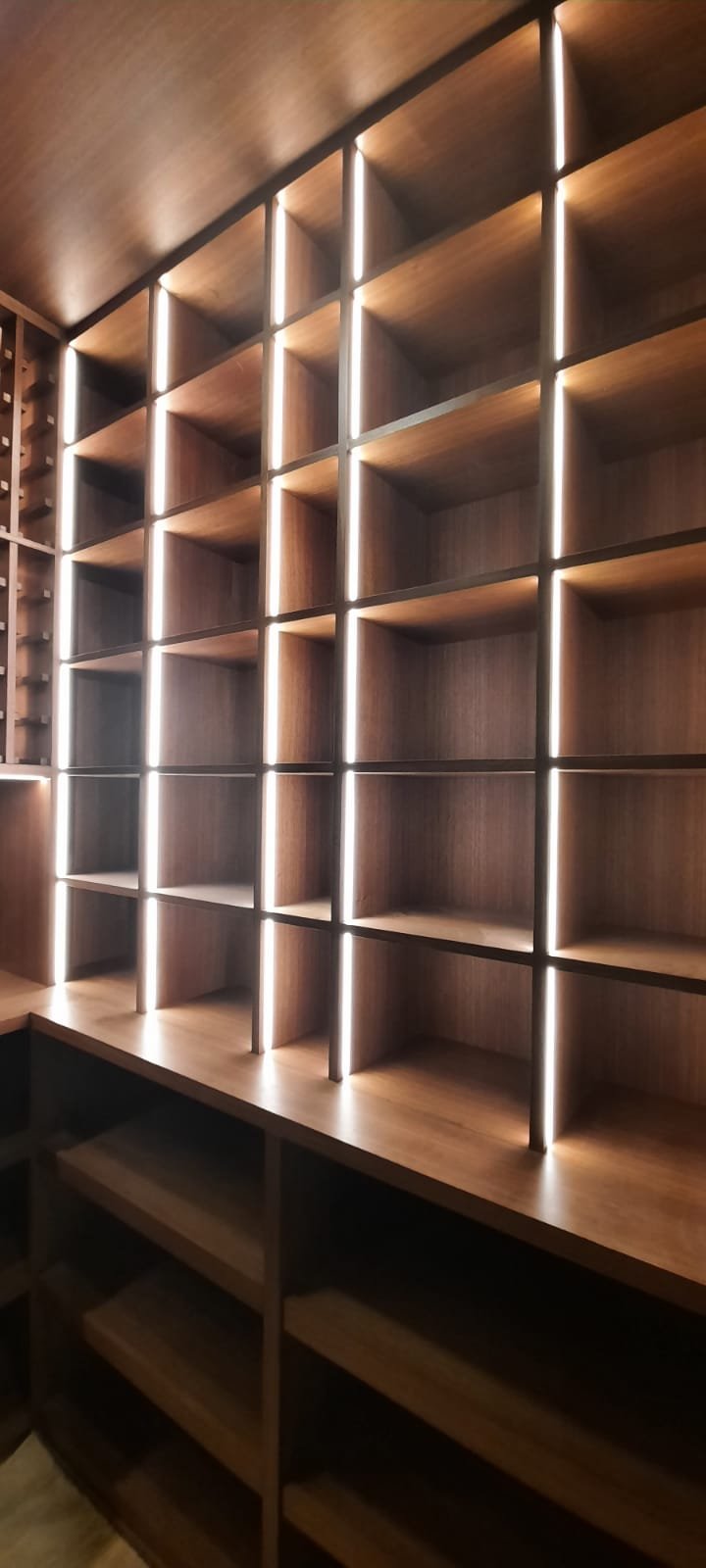
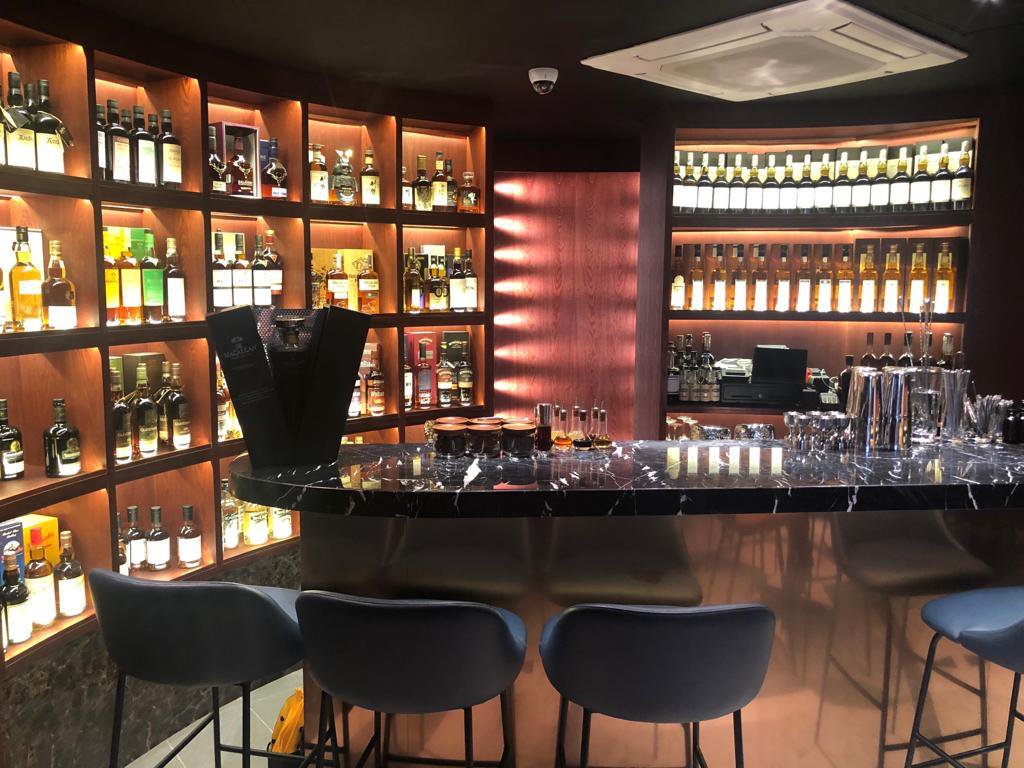
Glass shelves need correct support position, level and equal spacing, and small differences become obvious the moment an LED strip runs beneath each shelf. Because glass and polished metal reflect, the things normally hidden inside a timber cabinet – wiring, uneven LED strips, driver boxes, the unfinished back of a panel – become visible. Display furniture therefore has to be inspected with the lights on, from where somebody will actually stand, not from directly in front with the room lit.
Inspected with the lighting switched on:
- Shelf levels read against the LED line, not against the carcass
- Colour temperature consistent across every strip and every unit
- No visible hot spots, dark gaps or dot patterns through the glass
- No reflection of wiring, driver boxes or unfinished panel backs
- Consistent brightness between units that will be seen together
- Reflections checked from standing and seated eye level, and at an angle
Electrical Coordination and the Assembly Sequence
Integrated lighting needs power, drivers, sensors, switches, cable routes and future maintenance access planned before the final panels close. A driver concealed where it cannot be reached without dismantling a whole cabinet is not a detail – it is a service problem that arrives during the liability period, in a finished room, in front of the client.
Protective film deserves its own note. On anodised and coated metal it has to come off within the manufacturer’s window – left on too long, in Singapore’s heat, the adhesive bonds and removing it damages the finish it was protecting. That timing is a site decision, and it belongs to somebody by name.
Where the Metalwork Is Actually Made
Part of the coordination problem is that the metal in a furniture package frequently is not made by the furniture factory. Frames, brackets, decorative panels and support steel are subcontracted, which means a second drawing set, a second tolerance standard and a second finishing process feeding one finished item.
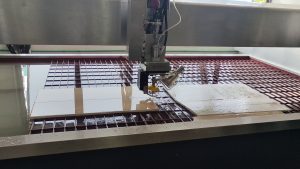
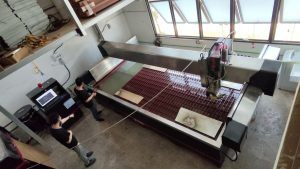
Where a component has to be fabricated or refabricated in Singapore – a bracket that does not fit, a frame section that arrives short, a support that has to suit the actual substrate – the capability question is specific. Our guides to the CAD-to-installed metalwork workflow, waterjet cutting for thick aluminium and stainless and laser welding stainless steel and aluminium cover what can be produced locally and to what standard.
Who Owns the Interface
Almost every failure described above sits between two scopes. The furniture supplier’s drawing stops at its own carcass; the glass supplier works to the opening it was given; the metal fabricator works to its own drawing; the electrician terminates at the driver. Each is complete, and the interfaces between them belong to nobody in particular.
The practical remedy is to name one party responsible for the finished object rather than for a package – the one who checks the carcass before the frame, confirms the opening before the glass is ordered, sequences the trades, tests with the lights on, and snags across all materials at once. Our guides to interface coordination between furniture and the other trades and the Singapore local execution layer set out how that scope is normally structured.
Snagging on a multi-material item covers, in one pass:
- Timber alignment, edges, filler and scribe work
- Aluminium and metal scratches, dents, joint lines and grain direction
- Glass chips, level, clearance and door operation
- Stone surfaces, joints and overhang support
- Lighting consistency, sensor operation and cable concealment
- Whether every maintenance access point can still be reached
The biggest risk on these packages is not a technical fault. It is six parties each saying the item is not in their scope, which is why the coordination is defined around the finished result rather than around the packages.
What to Confirm Before the Package Ships
Most of the cost in multi-material FF&E is decided before anything reaches Singapore. These are the items worth settling in writing while the factory can still act on them.
Confirm with the supplier:
- Which components are made in-house and which are subcontracted, and to whose tolerance
- Glass specification, thickness, edge treatment and every hole or cut-out position
- Metal finish, grain direction and the batch reference for the installed run
- Whether spare glass and metal components come from the same production batch
- Lighting specification, driver locations and how they are accessed for service
- The assembly sequence the item is designed to be built in
- Packing that keeps glass and finished metal separated and edge-protected
Our guide to installation-ready packing and documentation covers the last point, which is where most transit damage to glass and metal is decided.
How Rongda Pacific Coordinates Multi-Material FF&E
Rongda Pacific Pte Ltd handles these packages as one object rather than as several deliveries. In practice that means verifying openings before glass is ordered, receiving and inspecting glass and finished metal at the warehouse rather than in the room, levelling and correcting carcasses before any frame is fitted, sequencing stone, metal, glass and lighting so nothing installed early has to come out again, testing illuminated display work with the lights on, and snagging across every material in a single pass.
Where something does not fit or arrives damaged, local capability decides how expensive it becomes – on-site modification, locally fabricated metalwork, and finish rectification in our own spray facility, covered in our guide to spray-paint rectification during installation and DLP.
Frequently Asked Questions
Can Rongda Pacific install imported furniture with aluminium and glass components?
Yes. Depending on scope we coordinate imported cabinetry with aluminium framing, glass, decorative metal, stone, integrated lighting and the associated electrical interfaces, and snag them as one item.
Why are aluminium-framed glass doors harder to install than ordinary cabinet doors?
Slim frames and large glass surfaces make alignment differences visible that a thicker timber door would hide. The underlying cabinet has to be level, plumb and square first – adjusting the door to compensate moves the error somewhere more obvious.
Why can’t tempered glass be adjusted on site?
Because toughening is the last process. Once glass is tempered it cannot be cut, drilled or edge-worked without shattering, so every dimension, hole and cut-out is fixed when the order is placed. A discrepancy means a new panel and a new lead time.
Can damaged glass be replaced locally in Singapore?
For common specifications, often yes. Specialised tints, coatings, textures, low-iron glass or proprietary components may still need the original supplier, and the lead time is the reason glass is inspected at the warehouse rather than after installation.
Will a replacement metal component match the installed ones?
Not reliably. Brushed and hairline finishes vary with grain and polishing pass, anodising varies by bath, and PVD and powder coating vary by run. Decorative metalwork is one of the strongest cases for holding batch-matched spares from the original production run.
Should glass be installed before or after stone?
Stone first in most designs, because it is heavier, less forgiving to manoeuvre and more likely to disturb anything already fitted. The correct order is set per item and agreed before installation starts, not improvised on the day.
Can integrated cabinet lighting be installed together with the furniture?
Yes, where it is coordinated with the electrical scope. Power, drivers, cable routing and maintenance access have to be settled before the cabinet is permanently closed – a driver that cannot be reached later is a service problem, not a detail.
Do you provide snagging for glass and aluminium furniture?
Yes, across carpentry, glass, aluminium, decorative metal, stone and lighting in one pass, with illuminated work inspected under its own lighting. The client sees one finished item, so it is snagged as one.