
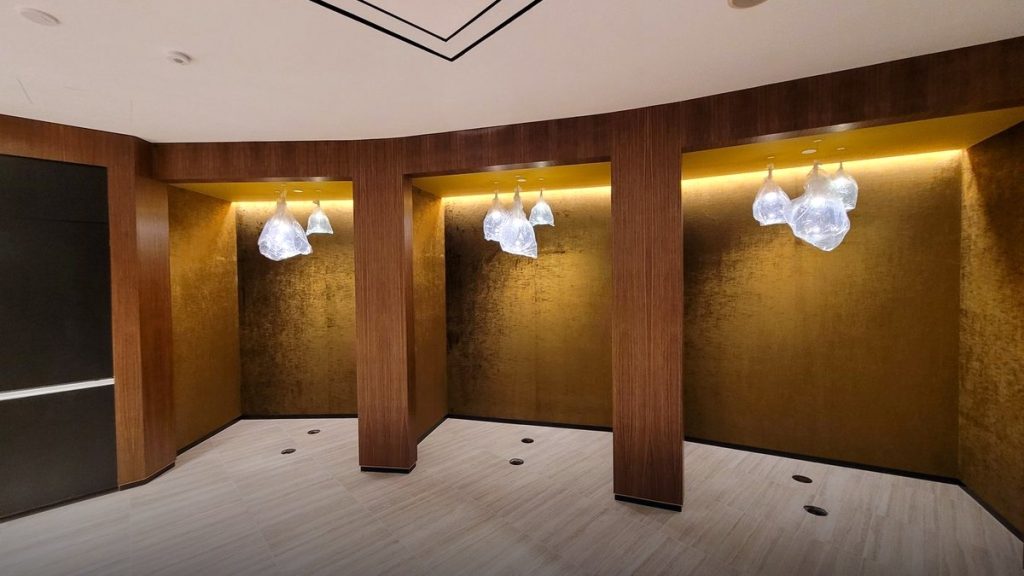
Your factory can produce work that competes with anything made in Europe. The problem is not the furniture. It is that the last two per cent of the project happens eight hours’ flight away, in a building nobody from your team has stood in — and that is the part your client will judge you on.
Related service: FF&E installation services in Singapore.
Excellent Furniture, No Local Presence
Chinese manufacturers have won a large share of Singapore’s custom furniture market on capability and price. What almost none of them have is a Singapore-side team. So when the container lands, the manufacturer is dependent on whoever the client happened to engage — often a general contractor with no experience of imported cabinetry, cam-lock systems or the factory’s assembly logic.
The furniture then gets blamed for the result. A run installed without levelling, a panel forced instead of scribed, a cam tightened on an unseated joint — all of these produce a finished room that looks like a manufacturing failure and is not.
What Actually Goes Wrong Without a Local Partner
These are the recurring failure modes, in roughly the order they cost the most.
The five expensive ones:
- A dimensional discrepancy becomes a return shipment instead of a morning’s trimming — weeks lost, freight paid twice
- Transit damage is discovered in a finished room rather than at a warehouse, so the claim window has closed
- Hardware packs are short-shipped and nobody notices until installation day
- Stone cut overseas to a drawing does not fit the installed cabinetry, and cannot be trimmed
- A warranty claim arrives with no condition record, so responsibility cannot be established either way
Every one of them is a coordination failure rather than a production failure — and every one of them lands on the manufacturer’s reputation.
What a Singapore Installation Partner Provides
The role is not simply labour. It is the local half of the delivery chain, executed to your drawings and your finish standard.
Operational scope:
- Site measurement against the built condition, fed back before you cut
- Container receiving, quantity and condition inspection, hardware reconciliation
- Warehouse storage and release staged against site readiness
- Delivery coordination, lift booking and access planning
- Assembly to your sequence, levelling, scribing, fixing and final adjustment
- On-site modification and locally fabricated replacement panels
- Stone templating and local fabrication after cabinetry is installed
- Protection, snagging, handover and defect-liability attendance
The work is carried out to the manufacturer’s drawings, specifications and intended finish — not reinterpreted. Where a deviation is unavoidable because of the built condition, it is documented and sent back rather than improvised silently.
Protecting Your Brand and the Client Experience
A Singapore client evaluating your factory is not evaluating the panel. They are evaluating the door gap, whether the drawer closes evenly, whether the filler looks deliberate, and whether somebody answered the phone when something needed adjusting three months later.
Those are all local outcomes. A manufacturer with a competent Singapore partner is judged on the finished room; one without is judged on whatever the site team happened to produce. Over several projects that difference compounds into whether designers specify your factory again.
The Commercial Case, Concretely
The argument for local capability is not quality in the abstract. It is the cost difference between four ways of solving the same problem.
A manufacturer who can keep problems in the first three rows carries dramatically lower warranty and rework cost than one whose only remedy is another container. Our guides to on-site modification of imported furniture and replacement parts and local rectification set out what can realistically be resolved here.
A Clear Split of Responsibilities
Most disputes between a factory and a Singapore site are about a task nobody was contracted to do. Setting the split out before the first order removes almost all of them.
The factory retains:
- Manufacture to the approved drawing revision
- Hardware, fixings and assembly documentation
- Packing, labelling and the packing list
- Replacement parts under agreed warranty terms
- Proprietary finishes and materials that cannot be matched locally
The Singapore partner carries:
- Site measurement and feedback before production
- Receiving, inspection and storage
- Delivery, access and installation
- Local adaptation, modification and rectification
- Protection, snagging, handover and DLP attendance
Agreed case by case:
- Cost of local modification where an item does not fit
- Transit damage liability and the point at which risk passes
- Whether stone is supplied by the factory or fabricated in Singapore
- Cost and route for replacement parts
Our guide to the complete factory-to-Singapore workflow sets out the same split from the buyer’s side, which is useful to share with a client who is trying to understand who does what.
How the Working Relationship Runs
In practice the arrangement works best when the factory and the Singapore team talk directly rather than through the client, because most of what needs resolving is technical and time-sensitive.
What that looks like on a live project:
- Site measurements and photographs sent to the factory before production
- Drawing queries resolved directly, with the client copied rather than relaying
- A condition report with photographs after container receiving
- Modification records sent back so the next shipment corrects the cause
- Replacement part requests raised with references and images, not descriptions
- A handover record the factory can rely on if a warranty question arises
That feedback loop is the part manufacturers usually value most. A recurring fitment issue that would otherwise repeat across five projects gets corrected after the first, because somebody in Singapore measured it and told you why.
What We Need From Your Factory
To quote and plan the Singapore-side scope for a project, the following is what makes the estimate accurate rather than defensive.
Please send:
- Furniture and installation drawings, with the revision to be produced
- Packing list and item quantity schedule
- Hardware and connector specifications
- Assembly sequence documentation, where available
- Expected shipment and delivery dates
- Project address, building type and known access constraints
- Whether stone and appliances are within your supply or ours
Send documentation to [email protected], or message us on WhatsApp at +65 8897 3670 to discuss an ongoing installation partnership rather than a single project.
Frequently Asked Questions
We already have a Singapore client. Why do we need a partner as well?
Because your client is buying furniture, not installation capability. If the site team has no experience of imported cabinetry, cam-lock assembly or scribing, the finished room reflects on your factory regardless of how well the panels were made.
Do you work for us, or for the end client?
Either arrangement works. Some manufacturers appoint us directly and include installation in their offer to the client; on other projects the client engages us and we coordinate with the factory. What matters is that the responsibility split is written down before the first container.
Will you follow our drawings and assembly sequence?
Yes. We install to the manufacturer’s drawings, specifications and intended finish. Where the built condition forces a deviation, it is documented with photographs and measurements and sent back rather than improvised.
What happens when an item does not fit?
We assess it and take the fastest acceptable route — adjustment within the designed allowance, on-site modification, or local refabrication of the affected part. A return shipment is the last option, not the first.
Can you inspect goods before they leave China?
Our scope is the Singapore side. What we can do is receive, inspect and reconcile on arrival and give you a condition report with photographs, which is what supports a claim while the window is still open.
How do replacement parts work?
Raised with item references and images rather than descriptions, so the factory produces the right part first time. Where a part can be fabricated locally to match, we usually recommend that instead — days rather than months, and no production slot needed.
Do you handle stone?
Yes, and on most projects we recommend templating and fabricating it in Singapore after the base cabinetry is installed. Stone cut overseas to a drawing frequently does not fit and, unlike timber, cannot be trimmed on site.
Can this be an ongoing arrangement rather than one project?
That is where it works best. A standing relationship means the feedback loop actually closes — recurring fitment issues get corrected in the next production run instead of repeating across every project.
- Luxury Furniture Installation Services
- Why Imported Custom Carpentry Requires Professional Installation
- From China Factory to Singapore Home
- Luxury Retail Store Fit-Out and Display Fixture Installation
- Operable and Movable Partition Walls
- Direct Furniture Procurement From China: What to Settle Before Award
More in FF&E Installation
 Rectifying FF&E in a Hotel That Has Already Opened: Room Nights, Housekeeping Access and the Remove-and-Return Cycle
 How Many Spares Should an Imported FF&E Package Carry? A Risk-Based Alternative to the 2% Line
 Large Residential Development FF&E in Singapore: Unit-by-Unit Handover, Defect Patterns and a Liability Period in Occupied Homes