
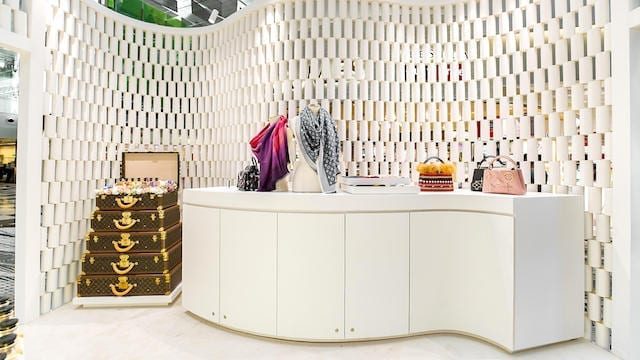
A luxury store is the physical expression of a brand, and it is inspected at a distance of thirty centimetres under lighting designed to reveal detail. Every misaligned shelf, uneven reveal and visible fixing is on display. Retail fit-out is also the least forgiving programme in the business: the opening date is set months ahead, the landlord’s handover is late more often than not, and the compression lands entirely on the last trade in.
Related service: commercial fit-out in Singapore.
Every Retail Space Represents a Brand
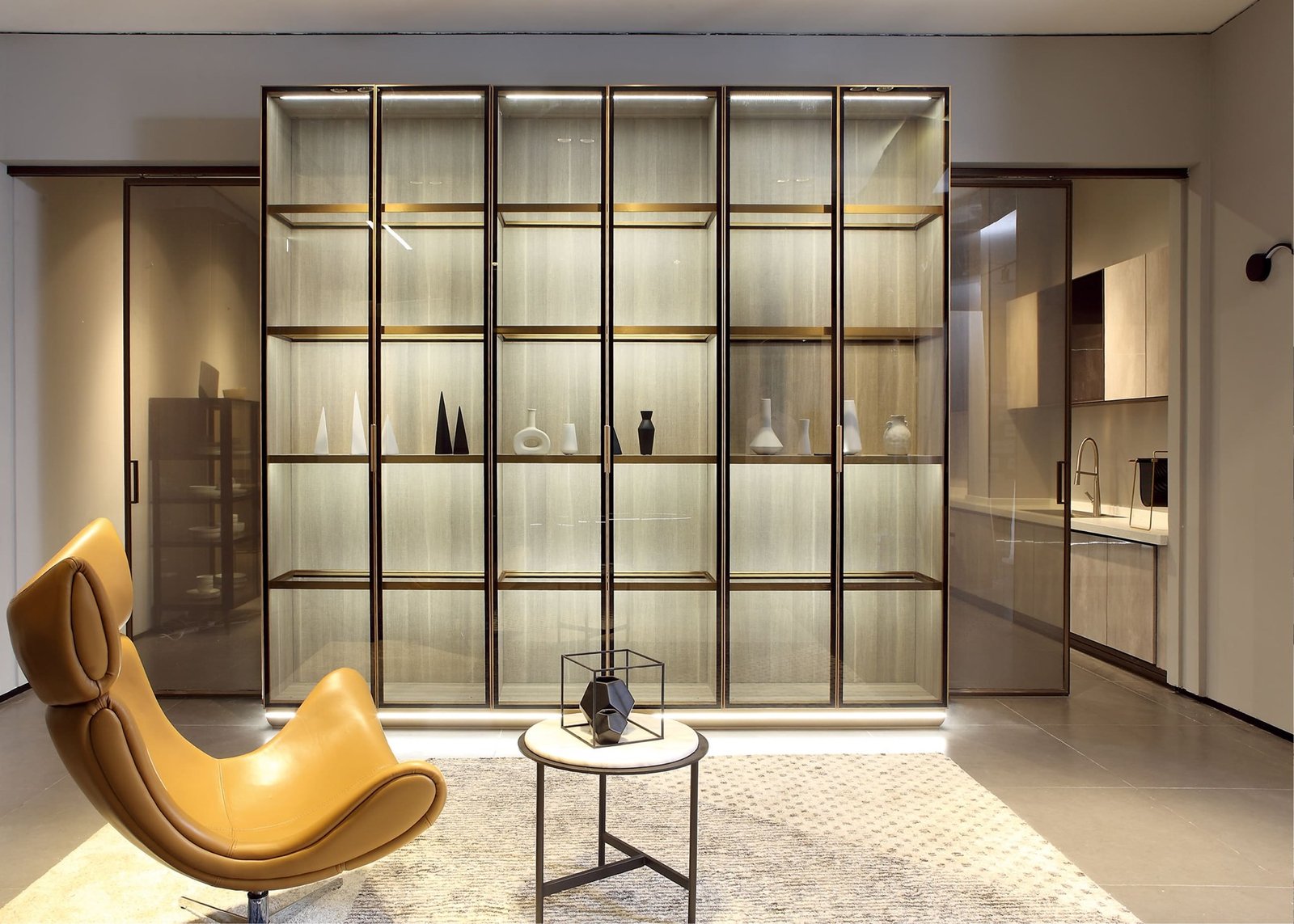
Customers do not evaluate a store as a set of components. They read the lighting, the display shelving, the cashier counter, the wall finishes and the alignment of every cabinet as one impression, and a single fixture that sits two millimetres proud of its neighbour undermines the rest of it.
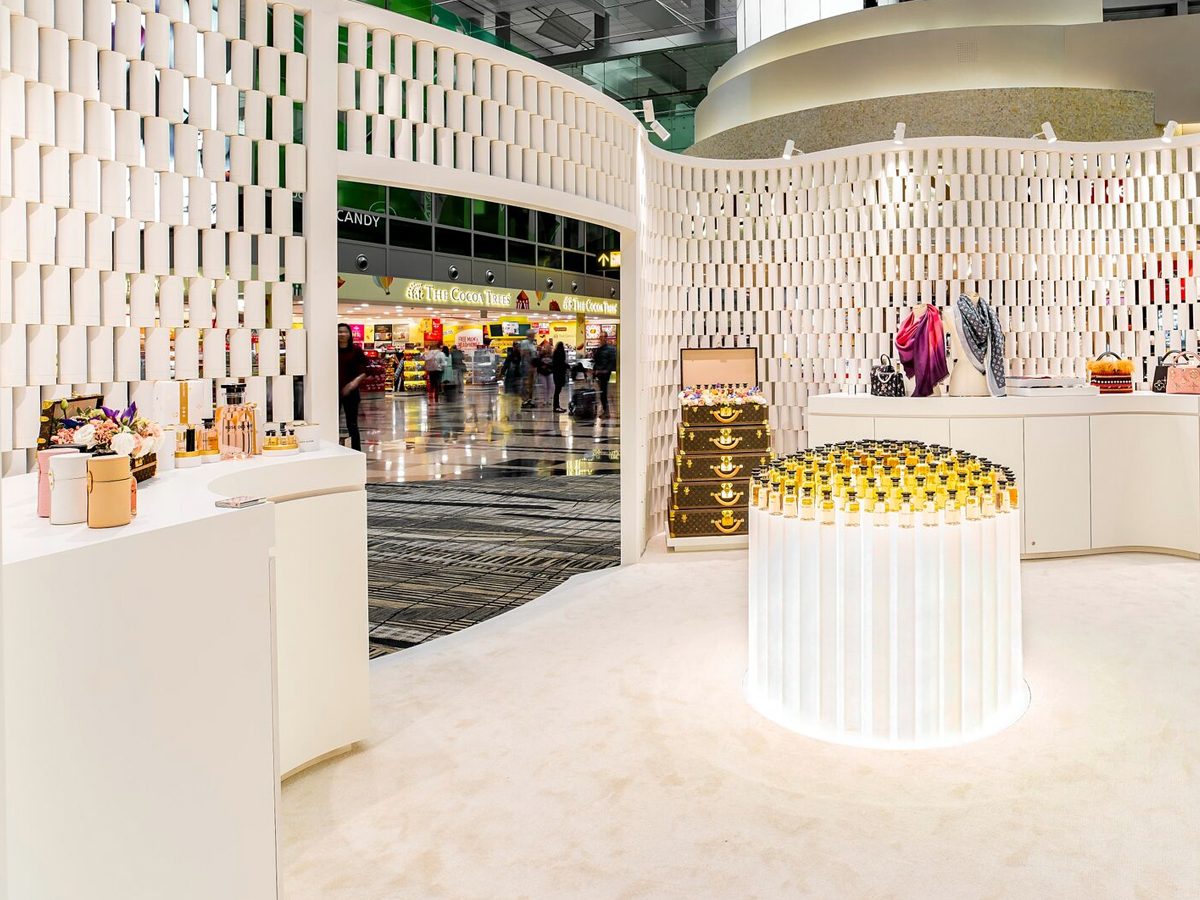
At Rongda Pacific Pte Ltd we install imported retail fixtures, custom display furniture and premium commercial interiors for luxury boutiques, flagship stores and shopping-mall tenancies across Singapore — including work delivered inside operating malls and airport terminals.
What a Retail Fit-Out Covers
Sales floor — high visibility, tight tolerances:
- Display cabinets, wall display systems and feature shelving
- Cashier and wrap counters, usually stone-topped and lit
- Product islands, plinths and glass showcases
- Decorative wall panels and feature finishes
Back of house — invisible, but on the same critical path:
- Stockroom shelving and stock-handling systems
- Staff storage, office furniture and pantry cabinetry
Brand elements — the items with the longest lead times:
- Illuminated logos and signage supports
- Digital display integration and screen mounts
- Feature lighting and integrated LED shelving
Precision Is the Product
Unlike residential furniture, retail fixtures are viewed constantly, from every angle, by people who are standing still. Professional installation delivers perfect alignment, consistent display heights across a run, hidden fixings, seamless joints, even lighting and clean finishing details.
What close-range retail lighting exposes that domestic lighting hides:
- Shelf-to-shelf height variation across a wall run
- Reveal and shadow-gap inconsistency between adjacent cabinets
- Visible fixings, packers and unfilled service holes
- Panel bow and flatness on tall lacquered or veneered surfaces
- Colour and sheen variation between components from different batches
- Sealant lines that are uneven or the wrong colour against stone
Several of those are not installation defects at all — they are material and environmental behaviour arriving on site. Batch variation in lacquer and veneer, and panel movement after shipping, both show up under retail lighting long before anyone would notice them in a home. Our guide to humidity, acclimatisation and environmental control covers why imported panels keep moving after they arrive.
Imported Fixtures Need Careful Receiving, Not Just Careful Handling
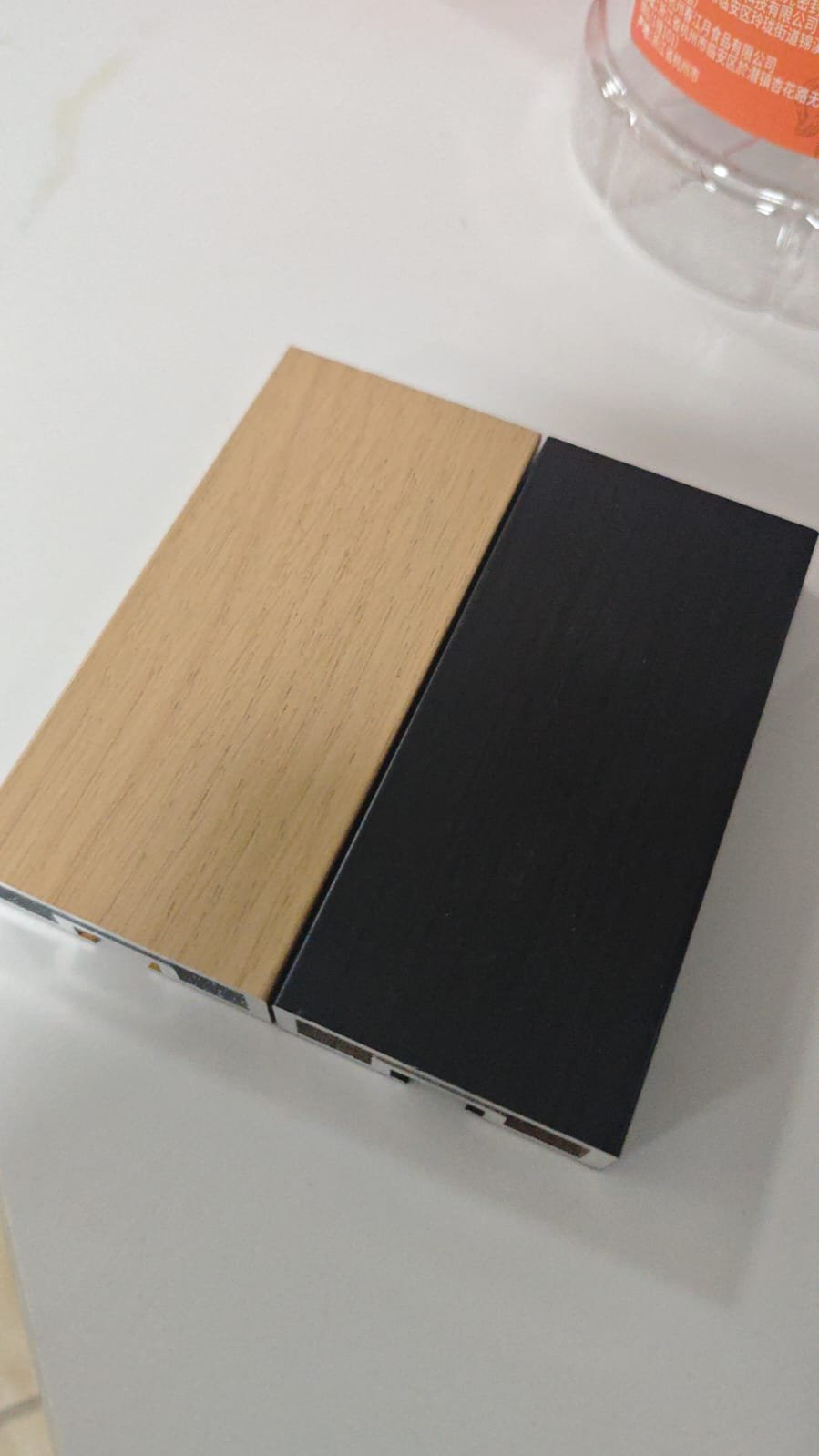
Many brands manufacture fixtures overseas against a global standard — veneered cabinetry, lacquered display units, glass showcases, stainless-steel displays, marble counters and LED-integrated shelving. These are high-value, delicate, and frequently irreplaceable within the programme.
The most expensive mistake is discovering damage on the shop floor rather than at the warehouse. A cracked showcase glass found during receiving can be reordered while the carcass work continues; the same crack found the week before opening is a hole in the store. Structured receiving, condition inspection and defect quarantine are what keep that decision early. Our guides to container unloading and FF&E receiving and defect tagging, quarantine and the FF&E defect register cover how damaged components are contained before they reach the store.
Working Inside an Operating Mall
Most retail fit-out in Singapore happens inside a building full of paying customers and neighbouring tenants who are trading. The mall’s rules, not the programme, decide what can be done and when.
Constraints that shape a mall fit-out programme:
- Approved working hours, usually excluding trading hours entirely
- Loading bay allocation and goods-lift booking, often shared across the mall
- Hoarding requirements, appearance standards and signage on the hoarding
- Noise restrictions — drilling and cutting are frequently night-only
- Dust control and protection of common areas along the delivery route
- Daily waste removal, with no accumulation in back-of-house corridors
- Fire, safety and hot-works permits, plus worker registration
The practical consequence is that useful working hours are far shorter than the calendar suggests. A four-week programme inside an operating mall may contain only around eighty productive hours on the shop floor, so anything that can be pre-assembled off site should be. Airport tenancies add another layer — security clearance, escorted access and restricted tool lists — which has to be built into the programme rather than discovered.
The Opening Date Does Not Move
Retail programmes are built backwards from a fixed opening date that has usually been committed to the landlord and announced to customers. What varies is the landlord’s handover of the shell, which is frequently late — and the fit-out window absorbs the delay.
Note where the stone sits in that order. Templating from a drawing rather than from the installed carcass is the single most common cause of a re-cut, and a re-cut slab against a fixed opening date is a serious problem. Our guides to on-site stone measurement and local fabrication and stone dry-lay, vein matching and final templating cover how it is sequenced.
Stone in Premium Retail
Luxury retail uses stone for cashier counters, display plinths, product islands, reception counters and feature walls — often bookmatched, often in slabs that cannot be replaced from the same block. Vein matching is decided by dry-laying the slabs and agreeing the layout with the brand before anything is cut.
Because the material is effectively irreplaceable, the protection strategy after installation matters as much as the fixing. A stone counter used as a workbench by a following trade is a defect that cannot be rectified, only replaced — with a slab that will not match. Our guides to stone and solid-surface coordination and imported furniture protection after installation cover both halves.
Lighting and Display Coordination
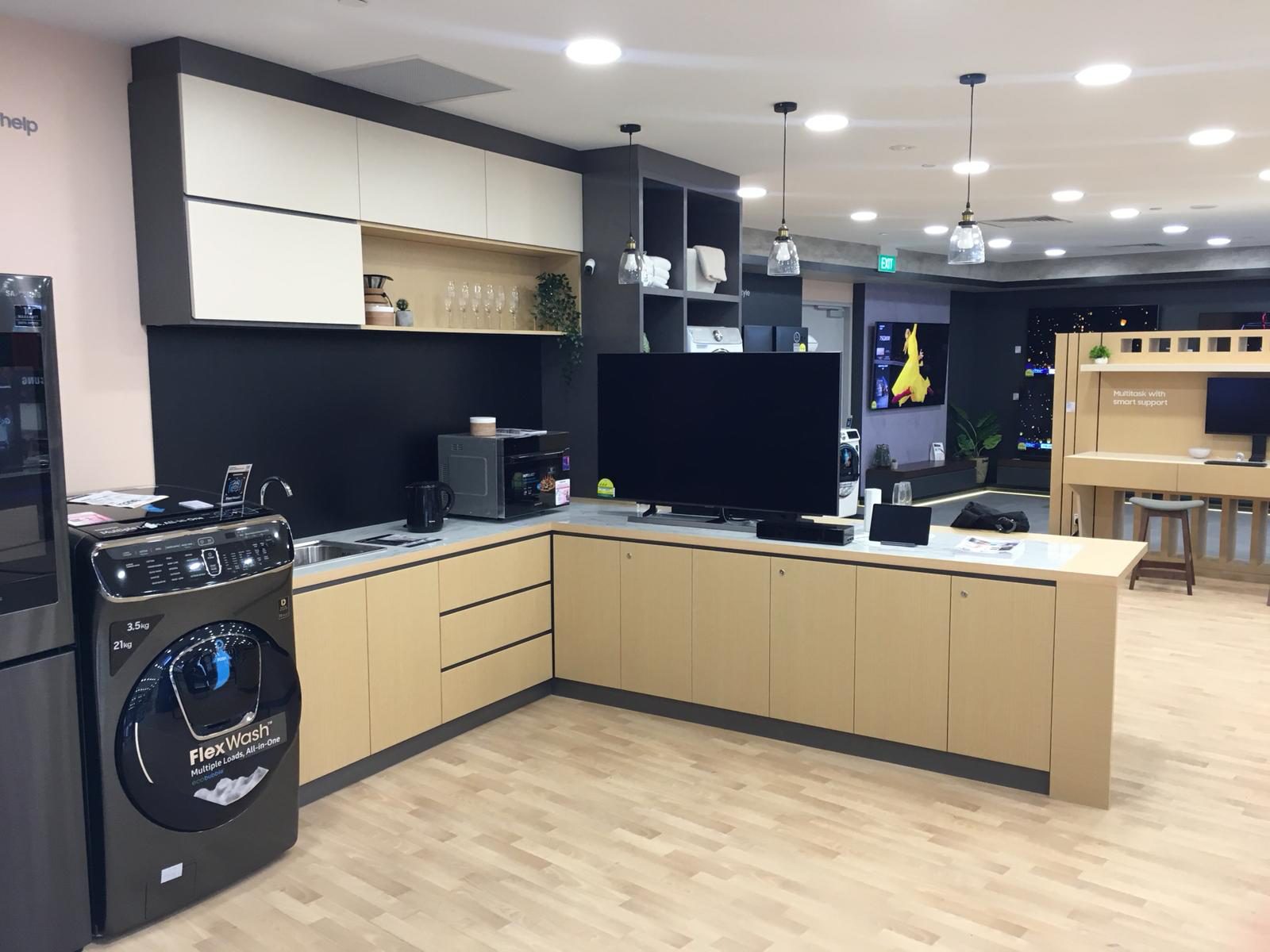
Retail displays exist to light products, and the lighting is usually integrated into the fixture rather than mounted above it. That makes the electrical interface part of the furniture scope.
What has to be coordinated with the electrical contractor:
- Even light distribution along a run, with no visible hot spots or dark shelves
- Consistent colour temperature between fixtures, including replacements
- Concealed wiring routes through the carcass, agreed before manufacture
- Driver locations that remain accessible for maintenance after handover
- Switching, dimming and control zones matching the brand’s lighting concept
- Load and circuit capacity for a store full of integrated LED
Driver access is the detail most often missed. A driver buried behind a fixed panel will fail eventually, and replacing it then means dismantling a finished fixture in a trading store. Our guide to smart furniture and integrated technology installation covers serviceability as an approval criterion.
Brand Standards and Consistency Across Stores
A brand operating several tenancies in Singapore is buying consistency, not just a store. The same fixture family has to read identically in a mall unit, a flagship and an airport tenancy, despite different ceiling heights, floor levels and landlord constraints.
That is a documentation problem as much as a workmanship one: the fixing details, filler strategy, sealant colours and lighting settings used in the first store have to be recorded and repeated in the next. Where a brand’s global standard meets a Singapore built condition that does not suit it, the deviation should be agreed and written down rather than improvised on site. Our guide to scribing, fillers and making good covers how those adjustments are made without looking adjusted.
Quality Control Before the Store Opens
Before handover, every fixture is checked for surface defects, alignment, lighting performance, hardware operation, stone finishing, glass cleanliness and overall presentation — and then checked again under the store’s own lighting, at customer eye level, from the positions customers actually stand in.
Defects that cannot be adjusted out are rectified locally wherever possible. A scratched lacquer panel resprayed in Singapore takes days; the same panel reordered from an overseas factory takes months and will miss the opening. Our guides to local spray-paint rectification and FF&E snagging and defect rectification cover what can be recovered on the ground.
How Rongda Pacific Supports Retail Fit-Out
Rongda Pacific Pte Ltd delivers retail fixture installation and premium commercial interiors across Singapore, including mall tenancies and airport terminals. Our scope covers container receiving and warehouse inspection, condition reporting to the brand or factory, staged delivery within landlord access rules, builder’s works and services coordination, fixture and display installation, stone templating, fabrication and fixing, glass and showcase installation, lighting interface coordination, protection through to handover, brand-standard snagging, local rectification and post-opening support.
For international retail brands and their overseas fixture manufacturers, that means a single Singapore counterpart who can read the brand standard, work inside the landlord’s rules, and hold the opening date.
Frequently Asked Questions
How long does a luxury retail fit-out take in Singapore?
The calendar length matters less than the number of productive hours. Inside an operating mall, work is usually restricted to non-trading hours, so a four-week programme may contain only around eighty hours on the shop floor. Pre-assembly off site is what recovers that time.
What happens if the landlord hands over the shell late?
The opening date rarely moves, so the fit-out window absorbs the delay. The practical defences are surveying the shell the day it is handed over, having fixtures already received and inspected in a warehouse, and pre-assembling whatever can be built off site.
Why is stone templated after the cabinets are installed?
Because the top has to fit what was actually built, not what was drawn. Templating from a drawing is the most common cause of a re-cut, and a re-cut slab against a fixed opening date is a serious problem — especially with bookmatched material that cannot be matched again.
Can imported display fixtures be repaired in Singapore?
In most cases, yes. Lacquer and paint damage can be resprayed locally, veneer can be repaired, and replacement panels can be fabricated. That matters because an overseas replacement will not arrive before opening.
Who coordinates the integrated lighting?
It sits between the fixture manufacturer, the electrical contractor and the brand’s lighting designer, and it has to be agreed explicitly. The details most often missed are driver accessibility for maintenance and colour-temperature consistency between original and replacement fittings.
How is consistency maintained across several stores for the same brand?
By recording the fixing details, filler strategy, sealant colours and lighting settings used in the first store and repeating them. Where a global standard does not suit a Singapore built condition, the deviation should be agreed in writing rather than improvised.
Do you work inside airport terminals?
Yes. Airport tenancies add security clearance, escorted access, restricted tool lists and tighter working windows, all of which have to be planned into the programme from the start rather than discovered during installation.
What should we do with fixtures that arrive damaged?
Tag them, quarantine them away from the good stock, photograph the condition and raise the replacement immediately. The failure mode to avoid is a damaged component being absorbed back into general inventory and then discovered again on the shop floor a week before opening.
More in Commercial Fit-Out
 SCDF Fire-Safety Coordination for Interior Fit-Outs in Singapore: Submission Routes, Interfaces and the Furniture Nobody Checked
 Main Contractor, ID Contractor or Direct Trades: Choosing a Procurement Route for a Singapore Fit-Out
 How Long Does an Office Renovation Take in Singapore? Programme, Critical Path and the Last Ten Per Cent